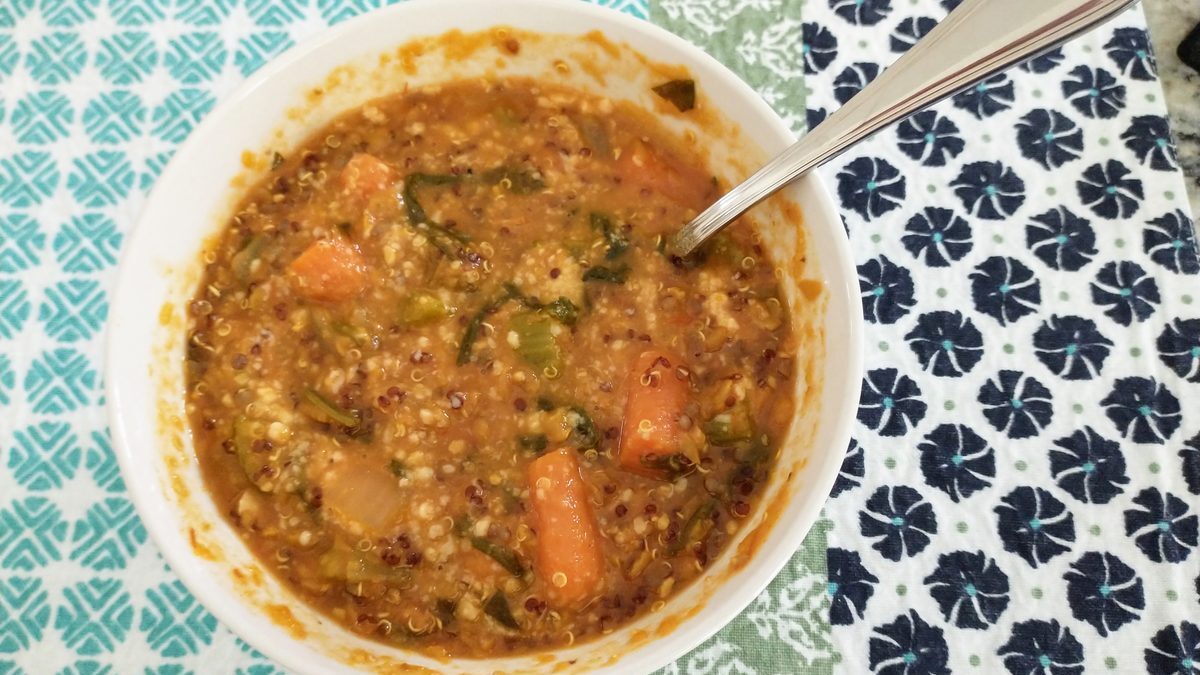
Two decisions settle whether this stew is worth the hours it takes: how hard you brown the sausages, and which lentils you buy. The rest is chopping.
A slow cooker cannot brown anything. It sits at a wet simmer under a sealed lid, so nothing inside ever climbs past boiling point and nothing caramelises. Whatever savoury depth this dish is going to have, you build it in a frying pan in the ten minutes before the lid goes on.
The lentil choice is quieter but just as final. Brown and green lentils keep their skins and their shape across a long cook. Red ones collapse into orange sludge: decent soup, sad stew.
I make this most Sundays between November and February, usually with six pork sausages from the butcher counter, and it feeds four of us with enough left for one lunch box.
The frying pan does the job the cooker can’t
Get the pan properly hot before the sausages touch it. Medium-high, a thin film of oil, then leave them alone. Sausages shed fat and water fast, and if you keep nudging them they steam in their own liquid and stay the colour of putty. Eight to ten minutes, turned three or four times, gets dark brown patches on most of each side. Dark brown. Not tan.
Then the part people skip: pour about 150ml of stock or plain water into the empty hot pan and scrape the base with a wooden spoon for thirty seconds while it bubbles. Everything stuck there lifts off into the liquid. Tip all of it into the slow cooker, sticky bits included.
I skipped that once, running late, and eight hours later the pot tasted like boiled lentils with sausage floating in it. Edible, forgettable. It’s the same step that makes a slow cooker pot roast taste roasted rather than boiled.
Brown them whole and cut them after. Coins give you more surface area and more flavour in the pot, but whole sausages hold their texture at the table, and I’d rather have that. For a weeknight version of the same pairing, one-pan sausage and peppers is done in half an hour.
Ingredients
- 6 pork sausages (about 400g), good quality — cheap ones shed water and shrink
- 250g dried brown or green lentils, rinsed, not soaked
- 1 tablespoon olive oil
- 1 large onion, diced
- 2 carrots, cut into 1cm half-moons
- 2 celery sticks, sliced
- 3 garlic cloves, sliced
- 1 x 400g tin chopped tomatoes
- 1.1 litres chicken or vegetable stock (plus the 150ml used to deglaze the pan)
- 2 bay leaves and 1 teaspoon dried thyme
- 1 teaspoon smoked paprika
- 1 tablespoon red wine vinegar, for the end
- Salt and black pepper, added late
Instructions
- Heat the oil in a heavy frying pan over medium-high. Brown the sausages for 8-10 minutes until they have dark patches on several sides, then lift them into the slow cooker.
- Cook the onion, carrot and celery in the sausage fat for 5 minutes, adding the garlic and paprika for the last minute. Scrape into the cooker.
- Pour 150ml of the stock into the empty pan, bring it to a bubble, and scrape the base clean with a wooden spoon. Pour that liquid over the sausages.
- Add the lentils, tomatoes, bay, thyme and remaining 1.1 litres of stock. The liquid should sit about 2cm above everything.
- Cook on low for 7-8 hours, or high for 4. Don’t lift the lid to check.
- Fish out the bay. Stir in the vinegar, then salt and pepper to taste. Halve the sausages on the diagonal and serve.
Lentils go in dry, but they need more liquid than you think
Don’t soak them. Brown and green lentils have thin skins and soften fine from dry over a long cook, unlike chickpeas or kidney beans, which really do want the overnight soak covered in how to cook dried beans from scratch. Soaked lentils just reach mush sooner.
Liquid is where this goes wrong. On a hob a stew reduces, because steam leaves the pan. A slow cooker does the opposite: the lid stays cool enough that steam condenses and drips straight back, so after eight hours you have close to the volume you started with, minus what the lentils drank. Dry lentils take up about three times their own volume, which is why 250g of them get 1.25 litres here, and why a stovetop recipe copied across comes out claggy and stuck to the sides.
Too thin at the end? Lid off, high for 30 minutes. Going the other way is harder, since stock added late thins the flavour along with the texture.
Red lentils once more, since people keep asking: no skin to hold them, broken down inside 25 minutes, purée by hour six. Save them for coconut curry lentil soup, where the collapse is the point.
Temperature, salt and the splash of vinegar at the end
Sausages are done at 71°C / 160°F in the centre of the thickest one. After seven hours on low they’re well past it, so this matters only if you cut the cook short or your cooker runs cool; some older ones hold barely 80°C on low. Probe sideways, into the fattest sausage rather than the one by the edge. More of these numbers sit in the meat thermometer temperature chart.
Salt at the end, always. Sausages and stock are both salted already, and the pot never reduces to concentrate anything. Taste first, then season.
The vinegar is what I’d argue for hardest. A tablespoon stirred in off the heat wakes up a pot that has sat at a low simmer all afternoon, and long-cooked lentils go flat without it. Lemon works too. If it reads sharp rather than brighter, you’ve gone a spoon too far.