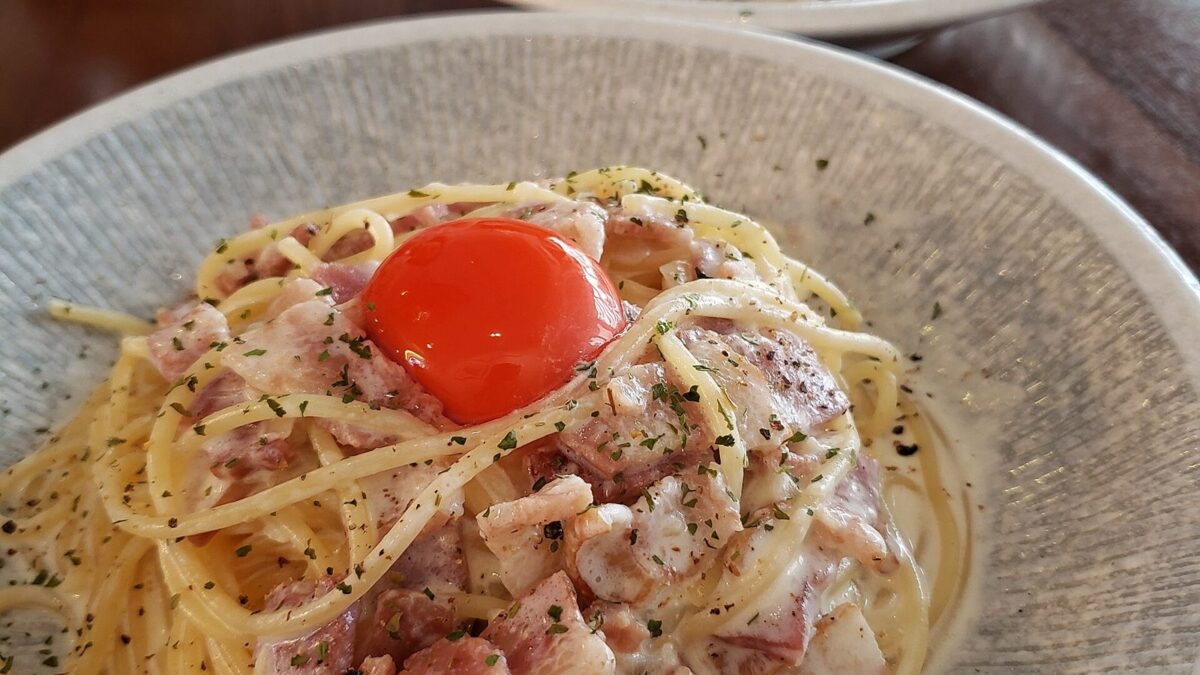
There’s a certain magic to a real spaghetti carbonara, the kind you find in a small trattoria in Rome where the plate arrives glossy, silky, and impossibly rich without a drop of cream in sight. For years many of us thought carbonara had to be a heavy, gloopy affair, but the authentic version is something altogether more elegant: just eggs, cheese, cured pork, and pasta, transformed into a sauce that clings to every strand.
The beauty of this dish is that it asks for almost nothing from your pantry, yet it rewards attention and timing. Get the technique right and you’ll wonder why you ever reached for a jar. Get it wrong and you’ll end up with scrambled eggs on noodles, which is why I want to walk you through it slowly and honestly.
This is weeknight food that eats like a celebration. Once you’ve made it a few times, it becomes a fifteen-minute reflex, the thing you cook when the fridge looks empty but you still want something that feels like a hug.
Prep: 10 mins Cook: 15 mins Serves: 4
Why You’ll Love This Carbonara
- No cream, no shortcuts — the silky sauce comes entirely from eggs, cheese, and starchy pasta water.
- Ready in under 30 minutes from cold pan to table, making it perfect for busy evenings.
- Just five core ingredients, most of which you can keep on hand for an impromptu dinner.
- Deeply savory and comforting, with crispy pork and a peppery, cheesy backbone.
- Restaurant-quality results at home once you understand the gentle-heat trick.
Ingredients
- 400g spaghetti — or rigatoni if you prefer a chewier bite.
- 150g guanciale — cured pork cheek; pancetta works well as a substitute.
- 3 large eggs plus 1 extra yolk — the yolk adds extra richness and color.
- 75g Pecorino Romano — finely grated; sharp and salty is the point.
- 25g Parmesan — grated, for a mellower balance against the pecorino.
- Freshly ground black pepper — be generous; carbonara loves pepper.
- Fine sea salt — mainly for the pasta water.
- A ladle of reserved pasta water — the starchy liquid that emulsifies the sauce.
- A drizzle of olive oil — optional, just to start the pork if it’s very lean.
Instructions
- Bring a large pot of water to a rolling boil and salt it well, though a touch less than usual since the cheese and pork are already salty. Add the spaghetti and cook until just shy of al dente.
- While the pasta cooks, cut the guanciale into short, chunky batons. Place it in a cold, wide pan and set over medium heat so the fat renders slowly and evenly.
- Let the guanciale sizzle for 6 to 8 minutes until deeply golden and crisp at the edges but still tender in the middle. Turn off the heat and leave the rendered fat in the pan.
- In a bowl, whisk together the whole eggs, the extra yolk, the pecorino, the parmesan, and a very generous amount of black pepper until you have a thick, sandy paste.
- Before draining, scoop out a mugful of the starchy pasta water. Drain the spaghetti, then add it directly to the pan with the guanciale, tossing to coat every strand in the warm fat.
- Now the crucial step: with the pan off the heat, pour in the egg and cheese mixture, tossing continuously and vigorously. The residual warmth cooks the eggs into a creamy sauce rather than scrambling them.
- Loosen the sauce with splashes of the reserved pasta water, a little at a time, until it turns glossy and coats the back of a spoon. Work quickly so it stays silky.
- Taste and adjust with more pepper or a whisper of salt. Serve immediately in warmed bowls with an extra shower of pecorino on top.
Tips for the Best Carbonara
- Take the pan off the heat before adding the eggs. This single move is the difference between silk and scramble.
- Warm your serving bowls so the sauce doesn’t seize and stiffen on contact with cold ceramic.
- Grate the cheese finely so it melts smoothly instead of clumping into stubborn lumps.
- Save more pasta water than you think you need — it’s your best tool for rescuing a thick sauce.
- Move fast at the end; carbonara waits for no one and is best eaten the moment it’s tossed.
Variations & Substitutions
- Pancetta or smoked bacon can stand in for guanciale if it’s hard to find, though the flavor shifts slightly.
- All Parmesan instead of pecorino gives a milder, nuttier, less salty result.
- Add spring peas or sauteed mushrooms for a heartier, less traditional plate.
- Use bucatini or fettuccine if you want a different texture to carry the sauce.
How to Store & Reheat
Carbonara is truly at its best the moment it’s made, but leftovers will keep in an airtight container in the fridge for up to two days. To reheat, warm it gently in a pan over low heat with a good splash of water or milk, stirring constantly to loosen the sauce back to a creamy consistency. Avoid the microwave if you can, as it tends to overheat the eggs and turn the sauce grainy. Never freeze carbonara; the delicate egg sauce simply won’t survive thawing.
What to Serve With It
Carbonara is rich, so keep the accompaniments light and fresh. A crisp green salad dressed simply with lemon and olive oil cuts through the richness beautifully. A glass of dry white wine such as Frascati or a light Italian red like Chianti rounds out the meal. If you want bread, offer a small piece of crusty ciabatta to catch any sauce left on the plate.
Frequently Asked Questions
Why did my carbonara turn out scrambled?
The pan was too hot when you added the eggs. Always remove it from the heat first and toss vigorously, letting the residual warmth do the gentle cooking.
Can I really make carbonara without cream?
Absolutely, and you should. The creaminess comes from emulsifying eggs, cheese, and starchy pasta water. Cream is a modern shortcut that masks the true flavor.
What’s the best cheese to use?
Traditional carbonara uses Pecorino Romano for its sharp saltiness. A little Parmesan softens the edge, but pecorino should lead the flavor.
Once you nail the timing, carbonara becomes one of those quietly perfect meals you’ll return to again and again. Buon appetito.