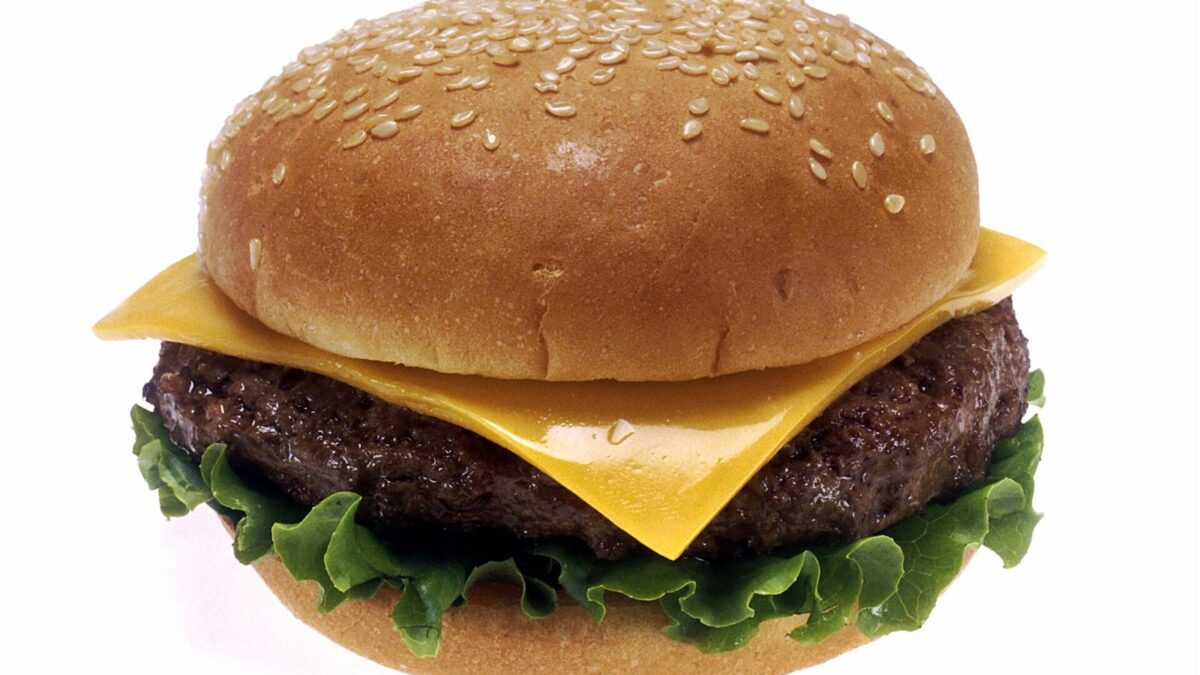
Almost everything written about burgers is a rule someone repeated from someone else. Three of those rules are doing real damage to your dinner.
Pressing the patty does not give you a better crust
The spatula press is the most common thing I see people do at a barbecue, usually while saying something about getting it flat. What comes out is a jet of hissing juice into the fire and a patty with maybe 15 percent less moisture in it.
Crust is not made by pressure. It is made by dry surface plus hot metal. Meat browns properly above roughly 140°C, and it can only get there once the surface water has boiled off. Pressing does the opposite: it floods the surface with liquid the pan then has to evaporate all over again, which drops the pan temperature and delays browning.
There is exactly one moment where pressure is right, and it is the smash burger, where you press once within the first 10 seconds while the ball is still raw and cold. That is not a crust technique, that is a shaping technique, and after those 10 seconds it is over.
Salt in the mix makes sausage, not burgers
Mix salt through ground beef and let it sit and you dissolve myosin, the protein that makes meat proteins bind to each other. Bound protein means springy, dense, snappy texture. That is exactly what you want in a sausage or a meatball. In a burger it reads as bouncy and a bit rubbery, and no amount of fat rescues it.
Season the outside only, and do it in the 60 seconds before the patty hits the pan. About 1/4 teaspoon of salt per 125g patty, split between the two faces.
I tested this side by side on one batch of 80/20 because I did not believe it. Salted-in-the-mix patties came out noticeably firmer and shrank more; the surface-salted ones stayed loose enough that they came apart slightly under the bun, which is the correct amount of falling apart.
Onion powder, egg, breadcrumbs, Worcestershire: all the same problem, all fine in a meatloaf. A cheeseburger is beef, salt, pepper, heat.
Burgers do not need a long rest
This one gets repeated because it is true of steak. A 3cm sirloin has a steep temperature gradient from a 160°C surface to a 55°C middle, and 8 minutes of resting lets that even out.
A 1.5cm patty does not have that gradient. It is nearly the same temperature all the way through 30 seconds after it leaves the pan. Rest it for 8 minutes and all you have done is let a hot burger slide down toward 55°C and let the cheese go waxy again.
Give it 60 to 90 seconds while you toast the buns, then build. If your burger runs juice everywhere on the first bite regardless, the cause is usually overcooking, not under-resting: past about 71°C internal, the muscle fibres contract hard and squeeze moisture out no matter how patiently you waited.
What actually decides whether it’s good
Fat ratio, pan temperature, and how little you handle the meat. In that order.
80/20 beef is not a preference, it is the floor. I have made 90/10 burgers when that was the only mince at the shop and they were dry at medium and dry at medium-rare, which tells you the problem is not doneness. If your butcher grinds to order, ask for chuck.
Get the pan properly hot before anything touches it. A drop of water should skitter across the surface and vanish in under 2 seconds. On my gas hob that is a cast iron pan on high for a full 5 minutes, and yes, the kitchen needs a window open.
Four burgers, 15 minutes of prep, 10 minutes at the stove.
Ingredients
- 500g ground beef, 80/20 lean to fat, fridge-cold
- 4 soft burger buns — brioche or potato buns
- 4 slices cheese — American melts best; mature cheddar has more flavour but breaks a little
- 1 teaspoon salt, for the surfaces only
- Freshly ground black pepper
- 1 tablespoon butter, softened, for the buns
- 1 small onion, sliced thin
- 2 firm tomatoes, sliced about 5mm thick
- Crisp lettuce leaves — iceberg or butterhead
- Pickles, ketchup and mustard
Instructions
- Divide the cold beef into four 125g portions and shape each into a loose ball with as few movements as you can manage. Warm hands melt the fat, so run them under the cold tap first.
- Flatten each ball to about 1.5cm thick and roughly 1cm wider than your bun, since the patty shrinks as it cooks. Press a shallow dimple into the centre with your thumb to stop it doming.
- Heat a cast iron skillet or grill on high for 5 minutes, until a drop of water vanishes in under 2 seconds.
- Season both faces with salt and pepper, then lay the patties down straight away. Leave them alone for 3 minutes. Do not move them, do not press them, do not check underneath at 90 seconds.
- Flip once and put the cheese on immediately. Cook another 2 to 3 minutes for medium, or until an instant-read thermometer shows 65 to 68°C at the centre.
- If the cheese is still stubborn, add a tablespoon of water to the empty side of the pan and cover for 20 seconds. The steam melts it without cooking the patty further.
- Butter the cut faces of the buns and toast them in a second pan for 45 to 60 seconds, until golden with a thin crisp layer. That layer is waterproofing, and it is why the bottom bun survives.
- Rest the patties 60 to 90 seconds while the buns finish.
- Build bottom-up: bun, sauce, lettuce, patty and cheese, tomato, onion, pickles, top bun. The lettuce under the patty is deliberate, it keeps the tomato juice off the bread.
If you want the smash version instead
Same beef, no shaping. Drop four cold 125g balls onto a very hot pan, press each one hard and flat with a stiff spatula within 10 seconds, and hold the press for 8 seconds. Cook 90 seconds, scrape underneath with a metal spatula so the crust stays attached to the meat, flip, cheese on, 30 seconds more.
The trade-off is real: you get far more browned surface and a thinner, drier interior. I make smash burgers when I want crust and thick patties when I want juice, and I have stopped pretending one of them is better.
Cooking ahead, honestly
Patties reheat acceptably. Assembled burgers do not, and no amount of wrapping changes that.
Keep cooked patties in an airtight container in the fridge for up to 3 days, or freeze them for 2 months with a square of parchment between each. Reheat covered in a skillet over low heat, or in a 160°C oven, and add the cheese in the last minute. Toast fresh buns. A burger that sat built overnight goes grey and the bun turns to paste, which I know because I have eaten one at 7am and regretted it.
The one thing worth buying if you make burgers often is an instant-read thermometer. Guessing doneness by feel works on a thick steak and does not work on a 1.5cm patty, and the gap between 65°C and 75°C is the whole difference between juicy and grey.