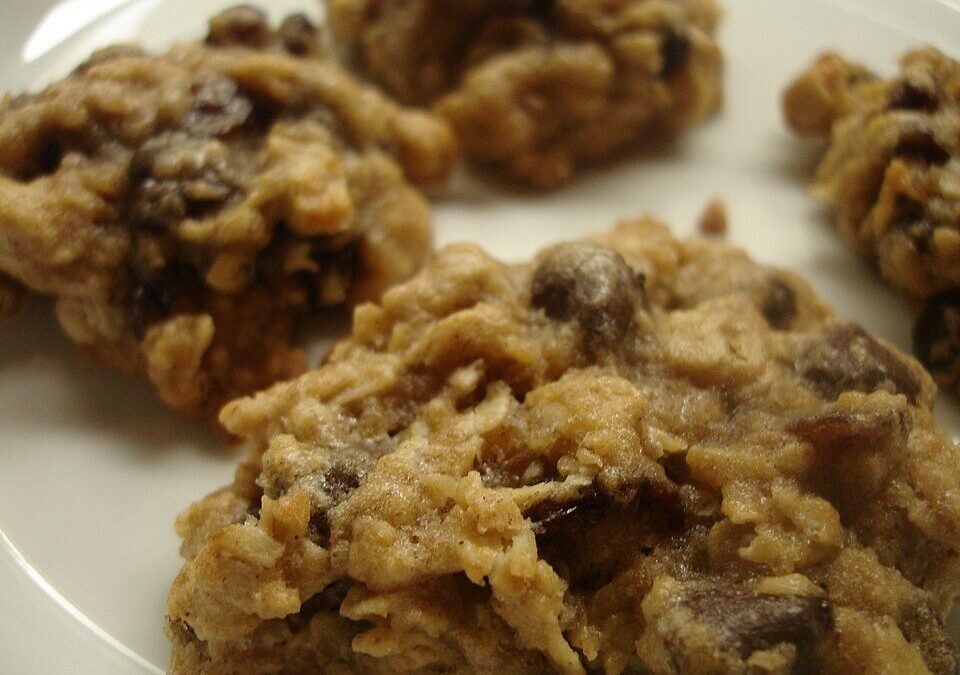
Every oatmeal raisin recipe you will read says the same thing: use old-fashioned rolled oats, never quick oats. I have baked this dough both ways, from the same bowl, on the same afternoon, and the advice is right — but not for the reason it usually gives, and there is one situation where I would genuinely reach for quick oats instead.
Prep: 20 mins (plus 30 mins chilling) Cook: 12 mins Makes: 24 cookies
Rolled Oats vs Quick Oats: I Baked Both
Quick oats are not a different grain. They are rolled oats that have been cut smaller and pressed thinner so they cook faster. That is the whole difference, and everything that follows comes out of it.
Thinner flakes absorb liquid faster and break down more in the dough. In a cookie, that means the oats stop behaving like structure and start behaving like flour. My quick-oat batch spread wider, browned faster at the edges, and came out with a smooth, slightly cakey crumb where the oats had dissolved into the background. The rolled-oat batch stayed thicker, held visible flakes, and had the chew people actually mean when they say a cookie is chewy.
The other thing I noticed, and did not expect: the quick-oat cookies were noticeably drier by day two. Small flakes give up their water sooner. The rolled oats hold onto it.
Worth saying how I ran it, because half the oat comparisons online are guesswork. One batch of dough, made to the recipe below, split in two before the oats went in. Same 1 1/2 cups of oats by volume into each half, same 30-minute chill, same oven, both trays baked one after the other on the middle rack at 350°F, same 1 1/2 tablespoon scoop. The only variable was which box the oats came out of.
If you only have quick oats and want the rolled-oat result, there is a partial workaround: pulse nothing, add nothing, just cut the bake by 2 minutes and add 2 tablespoons of extra flour to compensate for how much more readily the fine flakes soften. You get closer. You do not get all the way there, because the visible flake is a texture you cannot reconstruct once it has been rolled thin at the mill.
Side by Side
| Old-fashioned rolled oats | Quick oats | |
|---|---|---|
| Spread | Holds shape, about 3 inches across | Spreads wider, closer to 3 1/2 inches |
| Texture | Chewy centre, visible oat flakes | Softer, cakier, oats blend in |
| Edges | Lightly crisp at 12 minutes | Crisp and browning by 10 minutes |
| Day 2 | Still soft in an airtight tin | Noticeably drier |
| Best for | The cookie most people picture | Fussy eaters who dislike oat texture |
The Winner, and the One Case Where I’d Switch
Rolled oats win, clearly, and I would not call it close. The chew is the point of the cookie, and quick oats give it away in exchange for nothing you wanted.
The exception is real, though. My nephew will not eat anything with a visible flake in it, and the quick-oat batch went down without comment while the rolled-oat batch was picked at. If you are baking for someone who objects to the texture rather than the flavour, quick oats give you an oatmeal cookie that tastes right and feels like a soft sugar cookie. Pull them at 10 minutes, not 12, because they brown faster.
What neither version can survive is steel-cut oats. I tried a quarter-cup swap once out of curiosity and the pieces stayed hard through the whole bake, like gravel in the cookie. There is no soaking workaround that gets you back to a good texture.
Ingredients
- 1 cup unsalted butter, softened but still cool to the touch
- 1 cup packed light brown sugar
- 1/2 cup granulated sugar
- 2 large eggs, room temperature
- 2 teaspoons vanilla extract
- 1 1/2 cups all-purpose flour, spooned and levelled
- 1 teaspoon baking soda
- 1 1/2 teaspoons ground cinnamon
- 1/2 teaspoon salt
- 1/4 teaspoon ground nutmeg, optional
- 3 cups old-fashioned rolled oats
- 1 1/2 cups raisins
- 1/2 cup chopped walnuts or pecans, optional
Instructions
- Cream the butter with both sugars for 2 to 3 minutes, until visibly lighter in colour and fluffy.
- Beat in the eggs one at a time, then the vanilla.
- Whisk the flour, baking soda, cinnamon, salt, and nutmeg together in a separate bowl, then mix into the wet ingredients on low speed just until no dry flour remains.
- Fold in the oats, raisins, and nuts by hand with a spatula. The dough will be stiff and that is correct.
- Cover and chill at least 30 minutes, or up to 3 days.
- Heat the oven to 350°F and line two trays with parchment. Scoop 1 1/2 tablespoon balls and space them 2 inches apart.
- Bake 10 to 12 minutes, until the edges are golden and the centres still look slightly underdone and glossy.
- Leave them on the tray for 5 minutes to finish setting, then move to a wire rack.
Chilling: 30 Minutes vs Overnight
This is the second comparison worth running, and the answer surprised me more than the oats did.
Thirty minutes in the fridge does the mechanical job. The butter firms up, the dough holds its ball shape longer in the oven, and you get a thicker cookie instead of a thin one. Unchilled dough from the same bowl spread to about 4 inches and had almost no centre left.
Overnight does something different. The flour and oats keep hydrating, the brown sugar’s molasses distributes, and the baked cookie tastes deeper — more caramel, less flat sweetness. It also bakes darker at the same time and temperature, so knock a minute off. Is it worth planning a day ahead for? For a batch you are giving to someone, yes. For Tuesday, thirty minutes is plenty, and I say that as someone who chills brown butter chocolate chip cookies overnight without fail.
Raisins Behave Differently Depending on How You Treat Them
Straight from the box, raisins pull moisture out of the dough around them as they bake, which is why the crumb next to a raisin can taste dry. Soaked, they do the opposite.
Cover them in hot water or, better, hot black tea for 10 minutes, drain them, and pat them properly dry on a cloth. Wet raisins will slick the dough and thin it. Ten minutes is enough; leave them 30 and they turn slack and burst during mixing.
Golden raisins are sweeter and softer and need only 5 minutes. Dried cranberries need none at all and are already tart enough to cut the brown sugar, which is a swap I make about a third of the time.
A last note on the cinnamon, since it is the flavour doing the heavy lifting: ground spice loses most of its punch after about a year in a warm cupboard. If yours has been open since last winter, use 2 teaspoons rather than 1 1/2 and smell it first. The same tired-cinnamon problem is what makes people think their gingerbread cookies taste flat, and it is the cheapest fix in baking. If you are stocking a tin for the week, bake these alongside peanut butter cookies — the doughs both chill happily and the oven is already on — and use any leftover soaked raisins in maple cinnamon overnight oats.