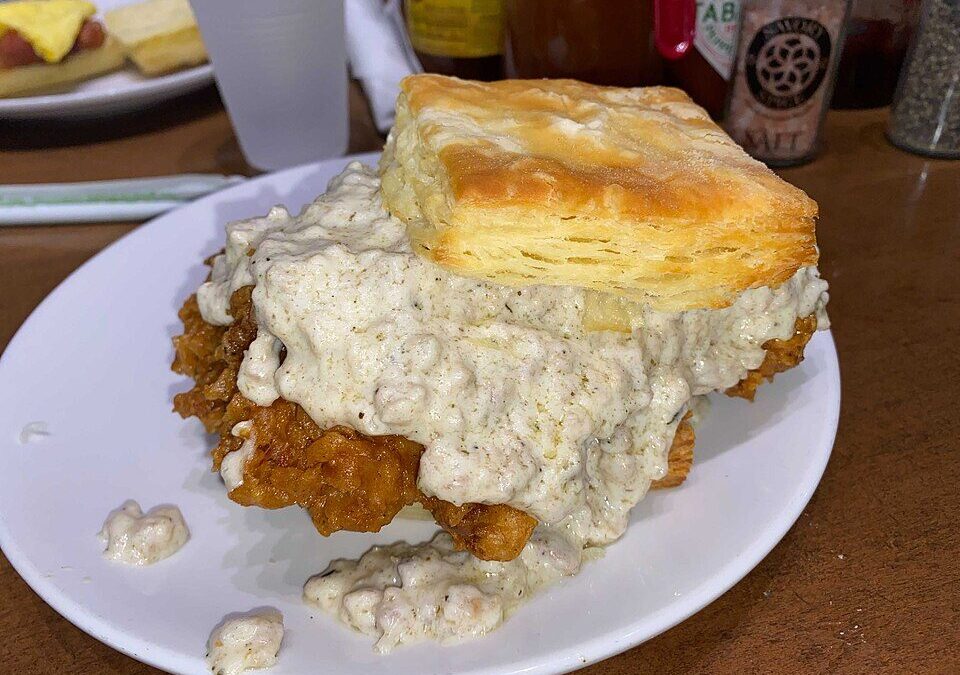
The Sunday I Made Nine Hockey Pucks
My first proper batch of buttermilk biscuits went into a 425F oven about an inch tall and came out about an inch tall. Nine flat discs. Dense, slightly damp in the middle, pale on top, and they tasted like a scone that had given up halfway.
I had followed the recipe. That was the annoying part.
It took three more Sundays to work out what I was actually doing wrong, and both mistakes are the kind that recipes cover in half a sentence before moving on. The first was temperature. I had cubed the butter and then spent maybe eleven minutes finding the baking powder, whisking the dry ingredients, answering the door. By the time those cubes hit the flour they had gone soft at the corners, and soft butter smears rather than flakes. Smeared butter coats the flour. Coated flour cannot build layers, because there is nothing solid left to hold the sheets apart.
The second one I did not spot for weeks. I was twisting the cutter. Press, twist, lift, the way you would open a jam jar. It feels like the correct motion. What it does is roll the cut edge over and seal the layers shut, so the rim of the biscuit is glued together while the middle tries to climb. You get a squat thing with a bulge in the centre and a domed top that never opens along a seam.
The batch after I fixed both went from an inch to a shade over two and a quarter inches. Same tray, same oven, same bag of flour. I measured, because by that point I did not trust myself.
Folding Is the Whole Trick
Biscuit layers are not something the dough does on its own. You put them there by hand, with a letter fold, and it takes about ninety seconds.
Pat the shaggy dough into a rough rectangle. Fold it in thirds like a business letter, turn it ninety degrees, pat it out again, fold again. Three or four rounds. Each fold stacks sheets of dough with a film of butter trapped between them, and in the oven that butter melts, its water flashes to steam, and the steam shoves the sheets apart. That is the whole mechanism. No yeast, no proving time, just water turning into gas in a hurry.
Why I stop at four folds
I have tried eight. Past about four the dough starts to push back under your palms, which means the gluten has woken up, and the biscuit turns chewy instead of tender. Four is my ceiling now. If the dough already feels springy at three, I stop at three and accept slightly fewer layers.
The one-inch rule
Pat the final slab to a full inch thick. Not three-quarters. Biscuits roughly double in height, so three-quarters of an inch gives you a perfectly decent biscuit and a full inch gives you the tall kind you can tear open with your thumbs. I keep a small ruler in the baking drawer for exactly this and I am not embarrassed about it.
Sides touching, every time
Arrange them on the sheet so they just kiss. Biscuits set their shape in the first four or five minutes, and ones with a neighbour to lean on climb straight up instead of relaxing outward. Space them apart and you get crisper edges all the way round, which plenty of people prefer. I don’t. I want the soft pull-apart sides.
If cold butter and a light hand are your kind of baking, the same logic runs straight through cheddar herb scones and through classic Irish soda bread, which uses the same buttermilk-and-soda reaction with none of the folding.
Ingredients
- 2 1/2 cups all-purpose flour, spooned into the cup and levelled so you do not pack in too much.
- 1 tablespoon baking powder for a strong, reliable lift.
- 1/2 teaspoon baking soda to react with the tangy buttermilk.
- 1 tablespoon sugar for a whisper of sweetness and better browning.
- 1 teaspoon fine salt to season the dough properly.
- 1/2 cup (1 stick) unsalted butter, very cold and cut into small cubes.
- 1 cup cold buttermilk, plus a splash more if the dough feels dry.
- 2 tablespoons melted butter for brushing the tops after baking.
- Flaky sea salt, optional, for finishing.
Instructions
- Heat the oven to 425F (220C) and line a baking sheet with parchment. Put the cubed butter and the buttermilk in the freezer for ten minutes so they are genuinely cold when you start.
- In a large bowl, whisk the flour, baking powder, baking soda, sugar and salt together until evenly combined. The whisking also loosens the flour a little.
- Add the cold butter cubes and toss to coat. Using your fingertips or a pastry cutter, work the butter in until you have coarse crumbs mixed with flat, pea-sized flakes. Those visible flakes are your layers, so stop well before it looks like fine sand.
- Pour in the cold buttermilk and stir with a fork just until a shaggy, moist dough comes together. It should look rough and untidy. Stop the moment there is no dry flour left in the bowl.
- Turn the dough onto a lightly floured surface and pat it into a rough rectangle. Fold it in thirds like a letter, then pat it out again. Repeat two or three more times, since each fold builds another set of layers.
- Pat the dough to a final thickness of about one inch. With a sharp round cutter, press straight down and lift straight up. No twisting, ever. Gather the scraps, press them gently back together, and cut the last few.
- Arrange the biscuits on the sheet so their sides just touch. Snug biscuits support each other and rise taller.
- Bake for 14 to 16 minutes, until the tops are deep golden and the biscuits have visibly puffed. Brush the warm tops with melted butter and add a pinch of flaky salt if you like. Serve straight away.
What I’d Change If I Started Over
I would have grated the butter from frozen on a box grater from the very beginning instead of cubing it. Frozen shreds go into the flour in about fifteen seconds and there is no window for them to soften while you faff about. It is the single change that made my biscuits reliable rather than lucky.
I would also have stopped believing that soured milk is a real substitute for buttermilk. A cup of milk with a tablespoon of lemon juice will curdle and it will react with the baking soda, so the biscuit rises. But real cultured buttermilk is thicker, and that thickness means less free water going into the dough, which means a firmer slab that holds its folds. My lemon-juice biscuits always spread a bit wider and a bit flatter. Usable. Not the same.
And I would have put the rack in the upper third of the oven years earlier. Lower down, the bottoms brown before the tops catch up and you end up with a dark base and a pale roof.
One last thing worth knowing: the scrap biscuits, the ones you press back together from the offcuts, will always be the shortest of the batch and slightly tougher. I bake them anyway and eat them first, standing at the counter, which is a household tradition at this point. If you want every biscuit uniform, cut the dough into squares with a bench scraper and skip the re-rolling entirely. You lose the round shape and you gain nine identical biscuits.
Warm biscuits go with almost anything on the table, but the combination I keep coming back to is a tray of these alongside soft dinner rolls for a crowd, or split under something saucy the way you would use classic cornbread with chili.