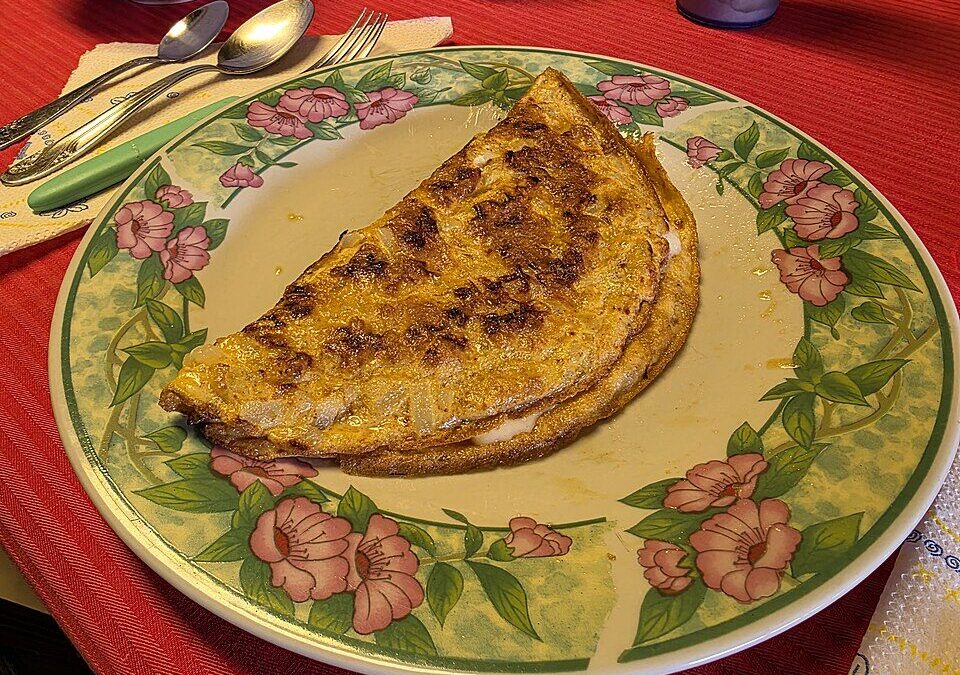
A cheese omelette might be the most humble thing you can cook, and also one of the most satisfying. Done well, it is soft and just set, folded around a molten pocket of melting cheese, ready in the time it takes the kettle to boil. Done badly, it is a rubbery, browned disappointment. The good news is that the difference comes down to a few small techniques anyone can master.
This is the breakfast I make when I want something quick but genuinely good. Three eggs, a knob of butter, a handful of cheese, and a couple of minutes of attention. That is all it takes to turn out something that feels far more special than the sum of its parts.
Let me walk you through the method that gives you a tender, French-style omelette every time.
Prep: 5 mins Cook: 5 mins Serves: 1
Why You’ll Love This Cheese Omelette
- Ready in minutes: the perfect fast breakfast, lunch or late-night supper.
- Just a few ingredients: eggs, butter and cheese are all you truly need.
- Soft and tender: the low-and-slow method avoids that dreaded rubbery texture.
- Endlessly adaptable: a blank canvas for whatever fillings you fancy.
- High in protein: a genuinely filling meal that keeps you going for hours.
Ingredients
- 3 large eggs – as fresh as you can get them.
- 50g mature cheddar – grated, for the best melt and flavour.
- 15g unsalted butter – for cooking; do not skimp.
- 1 tbsp milk – optional, for a slightly softer set.
- 1 pinch of salt – to season the eggs.
- 1 pinch of black pepper – freshly ground.
- 1 small handful chives – finely snipped, optional but lovely.
Instructions
- Crack the eggs into a bowl and add the milk, if using, along with a pinch of salt and pepper. Beat well with a fork until the yolks and whites are completely combined and the mixture is a little frothy.
- Place a small non-stick frying pan, about 20cm, over a medium-low heat. Add the butter and let it melt and foam, swirling to coat the base and sides of the pan. Do not let it brown.
- Pour in the beaten eggs. They should sizzle very gently, not fiercely. If the pan is spitting and browning, it is too hot.
- As the edges begin to set, use a spatula to gently push the cooked egg from the edge towards the centre, tilting the pan so the runny egg flows into the gaps. Repeat around the pan for about a minute.
- When the omelette is mostly set but the surface still looks slightly wet and glossy, scatter the grated cheese evenly over one half. Add the chives now too, if using.
- Let the omelette cook for another 30 seconds or so, until the cheese starts to melt and the base is just golden but not browned.
- Tilt the pan and use your spatula to fold the empty half over the cheesy half. Let it sit for a few seconds so the residual heat finishes melting the cheese.
- Slide the omelette onto a warm plate, folded side down. Serve immediately, while it is still soft and the cheese is molten.
Tips for the Best Cheese Omelette
- Keep the heat low. Gentle heat is the single biggest secret to a tender, non-rubbery omelette.
- Beat the eggs well. A thorough whisk incorporates air and gives a lighter finish.
- Do not overcook. Pull it off while the top still looks a touch wet; it will finish cooking on the plate.
- Use a good non-stick pan. It makes folding and sliding out effortless.
- Grate your own cheese. Pre-grated cheese is coated in starch and does not melt as smoothly.
Variations & Substitutions
- Ham and cheese: scatter a little chopped cooked ham over the cheese before folding.
- Mushroom: saute sliced mushrooms in butter first, then add them with the cheese.
- Different cheeses: try gruyere for nuttiness, or a soft goat’s cheese for tang.
- Herby lift: fresh parsley, tarragon or dill all work beautifully in place of chives.
How to Store & Reheat
An omelette really is best eaten the moment it leaves the pan, so I would always encourage you to cook it fresh. That said, if you have leftovers, wrap them and keep in the fridge for up to a day. Reheat gently in a covered pan over low heat, or in short bursts in the microwave, though the texture will never be quite as soft as it was fresh. I would not recommend freezing, as the eggs turn watery and rubbery on defrosting.
What to Serve With It
A cheese omelette is lovely with a slice of hot buttered toast for mopping up. For a more substantial breakfast, add grilled tomatoes and a few rashers of bacon. At lunchtime, a simple green salad dressed with a little mustard vinaigrette turns it into a light, complete meal.
Frequently Asked Questions
Why is my omelette rubbery?
Rubbery omelettes come from cooking on too high a heat or for too long. Keep the pan at medium-low and take the omelette off while the surface still looks slightly moist.
Should I add milk to an omelette?
It is optional. A splash of milk gives a slightly softer set, but many cooks prefer eggs alone for a richer, purer flavour. Try it both ways and see which you like.
How many eggs should I use?
Two to three eggs is ideal for a single serving in a small pan. Any more and the omelette becomes thick and difficult to fold neatly.
Master this one simple recipe and you will always have a quick, comforting meal at your fingertips. Enjoy every soft, cheesy fold.