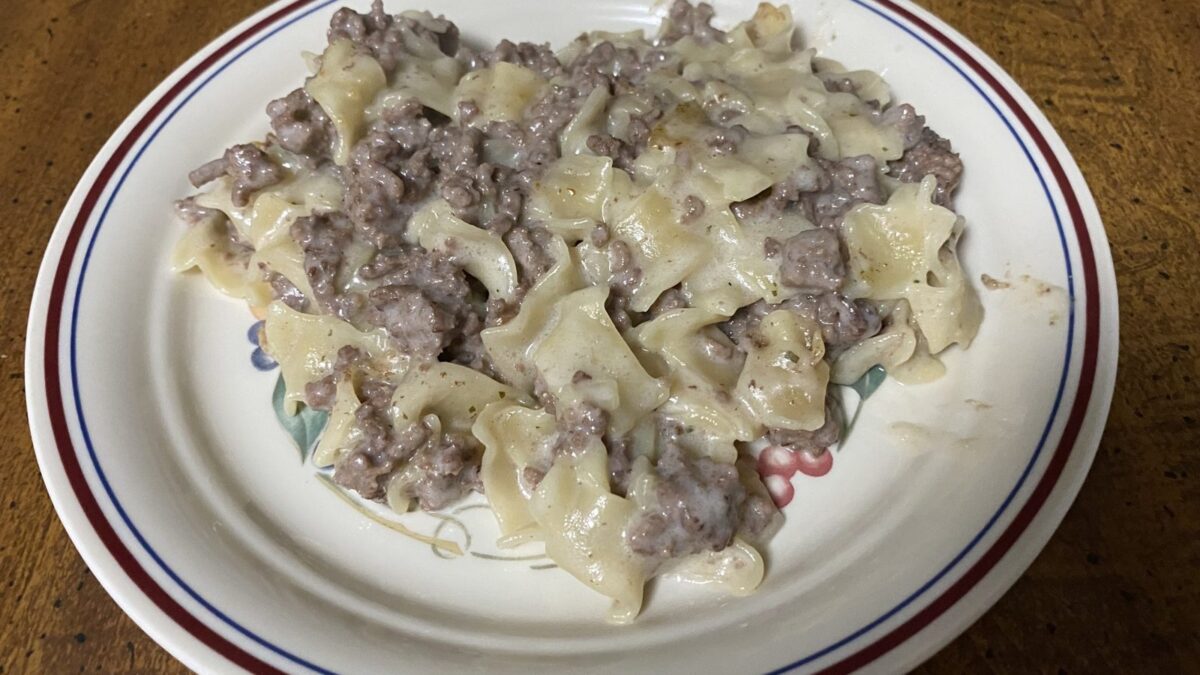
The sour cream went into a pan that was still bubbling, and the sauce broke in about four seconds. White curds floating in brown liquid, the whole thing grainy under the spoon. I served it anyway, because it was a Tuesday and my sister was already sitting down, and everybody was very polite about it.
That was eight or nine years ago. I’ve cooked stroganoff most months since, and the fix is almost annoyingly simple. Pull the pan off the burner and count to sixty. Stir two ladles of hot sauce into the sour cream in a separate bowl, then pour that back in and swirl with the heat off entirely. Sour cream splits above roughly 85°C/185°F, when the whey proteins tighten and wring out water. Keep the pan under a simmer and it doesn’t happen.
Prep: 15 mins Cook: 30 mins Serves: 4, with about 2 cups of sauce
Fast beef and slow beef make two different dinners
This matters more than any other choice in the recipe, and most versions online blur it.
Version one: 1 lb of sirloin sliced 1/4 inch thick against the grain, seared 45–60 seconds a side in a screaming pan, held aside, and returned only at the very end for a minute of warming. The beef stays pink in the middle and tastes of the sear. Total time from chopping board to table, about 40 minutes.
Version two: 1.5 lb of chuck in 1-inch cubes, browned, then braised in the broth 2 to 2.5 hours at 150°C/300°F until a fork twists through without resistance. Sour cream goes in after the braise, off the heat. That one tastes of long cooking, and the sauce is darker.
Both are good. They are not the same dish, and swapping the cuts without swapping the method is where people end up chewing grey sirloin that spent 40 minutes in liquid. If the slow one is what you’re actually after, you may be happier making a proper braised beef stew or a slow cooker pot roast and skipping the sour cream question entirely. Everything below is version one.
Ingredients
- 1 lb (450 g) sirloin, sliced 1/4 inch thick against the grain, patted very dry
- 3/4 tsp fine salt and plenty of coarse black pepper
- 3 tbsp butter plus 1 tbsp neutral oil, kept separate
- 10 oz (280 g) cremini or button mushrooms, quartered rather than sliced thin
- 1 medium onion (about 150 g), sliced into thin half-moons
- 3 cloves garlic, minced
- 2 tbsp all-purpose flour
- 2 cups (475 ml) beef broth, warmed in the microwave for 90 seconds
- 1 tbsp Dijon mustard
- 1 tsp Worcestershire sauce
- 2/3 cup (150 g) full-fat sour cream, out of the fridge 30 minutes ahead
- 12 oz (340 g) wide egg noodles, and a handful of flat-leaf parsley
Instructions
- Put the mushrooms in a dry 12-inch skillet over medium-high heat, no fat at all. Leave them 4 to 5 minutes. They’ll squeak, then release water, then the pan will go quiet again as it evaporates. Only now add 1 tbsp of the butter and cook 3 more minutes until the edges are properly brown. Tip them onto a plate.
- Wipe the pan, add the oil, and get it hot enough that a drop of water skitters. Sear the beef in two batches, 45 to 60 seconds a side, laying the strips out so no two touch. Move them to the mushroom plate. They will not be cooked through and shouldn’t be.
- Drop the heat to medium, add 1 tbsp butter and the onion, and cook 5 minutes with a pinch of salt until floppy and translucent. Garlic goes in for the last 30 seconds.
- Scatter the flour over the onion and stir it around for a full minute. It should smell faintly like toast, not like raw dough.
- Pour in the warm broth in three additions, stirring hard after each so it never has the chance to lump. Add the Dijon and Worcestershire. Simmer 5 to 6 minutes until it coats the back of a spoon and a finger drawn through leaves a clean line.
- Boil the noodles in well-salted water while that happens. Drain them a shade before the packet time and toss with the last tbsp of butter.
- Take the pan off the heat completely and wait a minute. Spoon two ladles of hot sauce into the sour cream, stir until smooth and pourable, then pour it back and swirl. The sauce should look glossy and pale beige, not speckled.
- Return the beef and everything that leaked out of it onto the plate, plus the mushrooms. Set the pan on the lowest burner setting for 2 minutes, moving things around. If it starts to bubble at the edges you’ve gone too far.
- Spoon over the buttered noodles and finish with chopped parsley.
The mushroom pan, dry first and fat second
Ten ounces of mushrooms hold a lot of water. Put them straight into hot butter and that water floods out, drops the pan temperature well below browning range, and you get pale grey mushrooms swimming in their own liquid for six or seven minutes. They taste of nothing much.
Dry-panning first drives the water off while the pan holds no fat, so nothing is diluted, and the butter then hits an already-hot pan and browns them in about three minutes. I resisted this for years because it looks wrong. The first minute the mushrooms squeak against the steel and you’re certain they’re scorching. They aren’t.
Quartered beats sliced here, too. Thin slices give up their structure and go limp in the sauce, and by the time the stroganoff has sat for five minutes you can’t find them. Quarters keep a bite. I use the same dry-then-fat start when I’m building a creamy mushroom soup, where the difference in depth is even more obvious.
What I’d change about the way I used to make it
I used to add the Dijon at the end with the sour cream, thinking of it as a finishing tang. It’s better in early, with the broth, where the sharpness has 5 minutes to soften into the sauce instead of sitting on top of it. One tablespoon in a 2-cup sauce is my line. Two makes it taste like mustard with beef in it, which some people in my house prefer and I don’t.
I also used to sear beef first and mushrooms after, in the same fat, because that’s the order every recipe gave me. Reversed, the mushrooms get a clean pan and the beef gets the browned bits already there.
And I’ve stopped tossing the noodles into the sauce. Sauce clings well enough when it’s spooned over the top, and separate noodles reheat the next day without turning to paste. If you do have leftovers, keep them in separate containers and warm the sauce in a small pan on low with a splash of broth. Reheating in the microwave, above about 700W, will split it again, and this time there’s no ladle trick to save you.
One more thing: if the sauce needs another ten minutes after the sear, don’t leave the strips sitting in their own juices. Cover them loosely and return them only once the sour cream is stirred through. Beef sitting in cooling liquid goes pink to grey with nobody applying heat, the same reason I rest seared pork chops on a rack instead of a plate.