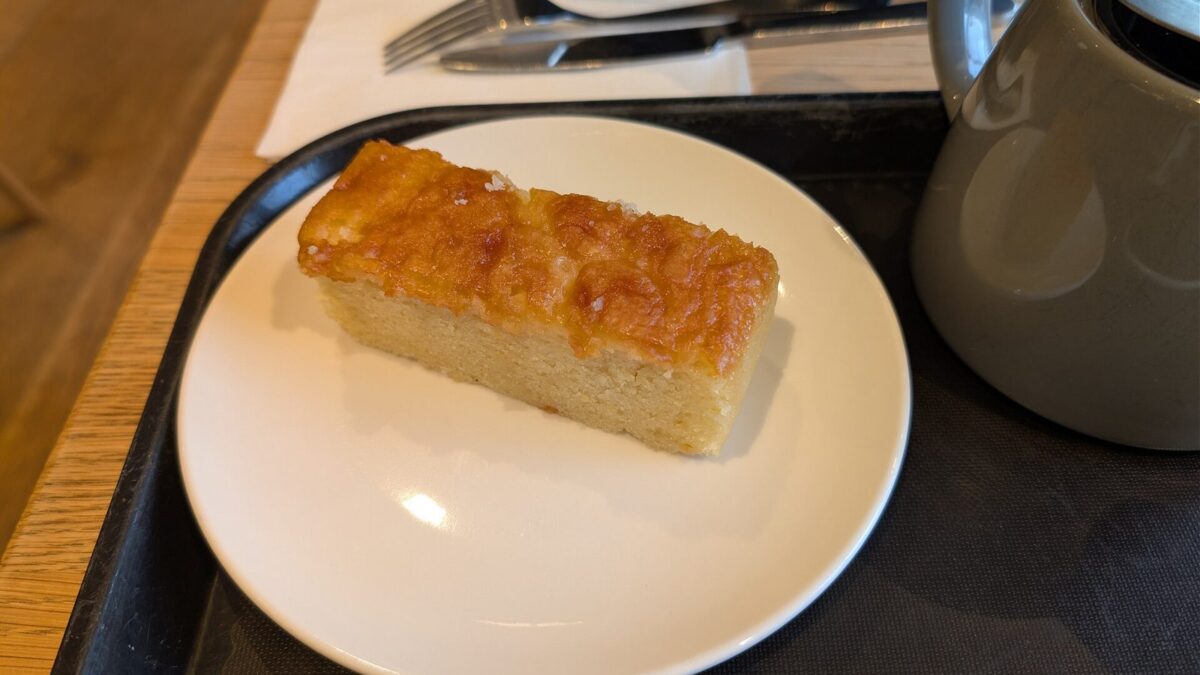
Hot Drizzle or Cool Glaze: You Have To Pick
There are two honest ways to get lemon onto this cake and they produce genuinely different cakes. Most recipes present one and never mention the other exists, which is how people end up disappointed by a perfectly good method that simply was not the one they wanted.
The first is the drizzle: lemon juice stirred into granulated sugar, undissolved, poured over the cake the second it leaves the oven while it is still in the tin. The second is the glaze: lemon juice beaten into icing sugar to a pourable paste, spooned over the cake once it has cooled completely.
Same cake underneath. Different eating experience. Here is what each one actually does.
What Hot Drizzle Actually Does
You prick the hot cake all over with a skewer and spoon the gritty juice-and-sugar mixture over the top. The juice soaks down through the holes into the crumb. The sugar cannot follow it, because it has not dissolved, so it stays on the surface and dries as the cake cools into a thin, crackly, slightly sandy crust.
Two things happen at once. The sponge becomes wetter and sharper the whole way through, not just at the top. And the surface gets that faint crunch you can hear when the knife goes in.
Timing is unforgiving. I have left a cake ten minutes on the rack before drizzling and the difference was obvious: the juice pooled on top instead of sinking, and the bottom half of the loaf tasted plain. The cake has to be genuinely hot, straight from a 180C oven, still in the 900g tin. That is not fussiness, it is the mechanism.
The downside is that it uses up all the lemon juice invisibly. Nobody looking at the cake can tell it is a lemon cake. It looks like a plain loaf with sugar on it.
What a Cool Glaze Actually Does
Icing sugar and lemon juice, roughly 150g to 2 tablespoons, whisked to something the thickness of double cream and spooned over a completely cold cake. It sets in about 40 minutes into an opaque white layer that snaps slightly under a knife.
The lemon here is concentrated on the surface, so the first bite is very sharp and the rest of the mouthful is sweet sponge. The crumb underneath stays exactly as it came out of the oven: lighter, drier, more like a straightforward butter cake.
It also looks like something. A white glaze with a bit of zest scattered on top makes the cake read as lemon before anyone tastes it, which matters if you are handing it round.
The real advantage is patience-free timing. There is no hot window to hit. You can bake the cake in the morning and glaze it at six.
Side By Side
| Hot drizzle | Cool glaze | |
|---|---|---|
| Applied | Straight from the oven, in the tin | Cake fully cold, on a rack |
| Sets in | About 2 hours as the cake cools | About 40 minutes |
| Lemon reaches | All the way through the crumb | The top surface only |
| Texture on top | Thin, sandy, crackly | Smooth, opaque, snaps |
| Keeps well | 4 days, gets moister | 2 days, glaze softens |
| Looks like lemon | No | Yes |
The One I Make, and Why
The drizzle. Not close, for me.
The reason is what happens on day two. A drizzled cake has had twelve hours for that juice to redistribute through the crumb, and it comes out of the tin denser, wetter and considerably more lemony than it was the night before. A glazed cake on day two has a slightly tacky top where the glaze has drawn moisture from the air, and a sponge that has started to dry.
The crunch is the other half of it. Undissolved sugar on a warm surface gives you a texture that no glaze can imitate, and it is the thing people actually comment on.
I will make the glaze version when the cake needs to look like a cake, on a stand, for people who are seeing it before they eat it. That is a real reason. It is just not the reason I bake this most weeks.
Ingredients
- 225g unsalted butter, softened to room temperature.
- 225g caster sugar (superfine sugar) for a fine, even crumb.
- 4 large eggs, at room temperature.
- 225g self-raising flour, or plain flour plus 2 tsp baking powder.
- Zest of 2 lemons, finely grated for maximum flavour.
- 1 tsp vanilla extract to round out the citrus.
- Pinch of salt to sharpen the sweetness.
- 2 tbsp milk, to loosen the batter if needed.
- Juice of 2 lemons (about 6 tbsp) for the drizzle.
- 100g granulated sugar for the crunchy topping.
Instructions
- Heat the oven to 180C (160C fan) and line a 900g loaf tin with parchment, leaving an overhang on the long sides so you can lift the cake out later.
- In a large bowl, beat the softened butter and caster sugar until pale, light and fluffy. This takes three to four minutes and builds the airy structure of the sponge.
- Add the eggs one at a time, beating well after each. If the mixture looks like it is starting to curdle, add a spoonful of the flour to bring it back together.
- Stir in the lemon zest and vanilla. Gently fold in the self-raising flour and salt with a spatula, mixing just until no streaks of flour remain. Add the milk if the batter feels stiff.
- Spoon the batter into the tin and smooth the top. Bake for 40 to 45 minutes, until golden and a skewer pushed into the centre comes out clean.
- While the cake bakes, make the drizzle. Stir the lemon juice and granulated sugar together in a small bowl. Do not dissolve it fully; you want the grainy texture for that crackly finish.
- The moment the cake comes out of the oven, prick it all over with a skewer. Spoon the drizzle slowly over the hot surface, letting each addition soak in before you add more.
- Leave the cake to cool completely in the tin. The sugar sets into a delicate crust as it cools. Lift it out, slice, and serve.
Creamed or All-in-One
The second fork in the road. Creaming means beating butter and sugar for three to four minutes before anything else goes in. All-in-one means dumping softened butter, sugar, eggs, flour and baking powder into one bowl and beating for 45 seconds.
All-in-one works. It genuinely does, and it saves about five minutes. What you lose is height and lightness: the creaming stage whips air bubbles into the fat, and those bubbles are what the baking powder later expands. Skip it and the raising agent has fewer bubbles to work with.
In my tin the difference is roughly two centimetres of rise and a crumb that is a bit tighter and more pound-cake-ish. That tighter crumb, oddly, holds the drizzle slightly better. So if you are making the drizzle version and you are in a hurry, all-in-one is a defensible choice and not a lazy one.
For the glazed version, cream it. A glazed cake has nothing hiding its texture, so you want the lighter sponge.
Getting the Lemon Past the Sugar
Two lemons of zest sounds like plenty and it is barely enough. The oils in the zest carry almost all of the aroma, and 225g of sugar is very good at burying them.
The fix that made the biggest difference in my kitchen: rub the zest into the caster sugar with your fingertips for about thirty seconds before you cream it with the butter. The sugar crystals tear the zest and release the oil, and the sugar goes pale yellow and smells sharply of lemon. It takes half a minute and it is the difference between a cake that tastes lemony and one that tastes of lemon. It carries a lemon poppy seed loaf almost single-handedly too.
Zest only the yellow. The white pith underneath is bitter and the bitterness survives baking. A microplane held still while you turn the lemon against it gives you far better control than dragging the fruit up and down.
And use actual lemons. Bottled juice has been pasteurised, which flattens the top notes, and in a cake where lemon is doing all the work you notice it immediately.
If You Want More Lemon Things
A note for anyone who has now bought six lemons. The zest-in-the-sugar trick works in any creamed batter, including the batter for blueberry scones, where a little lemon lifts the fruit noticeably. For a sharper, custardy hit there is lemon meringue pie, and the no-bake route through lemon raspberry cheesecake bars if you do not want the oven on at all.
The leftover lemon halves, juiced and stripped, are worth keeping for one more job: dropped into a pan of water and simmered for ten minutes, they take the baked-butter smell out of a kitchen better than anything you can buy. And if you have egg whites left over from something else, classic madeleines use up butter and zest in the same afternoon.