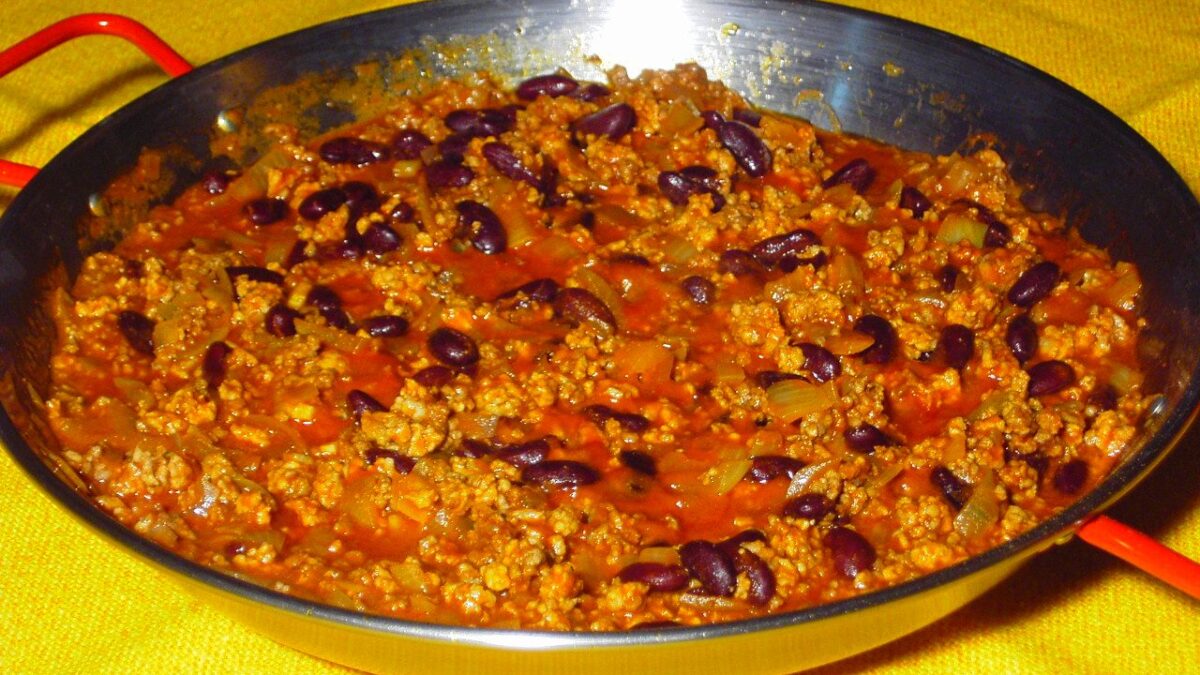
The chilli that taught me this recipe was a bad one. Eight people coming, three tablespoons of chilli powder tipped straight into a can of crushed tomatoes, forty minutes on the hob, and what came out tasted like spiced tomato soup with mince in it. Nobody said anything at the table. That’s usually how you know.
The fix took sixty seconds and cost nothing. The spices had never touched hot fat.
The pot that tasted like tomato soup
Chilli powder, cumin and paprika are mostly fat-soluble. Drop them into a wet, acidic pot of tomatoes and they sit there as a suspension of dust — you taste the raw, dry rasp of them and none of the toasty part underneath. Give them a minute in the beef fat first, at a heat where they sizzle faintly and the smell changes from dusty to nutty, and the same three tablespoons taste like twice as much.
That minute is the whole difference between the pot I ruined and the one I make now. I set a timer for it, honestly, because it’s easy to lose your nerve — the spices look like they’re catching when they’re not. Sixty seconds, stirring the whole time. If you go past ninety they will genuinely scorch and turn bitter, and there’s no rescuing that; you start again.
The second thing I got wrong that night was the beef. Two pounds of 80/20 mince crammed into one pot drops the pan temperature so far that the meat poaches in its own liquid. Grey, not brown. Now I brown it in two batches, and the second batch always browns faster because the pan is properly hot by then — a small tell that the first batch was fighting the pan the whole time.
The bottom of the pot after batch two should look alarming: dark brown, stuck-on, patchy. That’s the flavour. The broth lifts all of it in about fifteen seconds of scraping.
Ingredients
- 2 pounds ground beef — 80/20. Leaner mince gives you less fat to bloom the spices in, which is the one job the fat is here to do.
- 1 large onion, diced — about 1½ cups once chopped.
- 4 cloves garlic, minced
- 3 tablespoons chilli powder — the American-style blend, not pure ground cayenne. Smell the jar; if it smells of nothing, it’s older than a year and you’ll need more of it.
- 1 tablespoon ground cumin
- 1 teaspoon smoked paprika
- 1 teaspoon dried oregano
- 1 tablespoon tomato paste
- One 28-ounce can crushed tomatoes
- Two 15-ounce cans beans — one kidney, one pinto, drained and rinsed.
- 1 cup beef broth
- Salt and pepper — hold most of the salt back until the last twenty minutes.
Instructions
- Heat a heavy pot or Dutch oven over medium-high until a drop of water skitters. Add half the beef in a single layer and leave it completely alone for 3 minutes before you break it up. Cook another 3 to 4 minutes, then lift it out into a bowl and repeat with the second half.
- Pour off the rendered fat, leaving about 2 tablespoons in the pot. Add the onion and cook 5 minutes until it’s soft and just starting to gild at the edges.
- Add the garlic, chilli powder, cumin, smoked paprika and oregano. Stir constantly for 60 seconds. The smell will go from dry and dusty to warm and toasted — that’s the cue, and it’s the most important thing in this recipe.
- Stir in the tomato paste and cook another minute, until it darkens from bright red to brick.
- Return the beef and any juices. Pour in the crushed tomatoes and broth, and scrape the base of the pot hard with a wooden spoon until nothing is stuck.
- Bring to a bare boil, drop to low, add the drained beans and a teaspoon of salt. Simmer uncovered at a lazy blip — a bubble every second or two, not a rolling boil — for 90 minutes, stirring every 20 minutes or so.
- Taste at the 70-minute mark and again at the end. Salt is what most home chilli is short of, not spice. If it’s thicker than you want, splash in broth; if it’s loose, keep the lid off another 15 minutes.
- Off the heat, rest 10 minutes before serving. It thickens noticeably in that window.
Ninety minutes rather than the forty-five I used to do. The beans go from firm to collapsing-at-the-edges, and that starch is what makes the liquid cling to a spoon instead of running off it. There’s no shortcut for that; you can thicken with masa or cornflour, but it tastes like you thickened it.
Beans, and why I put them in
You’ll hear that real chilli has no beans. Texans in particular are firm about this, and they have history on their side — chilli con carne started as meat and chillies, full stop.
I still put beans in, and I’d defend it. This is a Tuesday pot for a household, not a competition entry. Beans stretch two pounds of beef across six or seven bowls, they thicken the sauce for free, and after two days in the fridge they’ve absorbed the spice better than the meat has. If that makes it a bean stew to a purist, fine.
What I won’t do is tip the bean liquid in. That thin, starchy brine tastes tinny and it flattens everything. Drain and rinse until the water runs clear.
What I’d change next time
Three things I’m still adjusting.
The chilli powder is the one to spend on. Supermarket own-brand at around a year old is doing about half the work of a fresh jar, and you can’t season your way out of stale spice. I now buy small tins and write the opening date on the lid in biro, which sounds fussy until you’ve made a flat pot of chilli for eight people.
I’ve started adding a square of dark chocolate — one 10g piece, 70% — in the last five minutes. Not enough to taste as chocolate. It rounds the acidity of the tinned tomatoes, which is otherwise the sharpest note in the bowl. Half the people I’ve served it to don’t notice; the other half ask what’s in it.
And I’d stop making it the same day I serve it. Chilli genuinely is better on day two, and that’s not folklore — the fat that separates overnight re-emulsifies when you reheat it gently, and the spices have had twelve more hours in liquid. If you’re feeding people on Saturday, cook it Friday, cool it fast and reheat over low heat with a splash of broth.
Serve it with a wedge of buttermilk cornbread for mopping, or spoon the leftovers straight over a tray of loaded beef nachos the next night — that’s what half my second-day chilli actually becomes. If the long-simmer approach appeals and you want it without the chilli heat, a proper beef stew uses the same browning-and-patience logic on chunks rather than mince. And the leftover fat trick works in reverse for a good cheeseburger: there, you want every bit of that 80/20 fat staying in the pan.