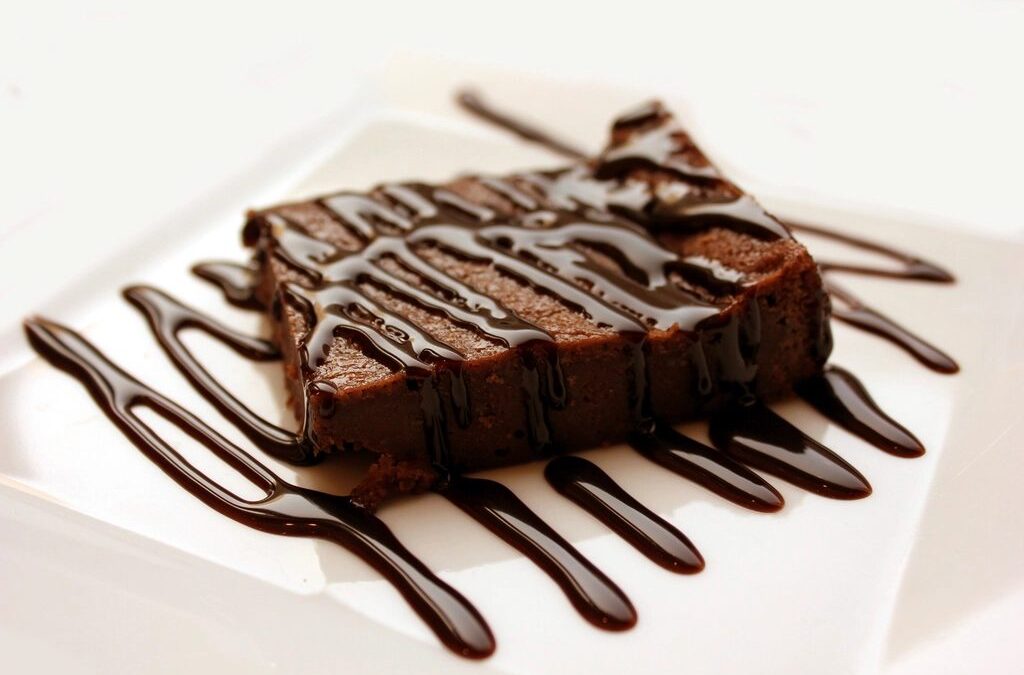
Fudgy or cakey is decided before the oven is even on, and one number decides it: fat against flour. Push the fat up and the flour down and you get fudgy. Reverse it and you’ve made chocolate cake in a square pan.
This recipe sits hard on the fudgy side. Around 170g of fat once you count the butter plus the cocoa butter inside the chopped chocolate, against 95g of flour. Call it 1.8 parts fat to 1 part flour. Cakey brownie recipes usually land near 1:1 and add baking powder to lift what little structure they’ve got. There’s no leavener here, deliberately.
Fat against flour is the whole argument
Flour builds structure. Fat interrupts it. Every gram of fat coats flour proteins and stops them linking up, so the more fat in the bowl, the less the crumb holds itself upright. That collapse is the whole point: a dense slab held together by set chocolate rather than gluten.
Which is why the folding at the end matters too. Thirty seconds of enthusiastic beating after the flour goes in will pull a fudgy batter measurably toward cakey. Streaks gone, spatula down.
Melted chocolate or cocoa powder
Cocoa powder is defatted, most brands sitting around 10 to 12 percent fat. Dark chocolate is roughly half cocoa butter. Swap the 6 oz of melted chocolate for cocoa gram for gram and you’ve just removed about 85g of fat from the bowl, which is exactly why cocoa-only brownies come out drier unless the recipe compensates with extra butter or oil.
This one uses both, and they’re doing different jobs. The melted chocolate supplies cocoa butter, which is solid at room temperature and gives that slightly cool, dense bite. The 1/4 cup of cocoa powder supplies colour and bitterness without adding any fat, so you get depth without a greasy batter. Take the cocoa out and they taste sweeter and look paler. Take the chocolate out and they’re cake.
Use 60 to 70 percent dark. Below about 55 percent there’s enough sugar in the bar already to make the tray cloying, and I’d rather decide the sugar myself. Lava cakes go all melted chocolate, no cocoa; chocolate cake leans the other way. You can taste which side of the line each sits on.
Ingredients
- 1/2 cup unsalted butter, melted
- 6 oz dark chocolate, chopped, 60 to 70 percent cocoa
- 1 cup granulated sugar
- 1/4 cup brown sugar
- 2 large eggs, plus 1 yolk, at room temperature
- 1 teaspoon vanilla extract
- 3/4 cup all-purpose flour, spooned and levelled
- 1/4 cup cocoa powder
- 1/2 teaspoon fine salt
- 1/2 cup chocolate chunks
Instructions
- Heat the oven to 350F (175C). Line an 8-inch square pan with parchment, leaving an overhang on two sides so you can lift the slab out later.
- Pour the melted butter over the chopped chocolate in a large bowl and stir until glossy and smooth, microwaving in 15-second bursts only if it stalls. Let it cool for three or four minutes so it won’t scramble the eggs.
- Add both sugars and whisk hard for a full minute. The mixture should go from grainy to thick and shiny.
- Whisk in the eggs, extra yolk and vanilla for another full minute, until the batter looks glossy and slightly lightened.
- Sift the flour, cocoa and salt over the top and fold with a spatula just until no dry streaks remain.
- Fold in the chocolate chunks, holding a few back to press onto the surface.
- Spread the batter level in the pan and bake 28 to 32 minutes, until a toothpick in the centre comes out with moist crumbs clinging to it.
- Cool completely in the pan, at least an hour, then lift out by the parchment and cut with a hot, dry knife.
The two minutes that decide the crackly top
That thin, shiny, tissue-paper crust is dissolved sugar. Nothing else. When sugar fully dissolves into warm fat and egg, some of it rises with the batter and sets as a meringue-thin sheet across the surface.
So the whisking isn’t a flourish, it’s the mechanism. One timed minute with the sugars in the warm chocolate and butter, one more after the eggs go in. Two minutes, arms tired, and you can watch the batter change from dull and sandy to thick and reflective. I skipped it once in a hurry and got a matte, powdery top. The brownies underneath tasted fine and looked like nobody had cared.
Then leave them alone. The centre is still liquid chocolate when the pan comes out and only sets as it cools, so cutting early gives a smear instead of a slab. An hour on the counter is the honest answer, twenty minutes out plus thirty in the fridge is the shortcut, and the knife goes under hot water and gets wiped dry between every cut. If an hour of waiting is too much, the marshmallow and cereal squares are cut and eaten in fifteen minutes.
Same fat-to-flour logic, incidentally, is why chocolate chip cookies spread wider the more butter you add, and why brown butter blondies turn cakey as soon as the flour creeps up.