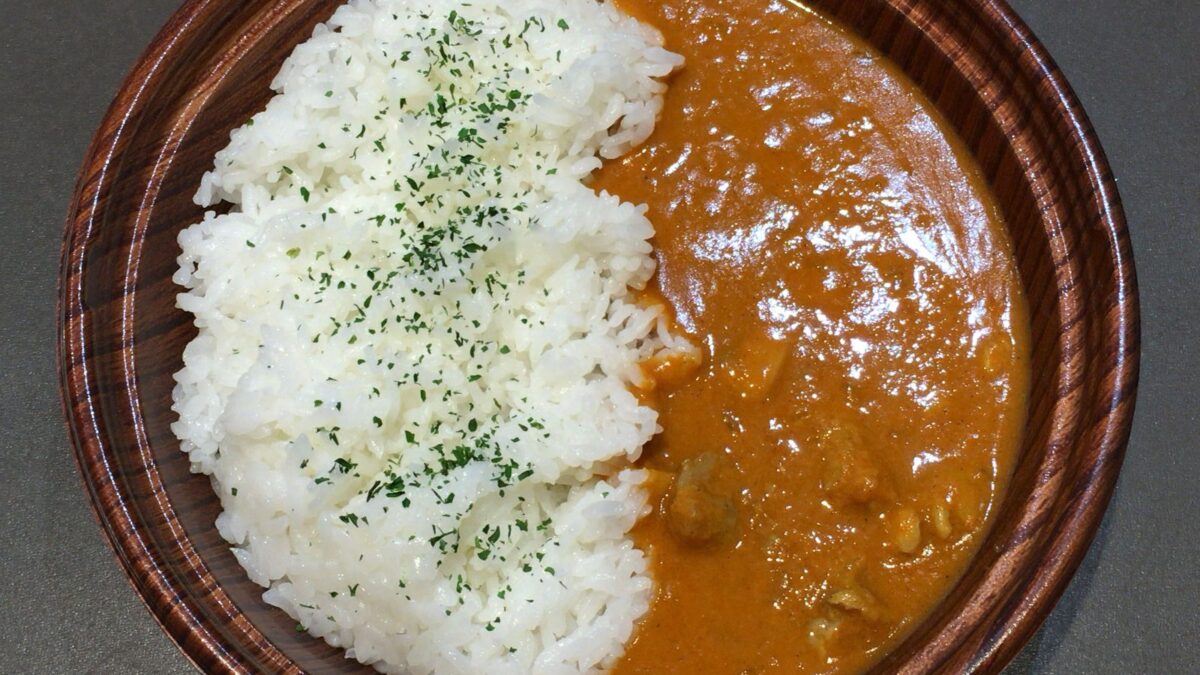
Butter chicken lives or dies on the tomato base, and almost every home version I’ve eaten (including my own, for about three years) fails at exactly the same point: the tomatoes go in and come out ten minutes later still tasting like tomatoes. Cream gets added to cover it. It doesn’t cover it.
What follows is the long version of a weeknight dish. The cooking is 45 minutes if the chicken is already marinating; the reason it’s worth reading past the ingredient list is that four specific steps carry nearly all of the flavour, and three of them are usually skipped.
Marinade: 4–6 hrs Prep: 20 mins Cook: 45 mins Serves: 4
A note on where the dish comes from
Murgh makhani is an Indian dish from Delhi, and the account cited most often credits the Moti Mahal restaurant around the middle of the twentieth century, the sauce built to use up leftover tandoori chicken. That’s the commonly repeated story rather than settled fact, and historians treat it with caution. I mention it because the leftover-tandoori detail is genuinely useful: the chicken is meant to be cooked hard and separately, then bathed in sauce, not poached in it.
It is also not the same dish as chicken tikka masala, which has a different origin story and usually a spicier, less butter-forward sauce.
Cooking the tomatoes until they stop tasting raw
Use a 14 oz (400 g) tin of whole peeled tomatoes, crushed by hand, rather than passata. Passata is thinner and gives up less concentrated flavour.
Into a hot pan with the onions, they’ll go loose and watery immediately. What you’re waiting for is a change you can see: the mass pulls away from the side of the pan when you drag a spoon through, the colour shifts from bright red toward brick, and small pools of orange fat separate out at the edges. In a 10-inch skillet over medium heat that takes 18 to 22 minutes, not 10. I set a timer now because I used to consistently call it early.
That separated fat is the signal. Before it appears, the sauce tastes acidic and thin. After it appears, it tastes round and slightly sweet, and it needs far less cream to feel rich.
Whole spices go into ghee, ground spices go in later
Start with 3 tbsp ghee over medium heat, and in it: a 2-inch cinnamon stick, 4 green cardamom pods cracked with the flat of a knife, 3 cloves, and 1 bay leaf. Give them 40 to 60 seconds. The cardamom will smell sharp and green, the cinnamon will start to curl, and that’s the moment to add the onion.
Ground spices burn in that same amount of time. They go in much later, after the onions have softened, and get 20 to 30 seconds of stirring before the tomatoes arrive to stop them cooking. If you smell anything bitter, the pan was too hot and it’s honestly faster to start again than to try to rescue it.
Ghee over butter for one reason: no milk solids, so nothing scorches at the 60-second mark.
Yogurt, acid, and a marinade time limit
1/2 cup thick whole-milk yogurt, 1 tbsp lemon juice, 1 tsp salt, 1 tsp Kashmiri chilli powder, 1/2 tsp turmeric, and the ginger-garlic paste. The acid does two jobs: it thins the yogurt enough to coat properly, and it starts breaking down surface protein so the chicken holds seasoning.
Four to six hours is the sweet spot in my fridge. I’ve left it overnight more than once and the edges go soft and slightly mealy, especially with breast meat. Yogurt and lemon together are more aggressive than either alone. Twenty minutes, the usual weeknight suggestion, does little beyond wetting the surface.
Ingredients
- 1.5 lb (700 g) boneless chicken thighs, cut into 1.5-inch pieces
- 1/2 cup (120 g) whole-milk yogurt, 1 tbsp lemon juice, 1 tsp salt
- 1 tbsp ginger-garlic paste (roughly a 1-inch knob and 4 cloves)
- 2 tsp Kashmiri chilli powder, divided, plus 1 tsp turmeric
- 3 tbsp ghee, plus 1 tbsp butter to finish
- Whole spices: 2-inch cinnamon, 4 green cardamom pods, 3 cloves, 1 bay leaf
- 1 large onion (200 g), diced small
- 1 tin (14 oz / 400 g) whole peeled tomatoes, crushed by hand
- 1 tsp ground cumin, 1 tsp ground coriander, 1 tsp garam masala (half early, half at the end)
- 15 raw cashews, soaked 20 minutes in hot water, or 1/2 cup heavy cream
- 1 tbsp kasoori methi (dried fenugreek leaves)
- 1 tsp sugar if the tomatoes are sharp, and salt to finish
Instructions
- Mix the marinade ingredients with the chicken and refrigerate 4 to 6 hours. Take it out 20 minutes before cooking.
- Cook the chicken hard and separately. Grill, broil at 240°C/465°F for 12 to 14 minutes turning once, or sear in a dry-ish very hot pan in two batches. You want charred edges. Set aside; it does not need to be fully cooked yet.
- Melt the ghee in a 10-inch skillet over medium. Add the whole spices, 40 to 60 seconds, until the cardamom smells green.
- Add the onion and a pinch of salt. Cook 8 to 10 minutes to soft gold, stirring often, scraping the pan.
- Add the cumin, coriander, remaining chilli powder, and 1/2 tsp of the garam masala. Stir 20 to 30 seconds.
- Add the crushed tomatoes. Simmer 18 to 22 minutes over medium, stirring every few minutes, until the mass pulls from the pan sides and fat separates at the edges.
- Fish out the cinnamon, bay, and cloves. Blend the sauce smooth with the soaked cashews (drained) and 1/2 cup water. An immersion blender takes about 90 seconds; a jug blender does it better.
- Return to low heat. Add the chicken and its juices and simmer gently 10 to 12 minutes, until the thickest piece reads 74°C/165°F on a thermometer. If you’re using cream instead of cashews, stir it in now, off the boil.
- Crush the kasoori methi between your palms directly over the pan. Add the last 1/2 tsp garam masala, the butter, sugar if needed, and salt. Rest 5 minutes off the heat before serving.
Cashews or cream, and what each actually does
They’re not interchangeable, whatever the substitution lists say.
Fifteen cashews, soaked and blended in, thicken by adding solids: the sauce holds a spoon-line, tastes faintly sweet, and doesn’t thin as it sits. Cream adds fat and softness but no body, so a cream-only sauce that looked right in the pan runs across the plate ten minutes later.
My preference, and it’s a preference some people will argue with: cashews for the body, then 2 tbsp of cream at the end for the colour. All cream tastes like a shortcut. I use the same reasoning about blended thickeners in a coconut curry lentil soup, where lentils do the structural work and the coconut milk is finishing.
If you’re dairy-free, cashews plus 1/4 cup coconut milk works, though the coconut is detectable and pushes the flavour somewhere closer to a Thai green curry.
Kasoori methi at the end, crushed between the palms
This is the ingredient that makes people ask what’s in it. Dried fenugreek leaves, slightly bitter, a bit like celery leaf crossed with maple. Without it the sauce is pleasant and anonymous.
Crush the tablespoon between your palms over the pan rather than dropping it in whole. The friction warms the leaves and breaks them down so they disperse instead of floating as flakes. Ten seconds of rubbing is enough. Do it in the last minute, heat off or nearly, because the aroma is volatile and boiling drives it out.
It’s sold in small boxes at any Indian grocer, about the price of a jar of dried oregano, and one box lasts a year of monthly curries.
Where mine still goes wrong
Two failures, both mine, both repeatable.
The first is under-charring the chicken because I don’t want to fill the kitchen with smoke. Sauce-poached chicken is soft and one-note, and the point of the dish is the contrast between burnt edges and smooth base. Open a window and let the broiler work.
The second is salting only at the end. A blended cashew sauce absorbs salt strangely, and by the time it tastes right in the pan it’s often flat on the plate next to plain rice. Salt the onions, salt the marinade, then taste again at the end alongside a spoonful of whatever you’re serving it with, not on its own.
Leftovers keep 4 days and thicken noticeably. Loosen with water, not cream, and if there’s not enough sauce left to go around, the chicken chopped small is very good folded through vegetable fried rice the following night.