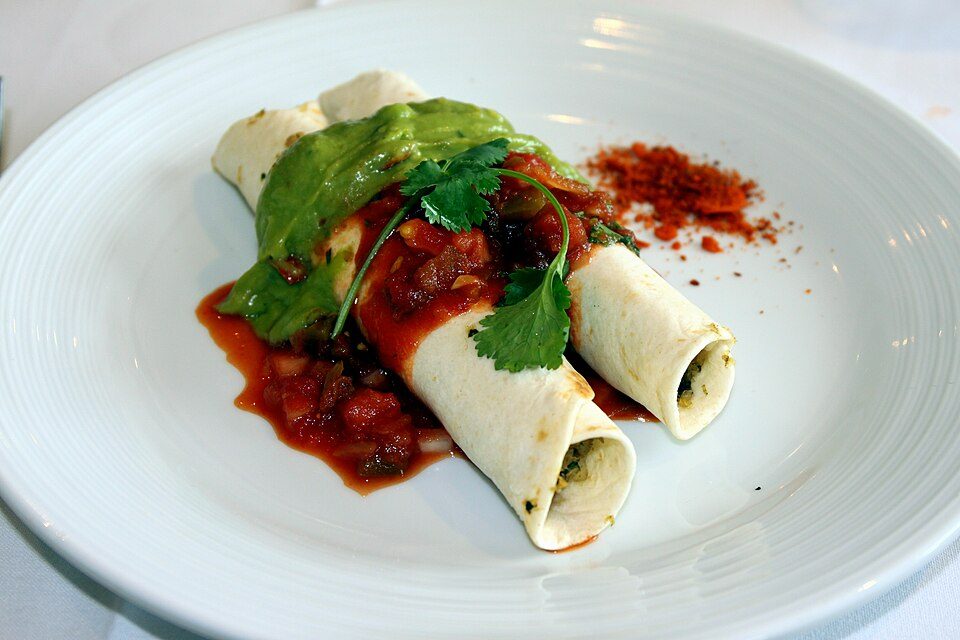
Nobody wonders what goes in a chicken enchilada. They wonder why the tortillas split, why the bottom went to mush, and how far ahead the tray can be built. So that’s how this one is organised.
Why do my tortillas fall apart when I roll them?
Because they’re cold. The masa is held together by starch that firms as it cools, and bending a fridge-cold tortilla splits it along the fold every time.
The fix takes thirty seconds: stack six or eight, wrap in a damp tea towel, microwave 30 to 45 seconds until the middle of the stack is warm. Then work fast, because they stiffen again within two or three minutes. I warm the second batch of six while rolling the first.
The other cause is over-filling. Roughly 1/3 cup of chicken is the limit for a 15cm corn tortilla; push it to half a cup and the roll won’t close.
Corn or flour — which should I actually use?
Corn, if you want them to taste like enchiladas. Corn tortillas have a toasted, faintly sweet flavour that the sauce is built to sit against. Flour tastes of wheat and goes noticeably blander under the same sauce.
Flour’s one real advantage is that it doesn’t crack, so it’s forgiving if you’re cooking for a crowd and don’t want to warm anything.
What it does badly is absorb. Corn takes on sauce and stays distinct; flour goes gummy, particularly the layer touching the dish. Using flour, cut the sauce slightly and don’t let the assembled tray stand more than about 15 minutes before baking.
Do I have to fry the tortillas first?
Traditionally yes, and the fried version is better. About 10 seconds per side in a shallow pan at 175°C (350°F) makes the tortilla pliable and waterproofs it, so sauce coats rather than soaks.
Do I do it? Usually not. Eight tortillas one at a time, with paper towels and splatter, is more work than a Wednesday deserves.
The middle option I’ve settled on: brush both sides lightly with oil, lay them on a baking sheet, and give them 3 minutes at 175°C (350°F) while the oven preheats. Flexible and lightly sealed, all eight at once, one sheet to wash.
Red sauce or green sauce?
Red is the chile-and-tomato sauce below: earthy, mild, the one most people picture. Green is tomatillo-based, sharper, and it suits chicken better than beef because the acidity balances the fat in the cheese.
Start with red if you’ve made neither. Pantry ingredients, ten minutes, and the roux base thickens predictably. Green needs tomatillos, which are seasonal, and it needs blending.
My mild heresy: sauce four rolls red and four green, bake them side by side in one dish. Better than either alone, and it looks like far more effort than it was.
Ingredients
- 8 small corn tortillas (flour also works, see above)
- 3 cups cooked shredded chicken
- 2 tablespoons vegetable oil
- 2 tablespoons all-purpose flour
- 2 tablespoons chili powder
- 1 teaspoon ground cumin
- 1/2 teaspoon garlic powder
- 2 cups chicken broth
- 1 can (8 oz) tomato sauce
- 1/2 teaspoon dried oregano
- 2 cups shredded cheddar or Monterey Jack cheese
- 1/2 teaspoon salt, plus more to taste
- Chopped cilantro and sliced green onion, to serve
Instructions
- Heat the oven to 190°C (375°F) and lightly grease a 9×13 baking dish.
- Warm the oil in a saucepan over medium heat, then whisk in the flour, chili powder, cumin, and garlic powder. Cook for a full minute, until it smells toasted rather than raw.
- Pour in the chicken broth slowly while whisking, then add the tomato sauce, oregano, and salt. Simmer 5 to 7 minutes until it coats a spoon thinly. Taste and adjust.
- Combine the shredded chicken with about 1/2 cup of the warm sauce and a handful of cheese, stirring until coated. This is what stops the filling drying out.
- Spread a thin layer of sauce across the bottom of the dish — just enough to film it, about 1/2 cup.
- Warm the tortillas (damp towel, 30 to 45 seconds in the microwave, or oiled on a sheet for 3 minutes in the heating oven).
- Fill each tortilla with about 1/3 cup of chicken, roll snugly, and lay seam-side down in the dish.
- Pour the remaining sauce over the top, covering the exposed ends completely so they don’t dry into hard tabs.
- Scatter the rest of the cheese over and bake 20 to 25 minutes, until bubbling at the edges and lightly golden on top.
- Rest 5 minutes before serving, then finish with cilantro and green onion. They lift out cleanly after resting and tear if you go straight in.
How much sauce is enough?
About 2.5 cups total for a tray of eight, which is what this recipe makes: 1/2 cup films the bottom, 1/2 cup goes into the chicken, 1.5 cups over the top.
The test after pouring is visual. No dry pale patches showing through, and a shallow pool at the edges maybe 3mm deep. Sauce halfway up the sides of the rolls is too much.
With corn tortillas I make a batch and a half, because they drink more than flour does, and keep the extra warm to spoon over plates.
Why is the bottom of my dish soggy?
Too much sauce underneath. Nearly always.
That bottom layer exists to stop the tortillas welding to the ceramic, not to cook them in. When I started making these I’d ladle a full cup down there thinking more sauce meant more flavour, and the bottom third of every enchilada came out as paste.
Two other contributors: wet filling, so drain shredded chicken properly if it’s been sitting in poaching liquid; and foil, which traps steam. Bake uncovered, and if the cheese browns too fast, tent foil loosely over the top rather than sealing it.
Can I assemble them the night before?
With one adjustment: assemble everything except the top sauce and the top cheese, cover, refrigerate. Pour and cheese it when you bake, straight from cold, with an extra 8 to 10 minutes on the clock.
Fully assembled overnight gives you tortillas that have sat in liquid for twelve hours. Soft, not inedible, but the line between roll and sauce is gone. Two hours ahead is fine. Overnight is not.
Can I freeze a tray of enchiladas?
Yes, and it’s one of the better freezer dishes because the sauce protects everything. Assemble in a foil tray without the top cheese, wrap in cling film then foil, freeze up to 3 months.
From frozen: 190°C (375°F), foil on, 50 to 60 minutes, then uncovered with the cheese for another 15. Thawed overnight: the normal 25 minutes plus about 10. Corn freezes better than flour here, which surprised me — the flour ones came out noticeably pastier.
Do I need to cook the chicken specially, and how hot should it be?
Any cooked chicken works, and a shop-bought rotisserie bird is the honest weeknight answer: one medium bird gives a bit more than the 3 cups you need, with the wings left for whoever’s standing in the kitchen.
Poaching it yourself, breasts in barely-simmering salted water take 15 to 18 minutes and are done at 74°C (165°F) at the thickest point. Thighs take about 20, shred better, and go stringy less readily. Cool them 10 minutes in the liquid before shredding, then drain well.
Either way the chicken is fully cooked before it goes in the tray, so the bake is only heating things through and melting cheese. No second temperature to hit.
For the table, classic guacamole is the one I always make alongside, because the cold fat cuts a hot cheesy tray better than sour cream does. If you’ve got sauce and chicken left over, both go straight into cheesy chicken quesadillas the following day. And if the rolling puts you off entirely, chicken fajitas get you to a similar place with a fraction of the assembly, while classic beef burrito is the version to make when you want it in the hand rather than on a plate.