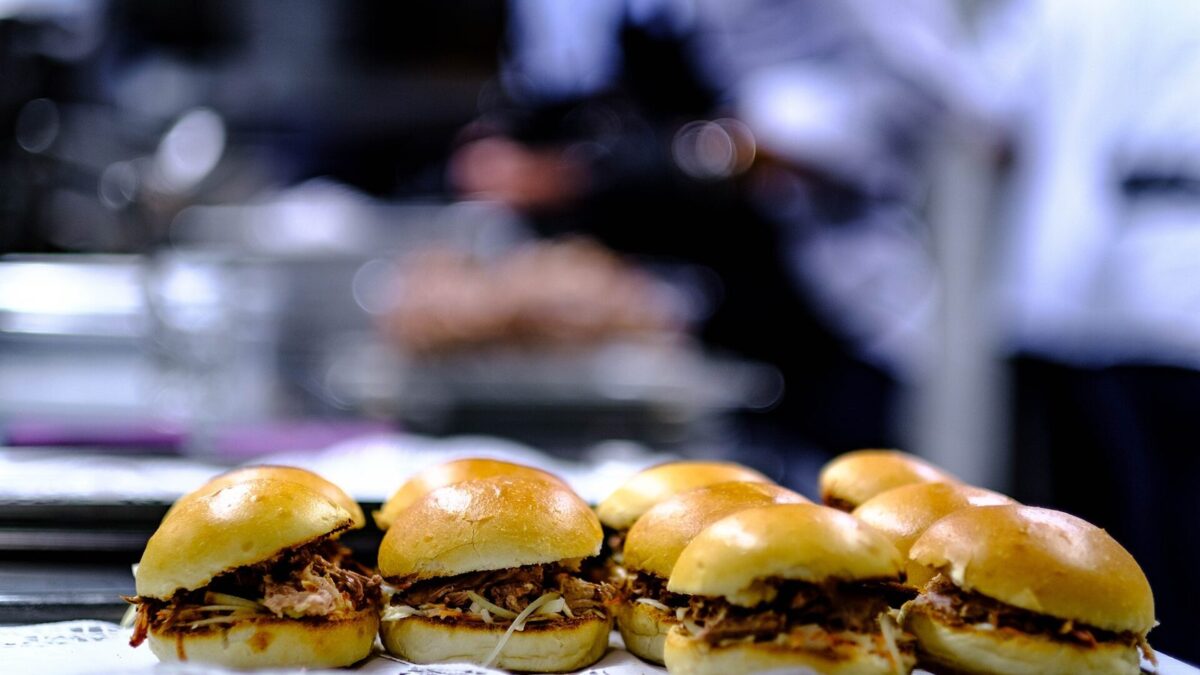
Same 4 lb pork shoulder, same rub, three different machines. I’ve cooked this cut every way my kitchen allows and the honest answer is that one method wins on flavour, one wins on effort, and one wins on speed — and they’re not the same method.
Oven, slow cooker, or pressure cooker
Pork shoulder is a working muscle laced with collagen and fat. To pull apart it has to be held above about 71°C long enough for that collagen to turn to gelatin, which is a function of time as much as temperature. Every method below achieves that. Where they differ is what happens to the outside.
Oven, low and slow
300°F / 150°C, uncovered for the first three hours, then covered until it’s done. Around 5 to 6 hours total for 4 lb.
This is the winner, and it’s not close on flavour. Dry oven air lets the surface dehydrate and the rub caramelise into an actual bark — a dark, slightly chewy crust that you chop through the shredded meat. Nothing else on this list produces bark, because bark needs evaporation and the other two methods are sealed.
The cost is attention. You want the fat cap facing up, a rack so the pork isn’t sitting in its own liquid, and the broth in the tray below rather than poured over the top. I check it twice and otherwise leave it alone. The kitchen smells extraordinary from about hour three, which is either a feature or a five-hour torture depending on how hungry you are.
The slow cooker
Low for 8 hours. Tender, reliable, and the method I use most on weekdays because you can start it at 8am and forget it.
The meat is genuinely excellent. The problem is that a slow cooker is a sealed, humid box: the rub dissolves into the liquid within the first hour and what you get is uniformly moist, uniformly seasoned pork with no crust anywhere. It also throws off far more liquid than you’d expect — often 2 cups by the end, mostly rendered fat.
Partial fix that I now do every time: after shredding, spread the pork on a baking tray, spoon over some sauce, and put it under a hot grill for 6 to 8 minutes until the edges catch. It’s not bark, but it’s texture, and it takes the slow cooker version from good to nearly-there.
Pressure cooker, for when the day got away
High pressure, 75 minutes for 4 lb cut into 4 chunks, then a natural release of at least 15 minutes.
It works. Collagen converts fast under pressure, and you’ll get shreddable pork in a quarter of the time. Cut the shoulder into fist-sized pieces or the centre won’t get there.
Two honest drawbacks. The meat has a slightly looser, wetter texture — the fibres separate more readily, so it goes to mush if you over-shred it. And a fast pressure release will visibly dry the meat out, because the sudden drop flashes moisture out of the fibres. Let it come down on its own.
Side by side
| Method | Time (4 lb) | Bark | Texture |
|---|---|---|---|
| Oven, 150°C | 5-6 hours | Yes, proper | Distinct strands, some chew |
| Slow cooker, low | 8 hours | None | Very tender, uniform |
| Pressure cooker | 75 min + 15 min release | None | Soft, shreds almost too easily |
If you’re cooking for people and it matters, use the oven. If it’s a Wednesday, use the slow cooker and finish it under the grill. The pressure cooker is the one I reach for when I’ve forgotten to start anything and there are four hours until dinner rather than nine.
Why 96°C and not 71°C
Pork is safe to eat at 63°C. Pulled pork is nowhere near ready at 63°C, and this trips up more people than any other part of the recipe.
You’re aiming for 90-96°C / 195-205°F in the thickest part. That’s above boiling point for water at the surface, and it needs to be, because collagen only breaks down into gelatin at a meaningful rate above roughly 71°C, and it needs hours in that zone. Pull the pork at 77°C and it will be technically cooked, perfectly safe, and about as shreddable as a car tyre. I’ve done it, once, in front of guests.
Expect a stall. Somewhere between 65°C and 75°C the internal temperature will sit still for an hour or more while surface evaporation cools the meat as fast as the oven heats it. Nothing is wrong. Wrapping the tray in foil at that point pushes through it faster, at the cost of softening the bark you’ve built — a trade I usually take at the three-hour mark.
Better than any number: a skewer pushed into the thickest part should meet no resistance at all, like going into a jar of peanut butter. If it drags, give it another 45 minutes.
Ingredients
- 4 lb pork shoulder (Boston butt) — bone-in if you can, it’s more forgiving.
- 2 tablespoons brown sugar
- 1 tablespoon smoked paprika
- 1 tablespoon salt — this works out at roughly ¾ teaspoon per pound, which is about right for a rub.
- 2 teaspoons garlic powder
- 2 teaspoons onion powder
- 1 teaspoon black pepper
- 1 teaspoon ground cumin
- 1 cup chicken or beef broth
- 1½ cups barbecue sauce — plus extra for the table.
- 8 soft burger buns — brioche or potato rolls.
- 2 cups coleslaw — optional but I’d argue not really.
Instructions
- Mix the brown sugar, smoked paprika, salt, garlic powder, onion powder, pepper and cumin. Pat the pork completely dry and press the rub into every surface, including the underside. Refrigerate uncovered overnight if you can — the surface dries out, which helps the bark.
- For the oven: heat to 300°F / 150°C. Set the pork fat-side up on a rack in a roasting tray and pour the broth into the tray beneath it, not over the meat.
- Roast uncovered for 3 hours. The surface should be dark and dry-looking by now.
- Cover the tray tightly with foil and continue for another 2 to 3 hours, until a probe in the thickest part reads 90-96°C / 195-205°F and a skewer slides in with no resistance.
- Slow cooker instead: rub as above, set the pork in the pot, add the broth around the base, cook on low for 8 hours. Pressure cooker: cut into 4 chunks, add the broth, 75 minutes on high pressure, then natural release for 15 minutes minimum.
- Rest the pork on a board, loosely tented, for 20 minutes. Skim the fat off the tray juices and keep the dark liquid underneath.
- Shred with two forks, pulling with the grain into strands rather than chopping across it. Discard the big seams of fat but keep the soft, jellied bits. Moisten with 3 or 4 tablespoons of the reserved juices.
- Stir in the barbecue sauce a half-cup at a time, tasting as you go. Pile onto toasted buns, top with coleslaw, and serve with extra sauce on the side.
Sauce, slaw, and the bun problem
Sauce the meat lightly and put the rest on the table. Pork you’ve spent six hours on shouldn’t taste primarily of a bottle, and 1½ cups across 4 lb is already generous — I often use a cup.
Toast the cut faces of the buns in a dry pan for 30 seconds. Untoasted bread turns to paste against hot, wet pork within about two minutes, and a soggy base is the most common way a good sandwich fails on the plate. This is also why the slaw goes on top of the meat rather than under it.
A sharp, creamy coleslaw is doing real work here — acid and crunch against fat and sugar — and I’d make it an hour ahead so it’s properly cold. On the side, buttermilk biscuits mop up the juices that escape. If you want the same smoke-and-sugar treatment on a faster cut, sticky pork ribs get there in about half the time, and slow cooker pot roast uses the identical collagen logic on beef if you want to see the principle transfer.