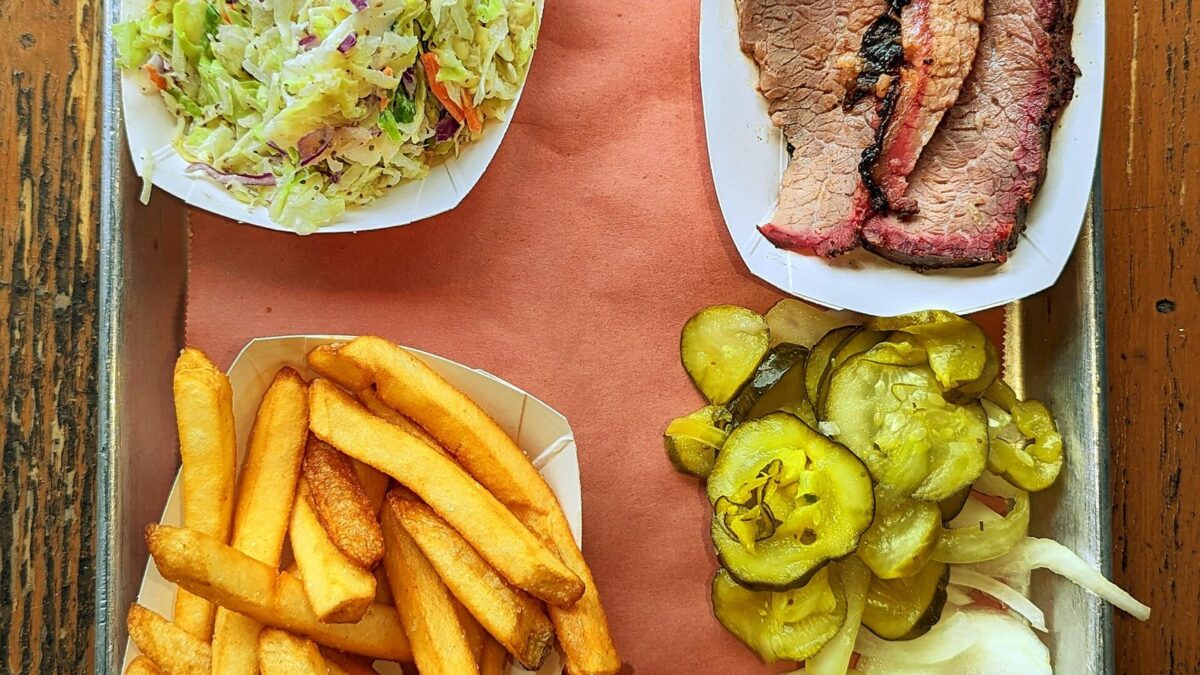
Coleslaw is easy to make and easy to make badly, and almost every failure comes down to water. Cabbage is around 92% water, the dressing is mostly fat and acid, and the two are in a slow argument from the moment they meet. Everything below is really about managing that.
Why does mine go watery?
Because salt in the dressing pulls water out of the cabbage cells, and that water has nowhere to go except into the dressing that made it happen. Half an hour is fine. Three hours in and you’ve got a puddle at the bottom of the bowl with grey shreds floating in it.
There’s a second cause people miss: shredding too far ahead. Cut cabbage sitting in a bag overnight sweats on its own before any dressing gets near it. If you shred in advance, keep it in a container lined with kitchen paper.
Should I salt the cabbage first?
Yes, if you have 30 minutes. It’s the single biggest improvement you can make to this recipe.
A teaspoon of salt tossed through the shredded cabbage in a colander pulls out a surprising amount of liquid. The first time I bothered to catch it in a bowl underneath it was close to a third of a cup from one small head, which is a third of a cup that would otherwise have thinned the dressing. The strands also stay crunchier, because losing some water makes the cell walls more flexible rather than more brittle.
Rinse briefly afterwards and press dry in a tea towel, then hold back a little salt from the dressing since some stays behind.
The honest exception: if you’re serving it within 20 minutes of making it, skip it. Undressed time is what does the damage, and there won’t be any.
Ingredients
- 1 small head green cabbage, about 6 cups shredded
- 2 cups red cabbage, shredded, for color and crunch
- 2 medium carrots, grated
- 1/2 cup mayonnaise, full-fat
- 2 tablespoons sour cream, or more mayonnaise
- 2 tablespoons apple cider vinegar
- 1 tablespoon Dijon mustard
- 1 tablespoon sugar, or honey
- 1/2 teaspoon celery seed (optional but classic)
- 1/2 teaspoon salt, plus more to taste
- 1/4 teaspoon black pepper
Instructions
- Quarter the cabbages and cut out the core. Shred as finely as you like with a sharp knife, a mandoline, or the shredding disc of a food processor. About 2mm wide is my preference: fine enough to eat with a fork, thick enough to still crunch after an hour.
- Toss the shredded cabbage with 1 teaspoon of salt and leave it in a colander over a bowl for 20 to 30 minutes. Rinse under cold water and press dry in a clean tea towel.
- Grate the carrots on the coarse side of a box grater and combine with the drained cabbage in a large bowl.
- In a separate bowl, whisk the mayonnaise, sour cream, apple cider vinegar, Dijon, sugar, celery seed, the 1/2 teaspoon salt and the pepper until smooth.
- Taste the dressing on its own. It should be sharper and saltier than you’d want to eat by the spoonful, because 8 cups of cabbage will mute it considerably.
- Pour about three-quarters of the dressing over the vegetables and toss until every strand is lightly coated. Use your hands, which is faster and gentler than tongs.
- Add the rest only if it looks dry. It loosens as it sits, and there’s no way back from too much.
- Cover and refrigerate at least 30 minutes so the flavors settle, and no more than 4 hours if you want it at its best.
- Toss again just before serving and taste. A splash of vinegar wakes it up if it’s gone soft and sweet in the fridge.
Mayo alone, or mayo and buttermilk?
Straight mayonnaise gives you the thick, clinging, picnic-table slaw most people picture. It holds up longest and it’s the right choice sitting outdoors next to pulled pork sandwiches.
Swap the sour cream for 3 tablespoons of buttermilk and you get something looser and tangier that coats rather than clings. Lighter, and better with fried food, because the acid cuts fat in a way thick mayonnaise doesn’t. It also goes watery faster, so make it within an hour of serving.
I’d pick buttermilk with fried chicken or fried catfish, and straight mayonnaise for everything else. If you want the tang without the thinning, keep the mayonnaise and add an extra teaspoon of vinegar instead.
How far ahead can I make it?
Four hours is the ceiling for dressed slaw and 1 to 2 hours is the sweet spot. Under 30 minutes and the dressing tastes like it’s sitting on top of the cabbage rather than part of it.
For a party, do it in two stages. Shred the cabbage and carrot the day before and keep it sealed in the fridge. Whisk the dressing at the same time and store it separately, where it’ll be good for 3 days. Combine 45 minutes before people eat. That’s about 4 minutes of work on the day, and it’s the only way I make slaw for a crowd now.
Green cabbage, red cabbage, or a bagged mix?
Green cabbage is the backbone: sweet, mild, and it holds its crunch longer than the alternatives. Red cabbage is firmer and slightly peppery, and it’s mainly there for the look, though it bleeds. If you shred it and let it sit in the dressing for more than an hour, expect a pink slaw. Adding it just before serving keeps the stripes.
Savoy is worth a try if you see it. Crinkled leaves catch more dressing, but it collapses within the hour.
Bagged mix is fine and I use it on weeknights without apology. Two caveats: it’s cut thicker than I’d cut by hand, and it’s been sitting in its own moisture since packing, so pat it dry even if it looks fine. Skip the salting step with bagged mix, since further salting takes it limp.
How long does it keep once it’s dressed?
Three days in the fridge, sealed, and it’s a different dish by day two. Softer, more pickled, the crunch mostly gone. Not bad, just not the same thing, and it’s genuinely good stuffed into a sandwich where you wanted something soft anyway.
Pour off the liquid that’s collected before you serve leftovers, and refresh with a teaspoon of vinegar and a spoonful of mayonnaise. Don’t freeze it. Mayonnaise splits and cabbage cell walls burst, and what thaws out is unusable.
Why does mine taste like dessert?
Because most supermarket coleslaw is sweetened heavily and that’s the baseline people have calibrated against. A tablespoon of sugar across 8 cups of cabbage, which is what this recipe uses, is deliberately restrained.
Cabbage brings its own sweetness, and carrot brings more, so the sugar is there to balance the vinegar rather than to be tasted. If yours reads sweet, the fix is usually more acid rather than less sugar: another teaspoon of vinegar, or a squeeze of lemon at the end.
The other adjustment worth knowing is salt. Under-salted slaw tastes sweet and slightly cloying even when the sugar is correct, which sends people looking for the wrong lever. Add a pinch, toss, taste again, and you’ll often find the sweetness problem was never sugar at all. If you want a side dish with no sweetness in it whatsoever, a three bean salad covers the same slot on the plate.