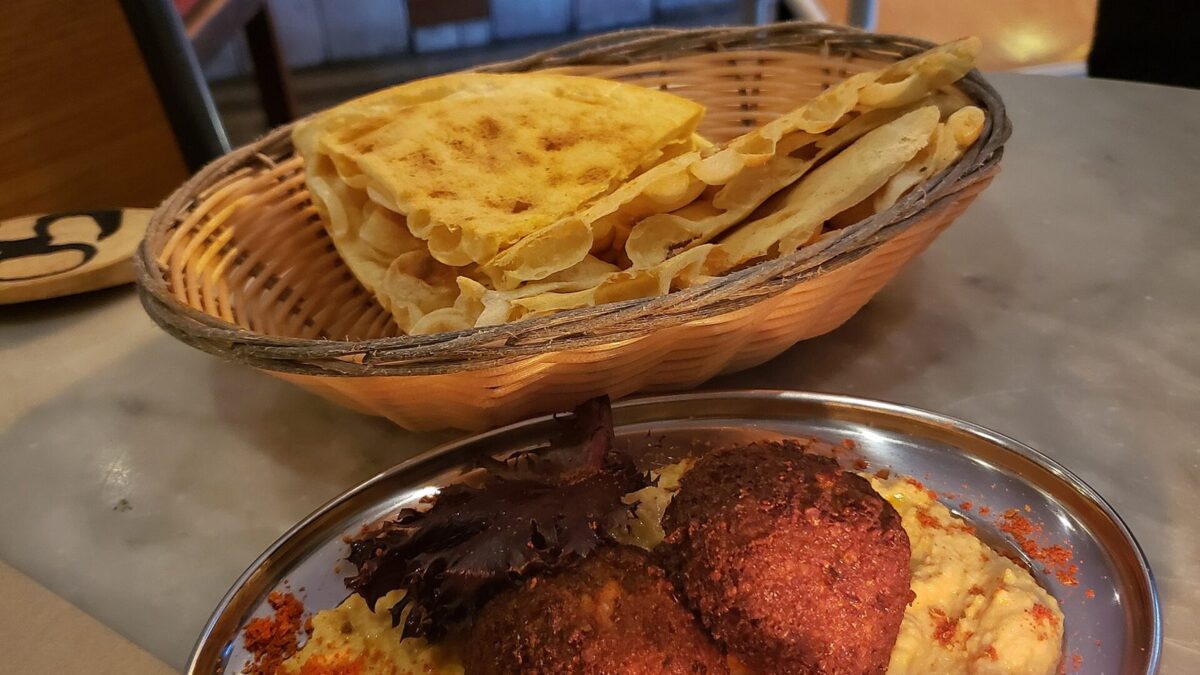
My first dozen batches of hummus were grainy. Edible, and people finished them, but you could feel chickpea skins on the roof of your mouth like fine sand, and no amount of extra olive oil covered it up.
The batch that finally broke the pattern was an accident. I had chickpeas simmering, a phone call ran long, and I came back to find them slumped and splitting, skins drifting loose on the surface like wet tissue paper. I’d tipped in a quarter teaspoon of baking soda earlier without much conviction. Eleven or twelve minutes of that and they were softer than any chickpea I’d cooked on purpose.
I drained them half expecting mush. What came out of the food processor twenty minutes later was pale, glossy, thick enough to hold a spoon swirl, and properly smooth. First time in about three years of trying.
So I’ve written this in the order I actually learned it, rather than the order hummus recipes usually get printed.
The afternoon I peeled every chickpea by hand
Before the baking soda, I tried brute force. One 15 oz can, drained, and I sat at the kitchen table pinching skins off one chickpea at a time with a podcast on. Somewhere past three hundred chickpeas and roughly twenty-five minutes in, my thumbnail hurt and I had a small pale mound in a bowl.
Was it better? Yes, clearly. That was the smoothest hummus I’d made to that point.
Would I do it again? No. Ten minutes of simmering with baking soda gets you most of the same result while you do something else in the kitchen. The alkaline water softens the pulses from the inside and loosens the skins so they slip off on their own during the rinse; you’ll see a scum of them float up and you can pour most away. What’s left is soft enough that the blender stops noticing.
The one case where peeling still wins: if you’re serving hummus completely plain, in a shallow bowl, with nothing but oil on top and good bread. Then it’s the whole dish and the texture is all anyone’s judging. For a mezze spread next to smoky baba ganoush and warm flatbread, nobody will notice, and you’ll have your afternoon back.
Ingredients
- 1 can (15 oz) chickpeas, drained and rinsed, or 1.5 cups cooked
- 1/3 cup tahini, well stirred; the quality of this jar decides how the hummus tastes
- 1 large lemon, juiced (about 1/4 cup)
- 1 small clove garlic, or more to taste
- 2 tablespoons olive oil, plus more for drizzling
- 1/2 teaspoon ground cumin
- 1/2 teaspoon salt, adjusted to taste
- 2 to 4 tablespoons ice water, to loosen and lighten the texture
- 1/4 teaspoon baking soda (optional, for simmering the chickpeas)
- Paprika, extra olive oil, and parsley, to finish
Instructions
- Put the drained chickpeas in a small saucepan, cover with water by an inch, add the baking soda, and simmer for 10 minutes. The skins will loosen and some will float. Drain and rinse under cold water, pouring off the loose skins. Optional on paper, and the single biggest upgrade in practice.
- Blend the lemon juice and garlic together in the food processor for about 20 seconds. Letting raw garlic sit in acid for a minute takes the harsh edge off it, which matters because there’s nothing cooked in this bowl to hide behind.
- Add the tahini and run the machine for 30 seconds, scraping the sides down once. It’ll seize up, go pale, and thicken. That’s correct, keep going.
- With the processor running, pour in 2 tablespoons of ice water. The paste loosens and lightens almost instantly.
- Add the chickpeas, olive oil, cumin, and salt. Blend for a full 2 to 3 minutes. Set a timer, because everyone stops early. This long blend is the difference between silky and pasty.
- Check the texture. Too thick, add ice water a tablespoon at a time, blending between each. You’re after something that slumps slowly off a spoon rather than dropping.
- Taste and adjust. Hummus almost always wants more salt and more lemon than you think, and it tastes flatter cold than it does at room temperature, so season accordingly.
- Spoon into a shallow bowl and drag the back of the spoon through it in a spiral to make a channel. Pour olive oil into the channel, dust with paprika, scatter parsley over.
- Serve straight away, or chill and take it out 20 minutes before eating.
The four levers, ranked by how much they matter
1. Blend time
This is the free one and the one people skip. Thirty seconds of blending gives you chickpea paste. Two and a half minutes gives you hummus. The machine gets warm, the mixture climbs the sides and needs scraping down twice, and the colour shifts visibly paler as air works in. If your food processor is small, do it anyway and just accept the noise.
2. Tahini
A third of a cup of tahini in a batch this size is a lot of one ingredient, and a bitter jar makes bitter hummus that no lemon will save. Taste it off the spoon before it goes in. Good tahini is loose enough to pour, tastes nutty and slightly sweet, and separates in the jar so you have to stir it properly, which takes a solid minute with a butter knife. Ones that have sat on a shelf for two years turn sharp and chalky.
3. Baking soda in the cook water
A quarter teaspoon in a small pan is plenty. More than that and you start tasting soap. Ten minutes at a bare simmer is the sweet spot; at fifteen the chickpeas begin falling apart, which doesn’t ruin anything but does make them harder to rinse.
4. Ice water
Cold water, not room temperature, poured in while the blades are turning. It thins the tahini emulsion and whips air in at the same time. Two tablespoons is my standard, three if the chickpeas were on the dry side. Hummus also firms up in the fridge, so leave it a touch looser than you want it.
What I’d change next time
I’d cook the chickpeas from dry. I’ve said the canned route works, and it does, but the two batches I made from dried chickpeas soaked overnight and simmered with the baking soda were better than any tinned batch, and the cooking liquid was worth keeping. A splash of that starchy water in place of the ice water gives a slightly fuller texture. It’s a four-hour job spread across two days for a twenty-minute payoff, which is exactly why I don’t do it most weeks.
I’d also stop under-salting. Every time I take hummus to someone’s house I taste it at the stove, decide it’s fine, and then find myself adding flaky salt on top at the table. Half a teaspoon is a starting point, not a finish line.
And if you end up with more than you can eat plain, don’t just leave it in the tub. It goes into a falafel wrap better than any shop dressing, it holds the base of a roasted red pepper and chickpea bowl together, and thinned with an extra spoon of lemon juice and water it becomes a salad dressing. The only place it doesn’t belong is next to guacamole on the same cracker, which I have tested, so you don’t have to.