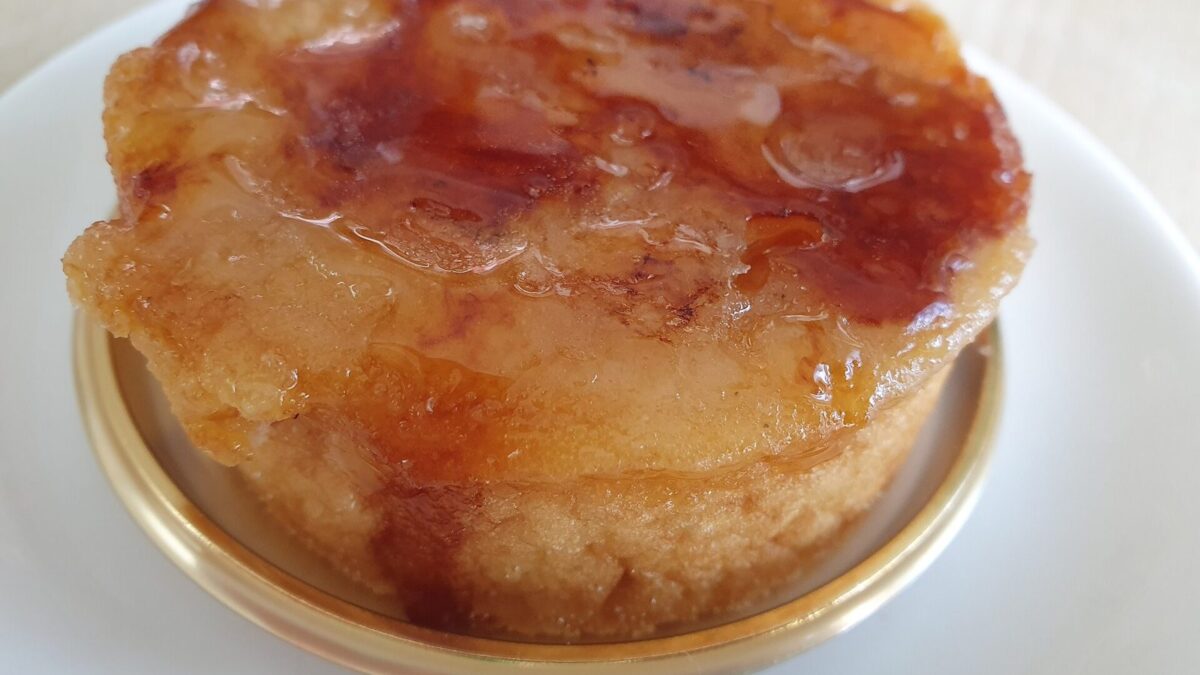
Almost everything that ruins a crème brûlée happens in a window of about four minutes, and none of it is visible until you’ve already chilled the things for four hours. So before the recipe, here is what actually goes wrong, in the order it tends to bite.
Prep: 15 mins Bake: 35–40 mins Chill: 4 hrs Serves: 4
Where It Actually Goes Wrong
The custard scrambles as you pour the cream in
Egg yolk proteins begin to coagulate around 149°F. Cream heated to a bare steam is somewhere near 175°F. Dump it in and the yolks it touches first cook instantly into threads.
The fix is tempering, done properly: pour in a thin stream no thicker than a pencil, whisking the whole time, and put the first quarter-cup in slowly enough that it takes fifteen seconds. Once a third of the cream is in, the bowl is warm enough that you can add the rest at speed. Then strain regardless. A fine sieve catches the threads you didn’t notice, plus the chalazae, which never dissolve.
It never sets
Five yolks to two cups of cream is the ratio, and if it comes out soupy after four hours in the fridge the bake was short, not the ratio wrong. A 4-ounce ramekin about 1 1/4 inches deep needs 35 to 40 minutes at 325°F. A wide, shallow 6-ounce dish can be done at 25.
Judge it by the wobble, not the clock. Tap the side of the ramekin. The whole surface should move as one piece, like set jelly, with the centre inch moving slightly more. If it ripples in concentric rings, it’s liquid underneath.
It weeps a thin liquid in the fridge
That’s overbaking, the opposite problem, and it’s the one people misdiagnose most. Past about 180°F the egg proteins contract and squeeze water out of the gel. You get a custard that’s simultaneously firm and wet, with a puddle around the edge.
There’s no rescue once it’s happened. Prevent it by pulling the ramekins at 170 to 175°F in the centre if you have an instant-read thermometer with a thin probe, and remember they carry on cooking for another two or three minutes out of the oven.
The sugar won’t caramelise, or it burns in one spot
Usually too much sugar. One and a half teaspoons per 4-ounce ramekin, tipped in and then tilted around until the surface is coated and the excess tapped off, is the right amount. A thick layer insulates itself: the top melts, the bottom stays granular, and you get a chewy sheet instead of glass.
Burning in one spot is a torch held too close and still. Keep the flame tip about two inches off the sugar and keep it moving in small circles. Work the outer ring first, because the ramekin rim conducts heat away and that edge always lags.
Also: the custard must be cold. Torching a room-temperature custard melts the top eighth-inch back into liquid.
Water gets into the ramekins
Pour the hot water into the roasting tin after it’s on the oven shelf, not before you carry it. I’ve slopped a bain-marie across a kitchen floor once and into three of four custards twice, which is the more annoying outcome. A folded tea towel in the base stops the ramekins sliding and insulates their bases from the hot metal.
The Number That Settles It: 170°F in the Centre
This dessert has a target temperature and a hard ceiling, and they’re about ten degrees apart. Set at 170 to 175°F. Weeping starts near 180°F.
Everything else in the method exists to slow the climb through that narrow band so you can catch it. The water bath caps how fast the outside heats. The 325°F oven keeps the air gentle. The shallow ramekin means centre and edge arrive close together. Start checking at 30 minutes even if the recipe says 40; ovens run hot by 15 to 25°F more often than they run cool, and mine does.
Ingredients
- 2 cups heavy cream.
- 1 vanilla bean, split and scraped, or 2 teaspoons vanilla extract.
- 5 large egg yolks, at room temperature.
- 1/2 cup granulated sugar, for the custard.
- 1 pinch salt.
- 6 teaspoons granulated sugar, for the tops.
- Boiling water, for the bain-marie.
Instructions
- Heat the oven to 325°F. Put the cream, the scraped vanilla seeds and the empty pod in a saucepan and warm over medium heat until it steams and shows a ring of small bubbles at the edge. Take it off and steep 10 minutes.
- Whisk the yolks, the half cup of sugar and the salt until pale and thick enough to leave a brief ribbon.
- Temper: add the warm cream in a thin stream, whisking constantly, taking the first quarter-cup over about fifteen seconds. Stir in the extract now if you’re using it.
- Strain through a fine sieve into a jug. Skim off any foam with a spoon, or you’ll bake bubbles into the surface.
- Set four 4-ounce ramekins in a roasting tin lined with a folded tea towel. Divide the custard between them, leaving about 1/4 inch clear at the top.
- Slide the tin onto the middle shelf, then pour boiling water into the tin until it comes halfway up the ramekins.
- Bake 35 to 40 minutes. They’re ready when the surface moves as one set piece and the centre inch wobbles slightly, or at 170°F on a thermometer.
- Lift the ramekins out with tongs, cool on a rack to room temperature, then chill uncovered for an hour before covering. At least 4 hours total, and overnight is better.
- Just before serving, blot the surface dry with kitchen paper, add 1 1/2 teaspoons sugar per ramekin, tilt to coat, tap off the excess, and torch until the sugar goes from grainy to molten to a deep amber.
Torch, Broiler, or Neither
A small butane torch is the honest answer and costs less than a decent saucepan. It gives you a shell you can crack with the back of a spoon and a custard that’s still cold underneath.
The broiler works, with a cost. Ramekins go on the top shelf, two to three inches from the element, for 90 seconds to 3 minutes, and you do not look away. You lose the temperature contrast, because the top half-inch of custard warms through. Sit the ramekins in a tray of ice while they’re under the grill and you recover most of it.
Without either, don’t try to caramelise sugar on top at all. Panna cotta sets on gelatine rather than egg and needs no oven.
Ramekin Depth Changes the Bake Time More Than Anything Else
This is the variable recipes never account for, because they assume you own the same dishes they do.
Depth drives it, not volume. Two ramekins can both hold 4 ounces, one squat and wide, one tall and narrow, and the narrow one needs 12 to 15 minutes longer because the heat has further to travel. The wide one also gives more surface per portion, which means more caramel per spoonful. If you’re using a dish you haven’t baked custard in before, check at 25 minutes and then every 5.
Making Them Two Days Ahead Without the Top Going Sticky
Baked, un-torched custards hold three days covered in the fridge and taste better on day two, once the vanilla has spread evenly through the cream.
The sticky-top problem is condensation. Cover them warm and water collects on the underside of the cling film and drips back. Chill uncovered for the first hour, then press cling film against the rim rather than the custard surface.
Torch within twenty minutes of serving. The caramel shell draws moisture from the custard immediately and turns from glass to toffee in about an hour, then to syrup.
Leftover egg whites keep a week in the fridge and freeze for three months. Mine usually become the meringue on lemon meringue pie, though a spoonful whipped in is also how the lightest version of tiramisu cups gets its texture. For a set-cream dessert that needs no torch and no bath, banana pudding is the one I fall back on when the oven is full.