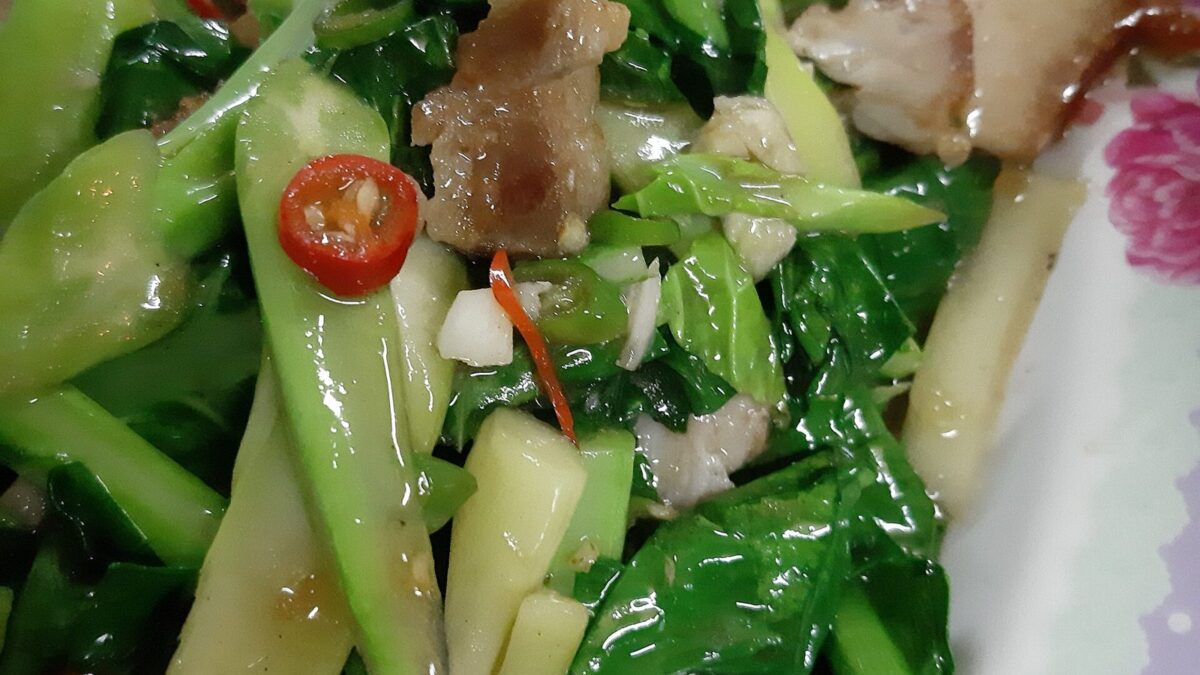
A stir-fry that tastes like takeaway isn’t about heat alone. I cooked mine on the highest ring I had for about two years and still ended up with a puddle in the bottom of the pan and broccoli that was raw at the stalk and floppy at the tip.
What fixed it was four separate things: a sauce built to a ratio instead of by eye, vegetables going in on a schedule, hard vegetables blanched before they ever meet oil, and garlic added near the end rather than the start.
If you want the fast version, my classic vegetable stir-fry covers pan heat and not crowding, and it’s honestly all you need on a Tuesday. This one is for when that stopped being enough.
Prep: 20 mins Cook: 8 mins Serves: 4
Building a sauce that actually clings
Most home stir-fry sauces are soy sauce plus something sweet, and they slide off. A sauce that coats needs four parts doing four jobs, and the ratio below is the one I’ve settled on for a pan holding about 1.5 lb of vegetables.
| Component | Amount | What it’s for |
|---|---|---|
| Light soy sauce | 3 tablespoons | Salt and colour |
| Vegetable or chicken stock | 1/2 cup | Volume, so the sauce can move and glaze rather than paint one spot |
| Sugar | 2 teaspoons | Balances the soy; you shouldn’t taste it as sweet |
| Cornflour slurry | 2 teaspoons cornflour in 1 tablespoon cold water | Thickens, so the sauce hangs on the vegetables |
| Toasted sesame oil | 2 teaspoons | Aroma only, added off the heat at the very end |
Two details matter more than the numbers.
First, sesame oil is a finishing oil, not a cooking one. The version of this recipe I had up here for months whisked it into the sauce that then went into a screaming pan, and the nutty smell you paid for burns off in seconds. Take the pan off the heat, then stir it through. You’ll smell the difference across the room.
Second, cornflour settles. Mix the slurry at the start of prep, pour it in twenty minutes later without stirring, and you’ve added water and left a paste in the cup. Stir it again right before it goes in.
Why the sauce goes in last, not early
Liquid in a hot pan drops the surface temperature fast. Pour sauce in while the vegetables are still cooking and the pan stops searing and starts simmering, and simmered broccoli is a different vegetable to seared broccoli.
There’s a thickening problem too. Cornflour sets around 203°F and holds, but keep it bubbling three minutes longer and it thins back out. So: vegetables done, aromatics 30 seconds, sauce in, 45 to 60 seconds of tossing, off the heat. Nothing after that. The test I use is dragging a spoon through the pan; if the sauce closes the gap slowly, it’s ready.
Ingredients
- 2 tablespoons groundnut or vegetable oil — something with a smoke point above 400°F. Olive oil smokes and turns bitter here.
- 1 medium head broccoli — about 12 oz, in florets no bigger than a walnut, stalks peeled and sliced thin
- 2 carrots — sliced on a steep diagonal, about 1/8 inch
- 2 bell peppers — cut into strips roughly the width of your little finger
- 1 cup snap peas — strings pulled off
- 5 oz mushrooms — quartered, not sliced thin; thin slices collapse
- 4 cloves garlic, sliced rather than crushed (sliced garlic survives the pan better)
- 1 tablespoon fresh ginger, finely shredded
- 3 tablespoons light soy sauce
- 1/2 cup vegetable stock
- 2 teaspoons sugar
- 2 teaspoons cornflour mixed with 1 tablespoon cold water
- 2 teaspoons toasted sesame oil, for the end
- Sesame seeds and 2 spring onions, sliced, to finish
Instructions
- Bring a pan of water to the boil and salt it. Drop in the broccoli and carrots for 90 seconds, then lift them straight into cold water. Drain and spread on a tea towel to dry completely. Wet vegetables steam.
- Mix the soy sauce, stock and sugar in a cup. Mix the cornflour and cold water in a second, separate cup. Put the sesame oil next to the hob where you can reach it.
- Get the pan properly hot over your highest setting, 2 to 3 minutes empty, until a bead of water vanishes on contact. Add the oil and swirl.
- Peppers and blanched carrots first, 90 seconds, moving them constantly.
- Broccoli and mushrooms next, another 2 minutes. The mushrooms will release liquid and then take it back; wait for that.
- Snap peas, 45 seconds. They should still squeak.
- Now the garlic and ginger. Push the vegetables up the sides, drop the aromatics into the clear centre, and stir them for 30 seconds until you can smell them. No longer.
- Pour in the soy mixture. Stir the cornflour slurry again, add it, and toss for 45 to 60 seconds until the sauce turns glossy and coats a spoon.
- Off the heat. Stir through the sesame oil, scatter the spring onions and sesame seeds, and serve immediately.
A timetable for staging by density
Vegetables don’t cook at the same speed, and “add the firm ones first” is too vague to act on. Here’s what I actually go by, in a hot pan, cut to the sizes above.
| Vegetable | Pan time | Blanch first? |
|---|---|---|
| Carrot, cauliflower, green bean | 3–4 min | Yes |
| Broccoli | 2–3 min | Yes |
| Bell pepper, onion, celery | 2 min | No |
| Mushroom, courgette | 2 min | No |
| Snap pea, mangetout, asparagus tip | 45–60 sec | No |
| Bok choy leaf, spinach, bean sprout | 20–30 sec | No |
Work backwards from the longest. If the carrots need 3 minutes and the snap peas need 45 seconds, the peas go in 2 minutes and 15 seconds after the carrots. That’s it, that’s the whole method.
Blanching, and the texture it buys you
This is the step most home recipes skip and the one that changed my results most.
Ninety seconds in salted boiling water, then cold water to stop it, then dried. The broccoli comes out bright green and cooked through at the stalk, so its time in the pan is about browning and sauce rather than about getting it edible. You stop having to choose between scorched florets and hard stems.
It also fixes a domestic-hob problem. A restaurant burner cooks raw broccoli fast; a home ring doesn’t, so the broccoli sits there releasing moisture and quietly steaming everything else. Blanching moves that work into a pot of water, where it belongs.
Dry them properly. Mine sit on a tea towel for five minutes while I cut everything else. Damp broccoli spits in hot oil and drops the pan temperature exactly when you need it high. Tofu is the same fight but worse, and getting tofu to crisp instead of steam starts with pressing it hard.
Wok, flat carbon steel, or non-stick
Honest opinion, and some people will disagree: on a standard domestic hob, a round-bottomed wok is the worst of the three unless you have a wok burner. It sits on a ring, only the very bottom gets hot, and the sloped sides are where food goes to cool down.
A flat-bottomed carbon steel pan, 12 inches or so, is what I use. Full contact with the ring, holds heat when cold vegetables land, seasons over time. Mine cost about $30 and took four rounds of cooking before things stopped sticking.
Non-stick works, with one real limit: most coatings shouldn’t be pushed past around 500°F, which is below the temperature that gives you proper searing. You’ll get a decent dinner. You won’t get the faint smoky note that makes a good beef and broccoli taste like the takeaway version.
Garlic and ginger belong at the end
Recipes that start with garlic in oil are borrowing from Italian cooking, where the pan is at a moderate temperature. In a stir-fry pan sitting somewhere near 400°F, minced garlic goes from pale to bitter brown in 30 to 40 seconds, and then you’ve got burnt garlic under everything you add afterwards.
So they go in at the end, into a cleared space in the middle of the pan, half a minute before the sauce. Slice the garlic rather than mince it if you’re nervous; more cut surface means faster burning.
The exception is a paste-based sauce, where you’re deliberately frying aromatics into oil first, like the base for spicy peanut noodles. Different technique, different rules.
What still goes wrong in my pan
Crowding, mainly. My 12-inch pan handles about 1.5 lb of vegetables and no more. Past that the load cools the metal faster than the ring reheats it, and everything steams. When I’ve prepped too much I cook in two batches and combine them for the sauce. Two minutes longer, completely different result.
The other one is prep timing. I’ve twice started cooking with the peppers still uncut, and there is no pause button once the pan is hot. Everything chopped, both cups mixed, sesame oil within arm’s reach, before the oil goes in.
Leftovers go soft by the next day, which is unavoidable. I don’t reheat them as a stir-fry any more; I chop them small and fold them into vegetable fried rice with day-old rice, where softness doesn’t matter.