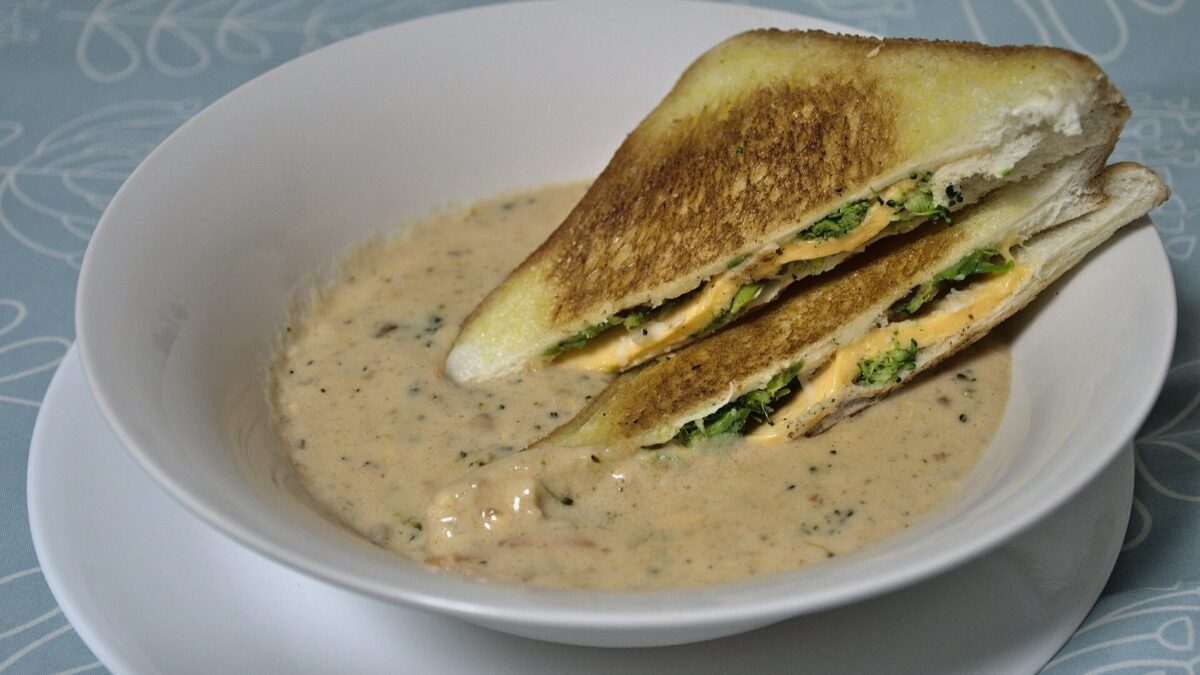
Two things separate a good grilled cheese from a pale one with a cold seam down the middle: the pan is too hot, and the fat is in the wrong place. Fix both and the sandwich takes about nine minutes.
Prep: 3 mins Cook: 9 mins Serves: 1
Turn the hob down further than feels sensible
Bread browns at a much lower temperature than cheese melts at, and that gap is the entire problem. On a hot pan the crust hits deep brown in about 90 seconds while the middle of the cheese is still cold and squeaky. You end up flipping a sandwich that looks finished and isn’t.
Medium-low, 4 to 5 minutes a side. That’s slow enough for heat to travel through the bread and into the cheese before the outside runs out of road. My old gas hob needed the second-smallest flame; the induction one I have now sits at 4 out of 9 and I still nudge it down halfway through.
If the pan hisses when the bread lands, it’s too hot. You want almost nothing: a faint sizzle you have to lean in for.
Ingredients
- 2 slices sturdy white or sourdough bread, about 1.5cm thick
- 85g cheese, coarsely grated from a block
- 2 teaspoons mayonnaise, or softened butter
- Pinch of flaky salt
Instructions
- Grate the cheese from a block and pile it loosely. Grated cheese melts in roughly half the time a thick slice takes.
- Spread mayonnaise on one face of each slice, corner to corner, including the crusts. Use mayo or butter, not both stacked up.
- Set a heavy skillet over medium-low and give it two full minutes to settle before anything goes in. A cold spot in the pan makes a pale stripe.
- Lay one slice fat-side down, heap the cheese on it, and close with the second slice, fat-side up.
- Cook 4 to 5 minutes without touching it. Lift a corner at four to check the colour.
- Flip, press once with the spatula, and give the second side another 4 to 5 minutes. Cover the pan for the last two if the cheese is lagging.
- Sprinkle with flaky salt, wait a full minute, then cut. Cutting straight off the heat sends half the cheese onto the board.
Mayonnaise on the outside beats butter, narrowly
Butter is roughly 16% water and it doesn’t spread evenly unless it’s genuinely soft, so you get thick patches and bare patches, which become dark patches and pale patches. Mayonnaise is oil and egg with barely any water. It sits in a thin even film, it browns at a lower temperature because the egg proteins go along for the ride, and it doesn’t tear cold bread the way a hard knob of butter does.
It doesn’t taste of mayonnaise afterwards. I was sceptical for years and made two sandwiches side by side to settle it, and the tasters in my kitchen picked the mayo one on looks before they’d tasted either.
Softened butter is still fine, and it tastes better if you can get it properly spreadable. What doesn’t work is buttering the pan instead of the bread. The fat pools where the pan is lowest, and the sandwich browns in a ring.
Which cheeses actually melt
Young cheddar, American slices, gruyère and fontina all flow properly. They still hold enough moisture and their protein structure hasn’t tightened up, so heat turns them liquid instead of splitting them. Those same easy-melting cheeses are the ones that survive make-ahead breakfast sandwiches reheated straight from the freezer.
Aged and very hard cheeses don’t. Parmesan, pecorino, a three-year cheddar, most hard alpine styles past a certain age: the protein network has contracted and lost water, so it squeezes out fat and goes grainy and oily rather than smooth. You can use a little for flavour, but it needs a proper melter carrying it.
Pre-shredded bags are the other trap. The starch coating that stops the shreds clumping also stops them fusing, and you get a slightly powdery, separated melt. Grate from a block, it takes thirty seconds.
Gruyère and young cheddar together is my usual, about two-thirds cheddar. Fontina is the smoothest of the four but mild enough that it needs salt on top.
The one thing worth adding after all this: eat it with something acidic. A bowl of creamy tomato soup is the obvious partner and it earns the cliché, but minestrone soup does the same job with more to chew on. A cold sandwich like egg salad wants none of that; a hot one full of melted fat does.