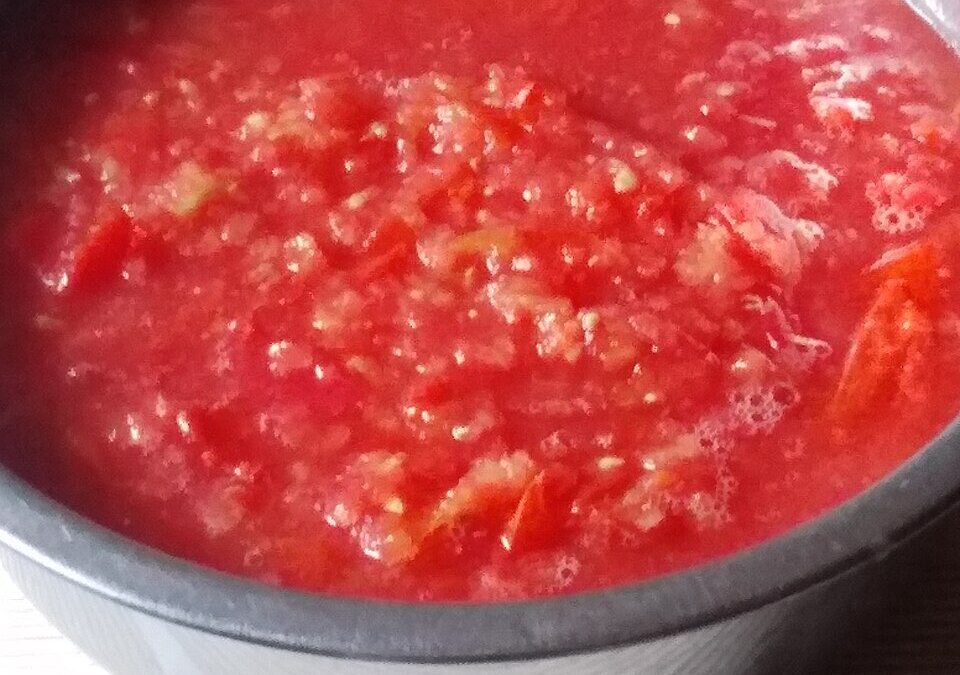
The difference between a decent tomato soup and a very good one is not the cream. It is which tomatoes you start with, whether you roast them, and how you handle the acid. Everything else is technique you can learn in one afternoon.
I have made this more times than any other savoury thing in my kitchen, mostly because it is what I cook when the fridge is empty and there are tins in the cupboard. Over the years I have split the cream, blown a blender lid, and served a batch so sharp my brother asked for sugar at the table.
Prep: 15 mins Cook: 30 mins Serves: 6
Tinned or fresh: the honest answer depends on the month
Tinned wins most of the year, and it is not close. Tomatoes for canning are picked ripe and processed within hours, so a 400g tin in January tastes more like a tomato than the fresh ones sitting next to it on the shelf. Fresh wins in late summer, when you can buy tomatoes that actually smell of something.
| Option | Best when | What it gives | Watch for |
|---|---|---|---|
| Whole peeled tinned | All year, the default | Ripe flavour, low bitterness, you control the crushing | Seeds go bitter if over-blended. Costs a minute to break up. |
| Chopped tinned | When you are in a hurry | Convenience | Often firmer, lower-grade fruit plus added calcium chloride, which keeps the dice intact and slows the breakdown you actually want |
| Passata | You want smooth with no blending | Already sieved, no seeds or skin | Thin. Needs 2 tablespoons of tomato paste and a longer reduction for body. |
| Fresh, in season | Peak summer, ripe and fragrant | The best soup you will make all year | Needs roasting or a long simmer. 2 lb fresh replaces roughly one 28 oz tin. |
| Fresh, out of season | Only if you roast them | Very little on its own | Watery and acidic raw. Roasting is the only thing that saves them. |
If you buy tinned, buy whole peeled. Crushing them yourself with a spoon in the pot takes about forty seconds and gives you a better texture than any chopped tin.
Roasting changes the soup more than any other single step
Simmering tomatoes softens them. Roasting rebuilds them. At 200C, or 400F, on a tray for 35 to 40 minutes, roughly a third of the water evaporates, the sugars caramelise at the cut edges, and the browning reaction produces a set of savoury compounds that simply do not exist in a simmered pot.
Halve the tomatoes, cut side up, on a tray with two onion wedges and four unpeeled garlic cloves. Two tablespoons of olive oil, a good pinch of salt. Pull the tray when the edges have gone dark brown and slightly wrinkled, not black. Squeeze the garlic out of its skins straight into the pot; roasted garlic is sweet and mild in a way that raw minced garlic never is.
This works on tinned tomatoes too, and it is the trick I use most. Drain a 28 oz tin, spread the tomatoes on a lined tray, roast 30 minutes at 200C, then add them to the pot along with the drained juice. The soup goes from decent to something people ask about.
If you have out-of-season fresh tomatoes and nothing else, roast them. It is the difference between a soup you finish and a soup you tip away.
Three ways to take the edge off acidity, and what each one actually does
Tomatoes sit around pH 4.3 to 4.9, which is sharper than most people expect and sharper still after reduction, because the acids concentrate along with everything else. Three common fixes, and they work in genuinely different ways.
Sugar does not reduce acidity at all. Not chemically. The acid is all still there. Sugar gives your palate a competing signal, and perceived sourness drops as sweetness rises. That is why a teaspoon works and a tablespoon makes the soup taste like ketchup: you masked the acid and then kept going. Start with one teaspoon per 6-serving pot, stir, taste.
Bicarbonate of soda genuinely neutralises it. It reacts with the acid to give carbon dioxide, water and a salt, and the pH rises for real. You will see it foam. Use an eighth of a teaspoon at a time, off the heat, stir, taste, stop. Overdo it and the soup goes soapy and flat with a metallic edge, and there is no way back. The bonus: a higher pH also makes the cream far less likely to split later, so this is my choice when the tomatoes are aggressive.
Carrot works by dilution and sweetness, plus body. One medium carrot, about 80g, grated and softened with the onion, adds its own sugars and soluble pectin that thickens the finished soup. It neutralises nothing. It also pushes the colour slightly orange, which some people mind and I don’t.
A quieter fourth option: fat. Butter coats the tongue and blunts sourness on contact. If the soup is only slightly sharp, a knob stirred in at the end does more than any of the above.
Body without flour
A roux makes tomato soup taste like something out of a tin, and it dulls the fruit. There are better ways to get a spoon-coating consistency.
- Reduce it. Simmer uncovered for 25 minutes instead of 15 partially covered. You lose maybe fifteen percent of the volume and gain concentration along with thickness. Free, and it improves the flavour rather than diluting it.
- Stale bread. Tear 30g of crustless white bread into the pot for the last five minutes before blending. This is borrowed straight from Tuscan pappa al pomodoro. It disappears completely and leaves a soft, full body. My favourite of the lot.
- Tomato paste, properly cooked. Two tablespoons fried in the fat for a full two minutes until it darkens from red to brick. Skip that two minutes and you get raw tinny flavour instead of depth.
- A small potato. About 100g, diced, simmered 15 minutes. It works, but blend it briefly and gently. Potato starch turns gluey under a high-speed blade and there is no undoing it.
- White beans. Half a drained tin blended in gives real weight and makes the soup a meal. It does mute the tomato slightly, so add a little more paste to compensate.
Ingredients
- 2 tablespoons butter — or olive oil for a dairy-free base
- 1 medium onion — diced
- 3 cloves garlic — minced
- 2 tablespoons tomato paste — cooked out until it darkens
- 2 cans whole peeled tomatoes — about 28 ounces each, crushed by hand or with a spoon
- 2 cups vegetable stock — adjust for your preferred thickness
- 1 teaspoon sugar — start here, taste before adding more
- 1/2 cup heavy cream — 36% fat or above, plus extra for swirling
- 1 handful fresh basil — plus more for garnish
- 1 teaspoon dried oregano
- Salt and black pepper — to taste
- A pinch of chili flakes — optional
Instructions
- Melt the butter in a large pot over medium heat. Add the onion and a pinch of salt and cook about 6 minutes, until soft and translucent with no colour.
- Add the garlic for a minute, then the tomato paste. Fry the paste for a full 2 minutes, stirring, until it darkens to brick red and smells sweet rather than sharp.
- Add the tinned tomatoes with their juice, crushing them against the side of the pot. Stir in the stock, sugar and oregano.
- Bring to a gentle simmer. Cook 15 minutes partially covered for a lighter soup, or 25 minutes uncovered if you want it thicker.
- Take the pot off the heat and drop in the basil. Blend until smooth, 60 to 90 seconds with an immersion blender kept fully submerged.
- Taste for acidity now, before the cream goes in. Adjust with sugar a teaspoon at a time, or an eighth teaspoon of bicarbonate of soda if it is genuinely sharp.
- Return to low heat. Stir two ladles of hot soup into the cream in a separate jug first, then pour that back into the pot. Warm through without letting it boil.
- Season with salt, pepper and chili flakes. Ladle out and finish each bowl with a swirl of cream and torn basil.
Why cream splits, and how to stop it
Cream splits for one reason: acid plus heat. Casein proteins are stable near neutral pH and destabilise as things get more acidic. Heat speeds that up and a rolling boil finishes the job. What you get is fine white grains in orange liquid and a gritty mouthfeel.
Four rules that have kept mine intact for years:
- Use heavy or double cream at 36% fat or higher. Single cream and half-and-half have less fat protecting the proteins and split far more readily. Milk splits almost every time.
- Fix the acidity before the cream goes near the pot, not after.
- Temper it. Stir a couple of ladles of hot soup into the cold cream in a jug, then return the lot. Cold cream hitting a hot acidic pot is the classic way to curdle it.
- No boiling after the cream is in. A gentle steam is as far as it should go.
If it does split, blitz it hard with the immersion blender for thirty seconds. Mechanical force will re-emulsify a mild split about three times out of four. A bad split does not come back, but it is still perfectly safe to eat and nobody at my table has ever refused a bowl.
Blending hot soup without wearing it
A sealed jug blender full of hot liquid is a small pressure vessel. Steam expands, there is nowhere for it to go, and the lid leaves at speed. I did this once with a half-full jug and spent twenty minutes getting tomato off a ceiling.
If you are using a countertop blender: fill it no more than halfway, take the small centre cap out of the lid, cover the hole with a folded tea towel held down with your hand, and start on the lowest speed before working up. Or just let the soup cool for 10 minutes first, which removes the problem entirely and costs you nothing since you are reheating it with the cream anyway.
An immersion blender is easier and I use one almost always. Keep the head fully under the surface before you switch it on, or you will decorate the wall behind the hob. Tilt the pot slightly and move the blender around so trapped air pockets get released rather than churned.
How smooth is smooth enough
Sixty to ninety seconds with a stick blender gives a velvety soup with a very slight grain, which is what most people want at home. Go longer and you pulverise the seeds, and tomato seeds carry a faint bitterness once broken up.
For the glossy version, push the blended soup through a fine sieve with the back of a ladle. You leave behind maybe half a cup of seed and skin per batch and the difference in mouthfeel is real, if not enormous. Five minutes and an extra pan to wash. I do it when people are coming over and skip it on a Tuesday.
What you serve alongside settles the whole meal. A properly griddled grilled cheese sandwich is the obvious partner and still the right answer, cut into fingers for dipping. A wedge of skillet cornbread works better than you would expect against the acidity. And if you like this method, the same roast-then-blend approach carries over to roasted butternut squash soup and to creamy mushroom soup, where browning the mushrooms hard before any liquid goes in does the same job that roasting does here.