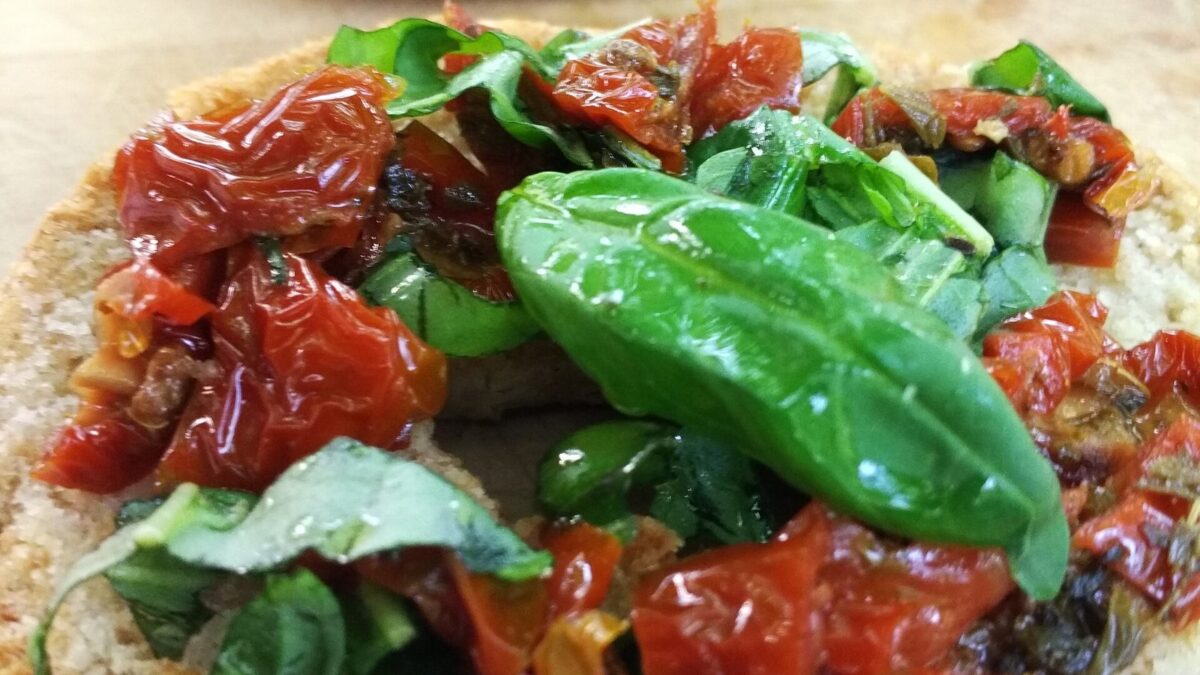
Two things decide whether bruschetta is good: how much water you take out of the tomatoes, and whether you rub the raw garlic onto the toast while it is still hot. Get those right and the rest is assembly.
Everything that goes wrong here is the same failure. Wet topping meets dry bread, bread drinks the juice, and by the time the plate reaches the table you are handing people soggy flannel with tomato on it.
Prep: 15 mins, plus 25 mins draining Cook: 6 mins Serves: 4
Salt the tomatoes, then walk away
Dice a pound of tomatoes, toss with half a teaspoon of salt, tip into a sieve over a bowl, leave 25 minutes. You will pull off three or four tablespoons of pink liquid. That liquid is exactly what would otherwise have gone into the bread.
Salt works by osmosis, drawing water out through the cell walls, which is also why the tomatoes taste more concentrated afterwards rather than less. Scraping out the seeds first helps but is not enough on its own. Do both.
Don’t pour the drained juice away. I keep it in a cup and drink it, or stir it into a dressing with more olive oil. It is the best-tasting thing in the recipe and it seems mad to bin it.
Dress only after draining: olive oil, torn basil, black pepper. Taste before adding more salt. And tear the basil at the last possible minute rather than slicing it, because it bruises at the cut edge and goes black within about ten minutes of meeting a knife.
The garlic rub does more than minced garlic ever will
While the toast is still too hot to hold comfortably, take a peeled clove cut flat across one end and drag it firmly over the rough surface three or four times. The toast works like a grater. The clove wears down visibly and leaves a thin film of garlic oil across the slice.
Two conditions matter. The bread has to be genuinely crisp, because a soft surface has nothing to grate against and the clove just slides. And it has to be hot, because the residual heat takes the sharpest edge off. On cool toast the same rub tastes raw and slightly acrid.
One clove covers about four slices before it is worn to a stub. If you only do one of the two garlic steps, do the rub.
Ingredients
- 1 pound ripe tomatoes — vine or Roma, at room temperature
- 1 baguette or ciabatta — cut on the diagonal into slices about half an inch thick
- 3 cloves garlic — one minced, two left whole for rubbing
- 1 handful fresh basil — torn, not sliced
- 3 tablespoons extra virgin olive oil — plus more for the bread
- 1 teaspoon balsamic vinegar — optional
- 1/2 teaspoon salt — for drawing water out of the tomatoes
- Freshly ground black pepper
- Flaky sea salt — for finishing
Instructions
- Core the tomatoes, quarter them, and scrape out the seeds and watery jelly with your thumb. Dice the flesh small, about a quarter inch.
- Toss the diced tomato with the 1/2 teaspoon of salt and leave it in a sieve over a bowl for 25 minutes. Give it a gentle shake halfway through.
- Tip the drained tomatoes into a bowl and stir through the minced garlic, olive oil, balsamic if using, and plenty of black pepper. Leave the basil out for now.
- Heat the broiler or a dry grill pan. Brush both sides of the bread lightly with olive oil.
- Toast 2 to 3 minutes a side, until golden with a few dark blistered edges. It goes from right to ruined in about thirty seconds, so stay with it.
- While the slices are still hot, rub one side of each with a cut whole garlic clove, three or four firm passes.
- Tear the basil into the tomatoes and stir once. Taste, and add salt only if it needs it.
- Spoon the topping on with a slotted spoon, leaving any last juice in the bowl. Finish with olive oil and flaky salt. Serve within about five minutes.
What I’d change if the tomatoes are mediocre
Supermarket tomatoes in February are firm, pale and tasteless, and draining does not fix that. Two things help: leave them on the counter for a day, never the fridge, since below about 12C the compounds that make a tomato smell like a tomato stop being produced. And add the balsamic, optional with good fruit and close to essential with dull fruit.
The other rescue is changing what the tomatoes sit on. Grill thick fingers of rosemary focaccia instead of baguette; the oil and salt already in the crumb do the work. If the tomatoes are genuinely poor I give up and make caprese panzanella, where the bread soaks on purpose and the mozzarella carries the plate.
Bruschetta will not wait. Assembled slices are noticeably softer in ten minutes and limp in twenty, so put the bowl and the pile of toast on the table and let people build their own. For something that survives a party, cheesy garlic bread holds.