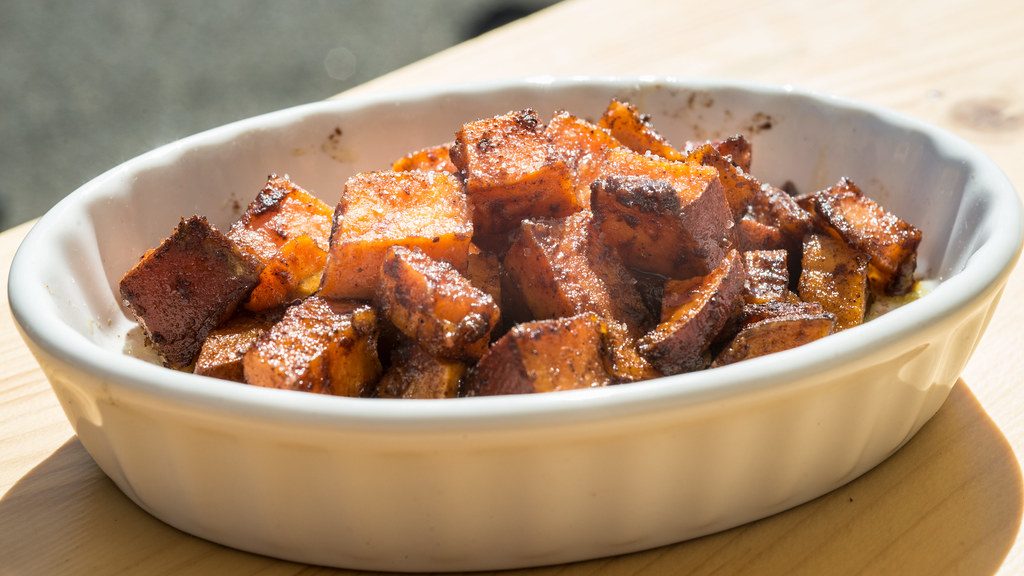
Pork chops get overcooked more often than almost anything else on a weeknight, and most of the reasons are things people were taught on purpose. I cooked pork to the texture of a beer mat for years because that’s what I’d been told to do. Here’s what turned out not to be true.
Myth: pork has to hit 71C before it’s safe
That number is a leftover. It came from an era when trichinosis was a live worry in commercial pork, and the safe margin was set high enough to be certain. The parasite is essentially gone from farmed pork in most countries, and the guidance moved with it — the USDA dropped whole cuts of pork to 63C (145F) plus a three-minute rest back in 2011. That rest isn’t decoration. The temperature keeps climbing 3-5C after the pan, and holding at 63C for three minutes does the same safety work as a higher instant reading.
The difference on the plate is not subtle. At 63C a chop is faintly rosy at the centre and still gives under the knife. At 71C it is uniformly grey and you have to chew. I’m a home cook, not a food safety authority — if you’re pregnant, immunocompromised or cooking for someone who is, the higher figure is the cautious call, and ground pork is a separate case that genuinely needs 71C.
Buy a probe thermometer if you don’t have one. Mine cost less than two packs of chops and it ended this problem permanently.
Myth: the glaze should go on early so the flavour soaks in
Honey starts to scorch around 160C. Your pan is well past that when the chops go in, and the oven here is at 220C. Glaze applied at the start doesn’t penetrate — it sits on the surface, burns, and turns bitter before the middle of the chop is anywhere near done.
Glaze is a finish. It goes on in the last eight to ten minutes, after the sear and after the pan sauce has already reduced. What actually gets flavour into the meat is salt, applied early — season both sides properly and, if you have the time, leave the chops uncovered in the fridge for an hour first.
I ruined two batches learning this. Both times the kitchen smelled like burnt toffee and the chops tasted of it.
Ingredients
- 4 bone-in or boneless pork chops, about 2cm thick
- 800g baby or Yukon gold potatoes, halved
- 3 tablespoons olive oil, divided
- Salt and black pepper, to taste
- 1 teaspoon dried thyme or rosemary
- For the glaze: 1/3 cup honey
- 4 cloves garlic, minced
- 3 tablespoons soy sauce
- 2 tablespoons apple cider vinegar
- 1 tablespoon butter
- 1/2 teaspoon chili flakes, optional
Instructions
- Heat the oven to 220C (425F). Toss the halved potatoes with two tablespoons of oil, the thyme, and a good pinch of salt and pepper. Spread them cut-side down on a large baking tray, in a single layer with space between them, and roast for 20 minutes while you deal with the chops.
- Pat the pork chops completely dry with kitchen paper and season both sides generously. A wet surface steams instead of browning — the pan spends its energy boiling off water rather than colouring the meat.
- Heat the remaining oil in a large ovenproof skillet over medium-high until it shimmers and a drop of water skitters. Sear the chops about three minutes per side, until a deep brown crust forms. Two chops at a time in a 26cm pan; crowd it and the temperature drops and nothing browns. Transfer to a plate.
- Lower the heat to medium and add the butter and garlic to the same pan. Cook 30 seconds until fragrant — no longer, garlic goes bitter fast in hot fat. Stir in the honey, soy sauce, vinegar and chili flakes. Let it bubble and reduce two to three minutes, until it coats the back of a spoon and a line drawn through it holds for a second.
- Return the chops to the pan and spoon the glaze over them. Flip the potatoes at the same time so the cut sides that have been in contact with the tray get their turn.
- Slide the skillet into the oven alongside the potatoes for a final eight to ten minutes, until the thickest part of a chop reads 63C (145F) and the potatoes are crisp at the edges.
- Rest the chops five minutes before serving. Spoon over the extra glaze from the pan and serve with the potatoes.
Myth: thin chops are the forgiving option
Thin chops are the opposite of forgiving. A 1cm chop passes from 55C to 70C in well under a minute of pan time — there is no window in which you can catch it. A 2cm chop gives you maybe 90 seconds, and a 3cm one gives you real minutes.
If thin chops are what you have, change the method rather than fighting it: very hot pan, 90 seconds a side, no oven stage at all, glaze off the heat. Don’t try to run them through this recipe’s oven finish, because they’ll be at 70C before the potatoes have noticed.
The 2cm thickness in the ingredient list is doing real work. Ask the butcher to cut them if the supermarket ones are all thin. It costs nothing extra and it’s the single easiest upgrade to this dish.
Myth: the potatoes and the chops can go in together
Halved baby potatoes need roughly 35-40 minutes at 220C to get properly crisp. The chops need eight to ten in the oven after searing. Put them in at the same time and you’re choosing which one to ruin.
Hence the 20-minute head start in step 1, and the flip in step 5. If your potatoes are large enough to be quartered rather than halved, give them 25 minutes before the pan joins them. The cut-side-down start matters too — that flat face against hot metal is where the browning comes from, and potatoes tossed loose on a tray never get it.
One tray, single layer. Two trays if you’re doubling. Potatoes piled up steam each other and come out pale and soft, which is the same mistake as crowding the chops, in a different dish.
Myth: searing seals in the juices
It doesn’t, and it never did. This was a 19th-century idea that got tested properly in the 20th and failed — seared meat loses about as much moisture as unseared meat, sometimes slightly more. You can watch it happen: a seared chop still puddles on the resting plate.
Searing is worth doing for a completely different reason. The browning is the Maillard reaction, and it creates hundreds of aromatic compounds that simply are not there in a pale chop. It also builds the fond — those stuck brown bits — which is what the honey and vinegar dissolve into a glaze with actual depth. Skip the sear and you get a sweet sauce instead of a savoury one.
What genuinely keeps a chop juicy is pulling it at the right temperature and letting it rest. Nothing else comes close. If you want to go further on that, the longer piece on brining and reverse-searing pork chops covers the methods that buy you an even wider margin. And when you have the whole afternoon instead of 45 minutes, sticky pork ribs and pulled pork run on the opposite principle — cook it far past done, on purpose, until the collagen gives up.
The potatoes will take a second tray if you’re feeding six. Everything else scales as written, except the searing, which still has to happen two chops at a time no matter how many people are coming.