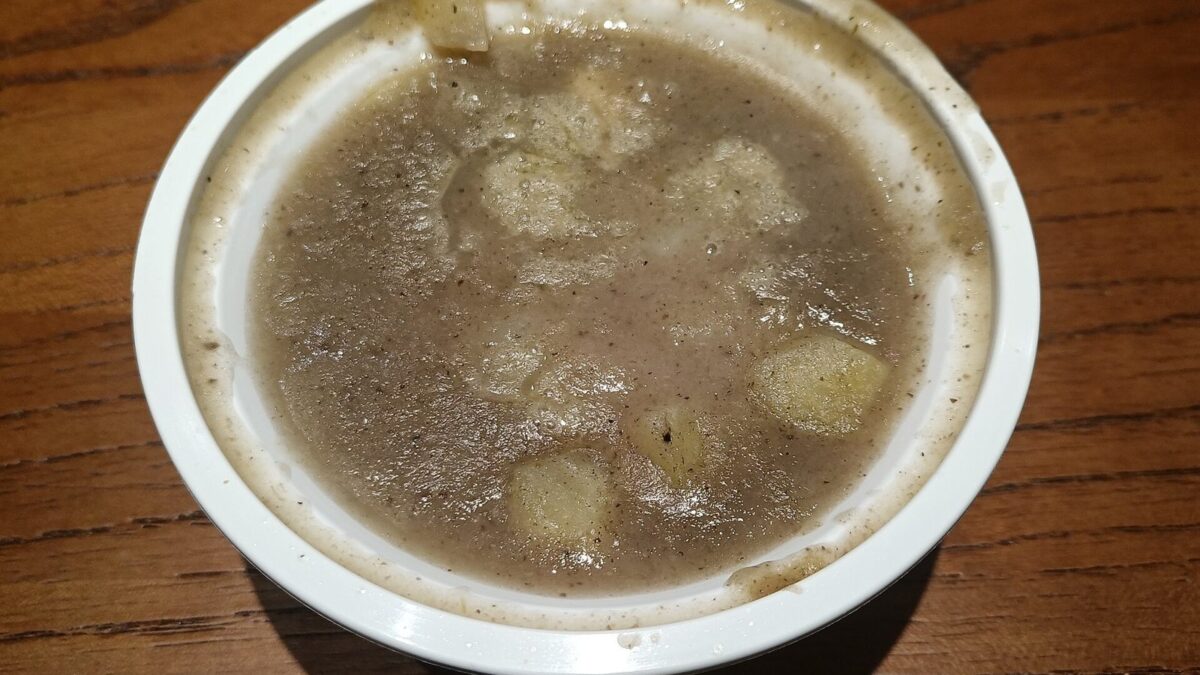
Every baked potato soup recipe promises the flavour of a loaded baked potato. Most of them boil the potatoes, which is the one step that guarantees you won’t get it.
There are four honest ways to get potato into this soup, and they don’t produce the same bowl. I’ve made all four in the same week, using the same quantities below, so here’s how they actually compare.
Method 1: bake the potatoes, then scoop the flesh
Prick 2 lb of russets, rub with oil and coarse salt, bake at 400 F for 55 to 65 minutes until a knife slides in with no resistance. Cool 10 minutes, split, scoop the flesh out, and chop a little of the skin fine to go back in.
Dry heat drives water out of the potato instead of pushing water in, so the flesh concentrates. There’s a faint toasted note from the skin that boiled potatoes simply don’t have, and if you chop in a tablespoon or two of crisp skin you get something closer to the actual thing you’re trying to imitate.
The cost is an hour of oven time you have to plan around. It also gives you a slightly drier, fluffier flesh that soaks up stock beautifully.
Method 2: boil and mash straight in the pot
Peel, dice into 2 cm cubes, simmer 12 to 15 minutes until just tender, drain, and mash about half of them into the soup later with a masher.
Fast: you’re at tender potatoes in 20 minutes from a cold start. The trade-off is real, though. Boiling leaches starch and flavour into water you then throw away, and the result tastes cleaner and blander. Half-mashing does give you the texture most people actually want, chunks in a thick base rather than a purée.
Worth knowing: if you boil the diced potatoes in the stock rather than in plain water, you keep most of what would have been lost. That single change closes maybe half the gap to method one for no extra time.
Method 3: roux first, potatoes second
Butter and flour cooked together, then the liquid whisked in, then the potatoes added to a soup that’s already thickened.
The roux isn’t really an alternative to the other methods, it’s a separate decision about body, and it’s the one that stops the soup tasting like gravy-thin milk. Three tablespoons of butter with three tablespoons of flour, cooked for 1 to 2 minutes, holds 3 cups of stock plus 2 cups of milk at a consistency that coats a spoon.
Skip the roux and you’re relying entirely on potato starch, which means either mashing nearly all of it or accepting a thinner soup. The roux also stabilises the dairy: flour-thickened bases split far less readily than pure cream ones, which matters a lot once sour cream and cheddar go in.
Method 4: blend a third of the potatoes for body
Cook the potatoes any way you like, then blitz a third of the pot smooth with an immersion blender and leave the rest whole.
This gets you the silkiest base of the four, and it’s how restaurants usually do it. The catch is that potato starch turns gluey when it’s over-worked. Ten seconds too long with a stick blender and the soup goes elastic, almost like wallpaper paste, and there’s no undoing it. A potato ricer or a hand masher can’t do that damage, which is why I’ve stopped blending potato soups at all.
Side by side
| Method | Time to tender potato | Flavour | Risk |
|---|---|---|---|
| Baked and scooped | 65 min plus cooling | Best, clearly | Planning only |
| Boiled and half-mashed | 20 min | Good if boiled in stock | Bland if boiled in water |
| Roux base | Adds 2 min | Neutral, adds body | Lumps if liquid goes in fast |
| Blended for body | Adds 1 min | Smoothest texture | Gluey if over-blended |
The winner, and the version I actually cook
Baking the potatoes wins on flavour and it isn’t close. If you’ve got an hour and the oven’s on anyway for something else, do that. Scooped-out baked russet tastes of baked potato in a way boiled potato never manages, and the whole point of this soup is in the name.
What I make on a Tuesday is the hybrid below: diced potatoes simmered until tender, a proper roux for body, half of them mashed in the pot with a masher, nothing blended. It’s on the table in 40 minutes. If you want it to taste closer to method one, boil the potatoes in the stock instead of water and add a teaspoon of smoked paprika with the flour. That’s not authentic baked flavour, but it fills the same gap.
Getting the dairy in without splitting it
Sour cream and cheddar both split if the soup is hot enough to bubble. Take the pot off the boil, drop it to low, and stir them in over about a minute.
Grate the cheddar yourself. Pre-grated cheese is dusted with potato or corn starch to stop it clumping, and while that starch technically helps it stay suspended, it also gives the soup a slightly powdery finish. Mature cheddar tastes stronger but breaks more easily than a mild block, so if you want punch without the oil slick, use mild cheddar and add a pinch of mustard powder.
Warming the milk before it goes in matters more than it sounds like it should. Cold milk into a hot roux drops the temperature enough that the soup takes another five minutes to come back, and that’s five more minutes of potatoes falling apart.
Ingredients
- 1 kg / 2 lb starchy potatoes such as russets, peeled and diced
- 1 onion, finely chopped
- 3 cloves garlic, minced
- 3 tablespoons butter
- 3 tablespoons plain flour
- 750ml / 3 cups vegetable stock
- 500ml / 2 cups whole milk, warmed slightly
- 120ml / 1/2 cup sour cream, plus more to serve
- 150g / 1.5 cups cheddar cheese, grated, plus extra to top
- Salt and pepper, to taste
- 2 tablespoons chopped chives or green onions, to garnish
- Optional toppings: extra cheese, crispy fried onions, or bacon bits
Instructions
- Cook the potatoes. Put the diced potatoes in a large pot, cover with water or, better, with some of the stock, bring to a boil and simmer 12 to 15 minutes until just tender. Drain and set aside.
- Build the base. In the same pot, melt the butter over medium heat. Cook the onion until soft and translucent, about 5 minutes, then the garlic for one minute more.
- Make the roux. Sprinkle in the flour and stir constantly for 1 to 2 minutes, until it smells toasted rather than raw.
- Add the liquids. Pour in the stock gradually while whisking, then the warmed milk. Keep whisking until it’s smooth, then bring to a gentle simmer.
- Return the potatoes. Add them back and simmer 10 minutes so they take on the flavour of the base and begin to soften at the edges.
- Mash for thickness. Use a potato masher to crush about half the potatoes directly in the pot. Leave the rest in pieces. Don’t reach for a blender.
- Stir in the dairy. Lower the heat, add the sour cream and cheddar, and stir until melted and glossy. Do not let it boil after this point.
- Season. Salt, and more black pepper than feels reasonable. Potato soup swallows seasoning.
- Serve loaded. Ladle out and top with cheese, a spoon of sour cream, chives, and whatever else you like.
It thickens hard in the fridge, to the point where day-two leftovers need a splash of milk and gentle heat to come back. Don’t freeze it: the potato goes mealy and the dairy separates.
If you liked the baked-potato route, loaded baked potatoes are the obvious use for the extra spuds, and the same crisp-skin trick shows up in crispy hash browns. On the table, a wedge of cornbread does more for a bowl of this than any bread roll. And if soup season has properly started, chicken noodle soup is the one I make the following night, because it’s the opposite of this in every way.