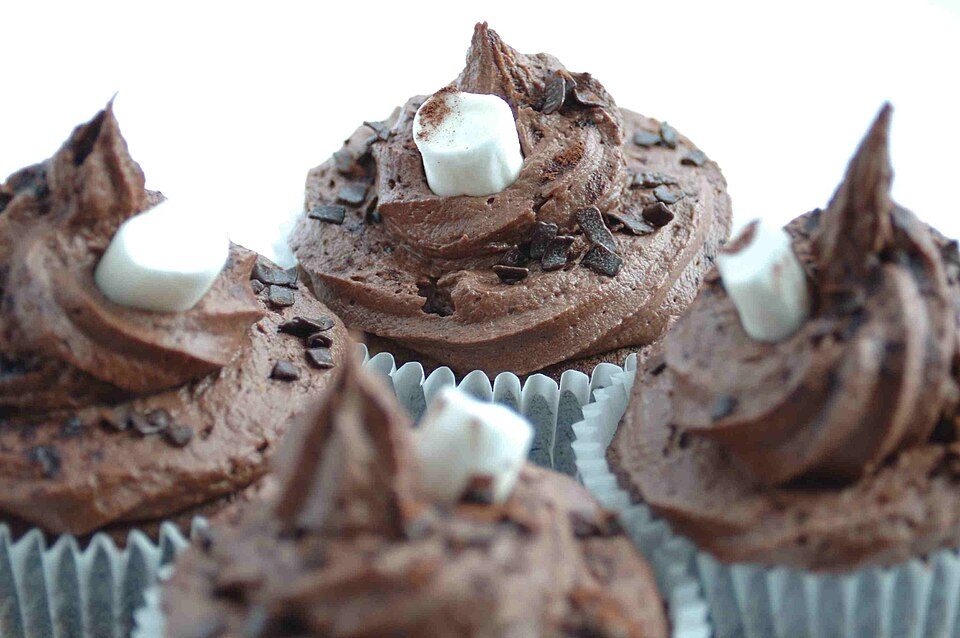
Chocolate cupcakes fail in about five predictable ways, and every one of them is fixable before you preheat. I’ve made this batter more times than any other bake in my kitchen, mostly for birthdays, and the failures have been consistent enough that I can now usually diagnose a bad batch by looking at it.
So here are the five, each with what causes it, before the recipe rather than after. If you’ve already had a batch go wrong, find yours below and skip straight to the fix.
Sunken centres
A cupcake that domes in the oven and then falls into a crater as it cools has almost always come out too early. The crumb structure sets in the last two or three minutes of baking, and the visual cue is unreliable because the top looks done well before the middle is.
At 350F in a standard 12-cup tin, this batter needs 16 to 19 minutes. Test at 16 with a toothpick in the centre of a middle cupcake, not a corner one. A few dry crumbs clinging to the stick is correct. Wet batter is not.
The other cause is too much baking soda. This batter takes 1 teaspoon of soda plus 1/2 teaspoon of baking powder, and going heavier doesn’t give more lift, it gives a fast rise that outruns the structure and then collapses. I once eyeballed the soda and got twelve small volcanoes with sunken calderas.
A dry, crumbly bite
Dryness in a chocolate cupcake usually traces back to flour measurement. A cup of flour scooped straight from the bag can weigh 25 to 30 percent more than a spooned-and-levelled cup, which is enough to turn a moist crumb into a dusty one.
Spoon the flour into the cup and level it with a knife. If you have a scale, 1 cup of all-purpose flour is about 125g and that’s the number to trust.
The second cause is overbaking by even two minutes. Cupcakes are small and they lose moisture fast; there’s no thermal mass to protect them the way there is in a full layer cake. If your oven runs hot, and most do by 15 to 25 degrees, an oven thermometer costs very little and will fix half your baking problems at once.
The 1/4 cup of oil in this recipe is doing real work here, so don’t swap it for butter. Oil stays liquid at room temperature, which is why an oil-based cupcake is still soft on day three while a butter-based one has gone firm.
Peaked and cracked tops
A cupcake with a pointed, split top like a small volcano was baked too hot. The outside sets before the inside has finished rising, so the still-liquid centre pushes up through the crust and tears it.
Check your oven with a thermometer before blaming the recipe. 350F is right for this batter; at 375F you’ll get peaks nearly every time.
Overmixing does it too. Once the flour is wet, gluten starts developing, and a strong batter climbs rather than spreads. Whisk to combine and stop the moment the dry pockets disappear, then stir the coffee in gently. Ten seconds of enthusiastic beating is enough to change the shape of the finished cupcake.
Liners that peel away
This one drove me mad for a year. You bake a perfect batch, leave them to cool, and by the next morning the papers have shrunk away from the sides and slide off in your hand.
It’s moisture. Steam trapped between the cake and the paper condenses as they cool and loosens the bond. Two fixes, both easy: get the cupcakes out of the hot tin after 5 minutes rather than leaving them to cool in it, and don’t store them in a sealed box until they’re completely cold, which takes a full hour on a rack.
Thin bargain liners give up much faster than greaseproof ones. If you’re using the cheap paper kind, a very light spray of oil inside each liner before filling makes a visible difference.
Batter that overflows the tin
Fill each liner two-thirds full and no more. This batter is thin after the coffee goes in, which makes it feel like there’s less of it than there is, and the temptation to top up is strong.
Two-thirds gives you a domed top that stays inside the paper. Three-quarters gives you a mushroom cap that spills over and welds to the tin, and then you’re chiselling. The recipe makes exactly 12 at the right fill level, so if you’re getting 10, you’ve overfilled.
An ice cream scoop with a release lever, the size that holds about 3 tablespoons, portions this batter more evenly than a spoon and takes about 40 seconds for the whole tin.
Half the tray browner than the other half
Home ovens have hot corners, usually the back. Rotate the tin 180 degrees at the 10-minute mark and the problem mostly disappears. Don’t open the door before then, because the temperature drop while the crumb is still setting is what gives you the sunken middles from the first section.
If your batch doesn’t fill all 12 cups, pour a couple of tablespoons of water into the empty ones. It steadies the tin and stops the empty metal scorching.
Ingredients
- 1 cup all-purpose flour – spooned and leveled for accuracy.
- 1 cup granulated sugar – for the right sweetness and moisture.
- 1/2 cup unsweetened cocoa powder – Dutch-process for a darker color.
- 1 teaspoon baking soda – your main leavening.
- 1/2 teaspoon baking powder – for a little extra rise.
- 1/2 teaspoon salt – to sharpen the chocolate.
- 1 large egg – room temperature.
- 1/2 cup buttermilk – for tenderness and a soft crumb.
- 1/4 cup vegetable oil – keeps the cupcakes moist for days.
- 1 teaspoon vanilla extract – rounds out the flavor.
- 1/2 cup hot coffee – the secret to bold chocolate depth.
- 1 cup chocolate frosting – homemade or your favorite from a jar.
Instructions
- Preheat your oven to 350F (175C) and line a 12-cup muffin tin with paper liners so nothing sticks.
- In a large bowl, whisk together the flour, sugar, cocoa powder, baking soda, baking powder, and salt until fully combined.
- Add the egg, buttermilk, oil, and vanilla to the dry ingredients. Whisk until you have a thick, smooth batter with no dry pockets.
- Pour in the hot coffee and stir gently. The batter will thin out considerably – that’s exactly what you want for a moist crumb.
- Divide the batter evenly among the liners, filling each about two-thirds full so they have room to dome.
- Bake for 16 to 19 minutes, until a toothpick inserted in the center comes out clean or with a few dry crumbs.
- Let the cupcakes cool in the pan for 5 minutes, then transfer them to a wire rack to cool completely.
- Once fully cool, frost generously with chocolate frosting using a knife or a piping bag for a bakery finish.
The coffee step nobody believes
Half a cup of hot coffee sounds like a gimmick and it isn’t. Two things happen. The heat blooms the cocoa, softening the solids so they release more flavour than they would in cold liquid, and coffee’s bitter notes overlap with cocoa’s, so the chocolate reads darker without more cocoa going in.
It does not taste of coffee. I’ve served these to people who don’t drink coffee and nobody has picked it out. If you’d rather skip it, hot water gives you the blooming and you lose maybe fifteen percent of the depth. Make it properly hot either way, straight from the kettle. Lukewarm coffee blooms nothing and just thins the batter.
Frosting that slides off the top
Warm cupcakes and buttercream are not compatible. A cupcake still holding heat in the middle melts the base of the frosting, and within an hour the swirl has sagged sideways.
Completely cool means completely cool: touch the underside of the paper, and if it’s even faintly warm, wait another 20 minutes. On a hot day I put the rack in front of a fan.
If your frosting is too soft to hold a piped shape, chill it 15 minutes and beat it again for 30 seconds. If it’s stiff and tearing, a teaspoon of milk brings it back. One cup of frosting covers all twelve with a knife; for tall piped swirls, make about 2 1/2 cups.
If you fix only one thing
Buy an oven thermometer. Nearly every problem on this page, the peaks, the dryness, the sunken middles, comes back to an oven that isn’t at the temperature the dial claims. Mine ran 20F hot for two years and I blamed recipes the entire time.
Once the temperature is honest, this batter is forgiving. Scaled up it’s what I use in a 9-inch round for a full chocolate cake, and it behaves the same way. For a denser, chewier direction try fudgy chocolate brownies; for something breakfast-shaped that uses the same cocoa-blooming trick, chocolate chip muffins are a gentler start. And molten chocolate lava cakes deliberately do the underbaked-centre thing this recipe spends its first section avoiding.
One last practical note: these keep better unfrosted. Bake them a day ahead, store them in a box at room temperature, and frost on the morning you need them. Frosted cupcakes go stale from the bottom up, and nobody can work out why.