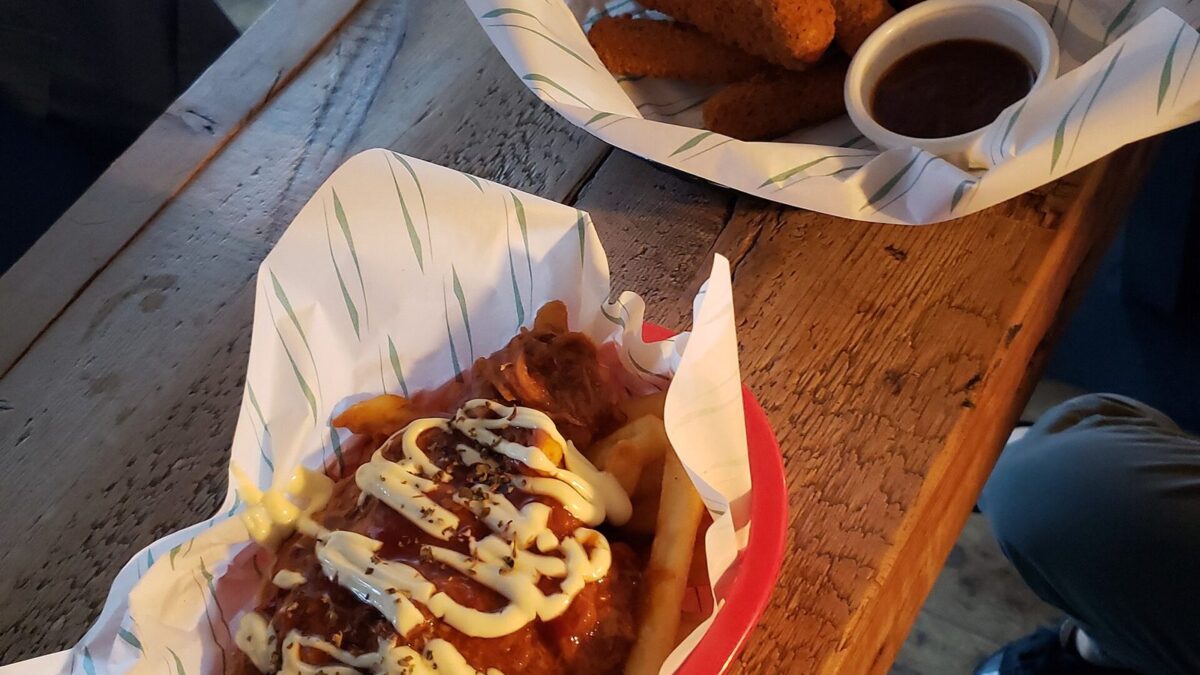
My first batch of mozzarella sticks lasted about thirty seconds in the oil. I dropped six in, watched the breading go pale gold, and then one split along its side and let out a ribbon of cheese that spread across the surface of the pot like melted candle wax. By the time I got the rest out with a slotted spoon, four of the six were hollow tubes of breadcrumb. The oil was ruined. The kitchen smelled like a stadium at half-time for two days.
I’d done what the packet suggested. Flour, egg, breadcrumb, straight into the pan. What I hadn’t done was freeze them, and I’d used fresh mozzarella out of a tub of brine because it was what sat in the fridge door.
Those two mistakes are the whole story. Fix them and this recipe stops being a gamble.
Prep: 25 mins Freeze: 2 hrs Cook: 6 mins Makes: 12 sticks
Why the Cheese Escapes
Mozzarella starts flowing at roughly 60°C. Your oil sits at 180°C. So the cheese in the middle turns liquid long before the crust outside has set into something rigid enough to hold it. The entire job of this recipe is to widen that gap in time: make the cheese take longer to melt, and make the crust set faster.
Freezing handles the first half. A stick that goes into the oil at −18°C has to climb sixty-odd degrees before it even begins to soften, and that climb buys you the seconds the crust needs.
Double-breading handles the second half. One coat of breadcrumb is a layer. Two coats, with egg in between, is a shell — and more importantly the second egg pass seals the seams and the two cut ends, which is exactly where mine split.
The cheese itself matters more than most recipes admit. Fresh mozzarella, the soft white kind packed in water, runs around 55–60% moisture. It doesn’t melt so much as collapse and weep. Low-moisture block mozzarella, the firm shrink-wrapped stuff by the cheddar, sits closer to 45%. It stretches instead of running. String cheese works too, though the block gives a better pull because you can cut the batons fatter.
One honest opinion, and plenty of people will disagree: pre-shredded mozzarella pressed back into shape is a waste of an evening. The anti-caking starch on it makes the melt grainy. I tried it once out of laziness and the centres came out chalky rather than stretchy.
Ingredients
- 400g low-moisture block mozzarella, cut into 12 batons roughly 8cm long and 2cm thick. Not fresh mozzarella in brine.
- 1 cup (125g) all-purpose flour, for the first dry coat.
- 3 large eggs, beaten with 2 tablespoons water so they coat thinly rather than clumping.
- 1 1/2 cups Italian-seasoned breadcrumbs.
- 1/2 cup panko, which is what gives you the audible crack rather than a soft crust.
- 1/2 cup finely grated Parmesan.
- 1 teaspoon garlic powder, 1 teaspoon dried oregano, 1/2 teaspoon salt, 1/4 teaspoon black pepper.
- Vegetable or sunflower oil, enough for 5cm depth in a heavy pot. About 1 litre in a 20cm saucepan.
- Warm marinara, for dipping.
Instructions
- Cut the mozzarella into 12 batons and pat every surface dry with kitchen paper. Wet cheese sheds its flour coat.
- Set out three shallow bowls: flour in the first, beaten egg in the second, and the breadcrumbs, panko, Parmesan, garlic powder, oregano, salt and pepper mixed together in the third.
- Roll one baton in flour, tap off the excess, dip in egg, then press it into the crumb mix and roll it firmly so the crumbs bed in rather than sit loose.
- Return the same stick to the egg, then back into the crumbs a second time. Pinch the crumb mixture onto both cut ends with your fingers — the ends leak first. Repeat for all 12.
- Lay them on a parchment-lined tray, not touching, and freeze for at least 1 hour, though 2 hours is the safer number. They should feel like small pieces of wood, with no give at the centre when you squeeze.
- Heat 5cm of oil in a heavy pot to 180°C (356°F). Check it with a thermometer. Below 165°C the crust takes too long and the cheese wins; above 195°C the crumb darkens before the middle has softened at all.
- Fry 4 sticks at a time for 45 to 90 seconds, turning once, until deep golden. Never crowd the pot — six cold sticks will drop the oil by around 20°C.
- Lift them out with a slotted spoon onto kitchen paper and salt them straight away while the surface is still oily enough to hold it.
- Let the oil climb back to 180°C before the next batch. Serve with warm marinara within about five minutes, while the centres still pull.
The Numbers I Actually Check
Four things decide whether this works, and none of them are about seasoning.
| Variable | Target | What goes wrong outside it |
|---|---|---|
| Freeze time | 2 hours (1 hour minimum) | Soft centres burst within 30 seconds |
| Oil temperature | 180°C / 356°F | Too low: greasy and leaking. Too high: burnt crumb, cold centre |
| Fry time | 45–90 seconds | Past 2 minutes the seams go, whatever you did earlier |
| Cheese moisture | Low-moisture block | Fresh mozzarella weeps water into hot oil and spits |
The one I get wrong most often is the second batch. I pull batch one, feel pleased with myself, and drop the next four in while the oil has sagged to 160°C. Those come out paler and greasier, every time.
How do you know a stick is done without cutting it open? The bubbling changes. Loud, fast bubbling means water is still leaving the crust. When it quietens noticeably, the surface is dry and set, and that’s your cue — usually a few seconds before the colour looks quite right.
What I’d Do Differently Next Time
I’d make 24 instead of 12. The breading station is the tedious part and it takes the same twenty minutes either way, so now I bread a double batch, freeze the whole tray solid, then bag half and keep it for up to two months. Frying straight from the freezer bag on a Friday takes six minutes start to finish.
I’d also stop bothering with the air fryer here. Twice now, 200°C for seven minutes, and both times the result was fine but flat: the crust dries rather than crisps. Baking on a rack at 220°C for ten minutes lands in the same place. If you want the shattering crust, you want oil.
Warm marinara is the default dip and it’s good, but the one people keep going back to at my table is marinara with a spoon of the garlic butter I make for cheesy garlic bread stirred through it while hot. For a spread, these sit well beside spinach artichoke dip and classic guacamole, since neither needs the fryer.
Leftovers, if you have them, keep two days in the fridge and come back reasonably well in a 190°C oven for four minutes. The microwave turns them into rubber tubes; I’ve done it, don’t.
And if you’re already heating a litre of oil, you may as well use it twice. Strain it through a coffee filter once it’s cool, keep it in a jar, and it’ll do one more round of frying — crispy fried chicken the next day is the obvious candidate, and cheese-flavoured oil does it no harm at all.