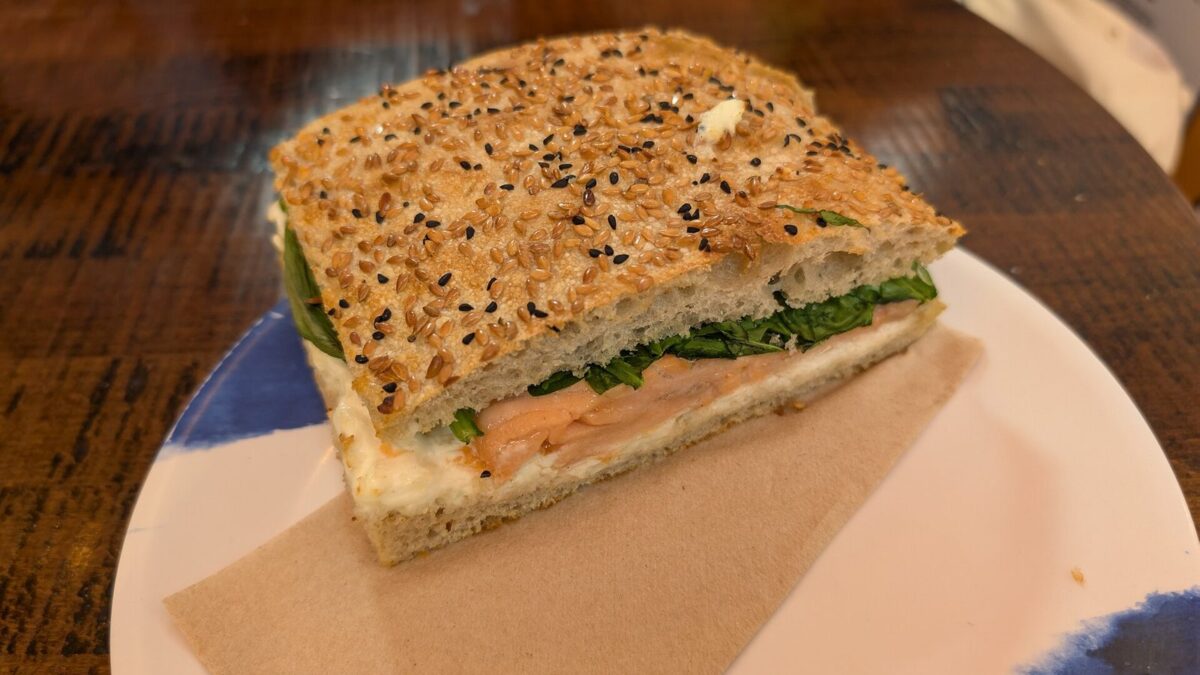
The worst tuna melt I ever made looked perfect. Deep golden bread, a little crackle when I pressed the knife through it, cheese doing the stretchy thing you want in a photo. Then I bit into the middle and it was cold. Not lukewarm. Refrigerator cold, straight from the bowl the tuna salad had been sitting in.
That sandwich taught me more than any recipe did. The pan was on medium-high, because that’s what you do for a grilled cheese sandwich, where the filling is a quarter-inch of cheese and melts in seconds. A tuna melt carries about half a cup of cold, dense filling. It needs roughly three times as long in the pan at a lower temperature, or the bread finishes the race while the middle is still at the start line.
The second disaster came a week later. I overcorrected on heat and didn’t drain the tuna, liquid leaked sideways into the bottom slice, and the sandwich I lifted off the pan had gone to paste underneath. It tore on the flip. I ate it with a fork.
Everything below is what I do now, after those two.
Prep: 12 mins Cook: 9 mins Serves: 2
Where a tuna melt actually goes wrong
Three things, in the order they cause trouble.
Wet tuna. Tipping the can and holding the lid on isn’t draining. A standard 5-ounce can still holds a couple of tablespoons of liquid in the flakes after that, and every drop of it ends up in the bread. Dump the tuna into a fine sieve instead and press it flat with the back of a spoon for a slow count of thirty. You’ll be surprised what comes out. The tuna should look dry and slightly crumbly, almost unappetising, before the mayo goes anywhere near it.
Bread touching filling. Even well-drained tuna salad is wet, and mayonnaise loosens as it warms. Sit the salad against the crumb and the crumb drinks it. So cheese goes on both sides: one slice down, filling in the middle, one slice on top. Each face melts into a seal and the tuna never touches bread at all. This did more for my melts than any bread upgrade.
Impatient heat. Covered, medium-low, first side only. A lid traps steam from the filling and heats the sandwich from the inside while the bottom browns from the outside. Without it you’re relying on conduction through a slice of bread to warm half a cup of cold mayonnaise, which does not happen in three minutes.
Is a lid on a grilled sandwich strange? A bit. It softens the top crust while it’s on, and you get that back on the second side, uncovered.
Ingredients
- 2 cans (5 oz each) tuna in water — drained hard in a sieve. Chunk light has a softer flake and mixes creamier; solid albacore stays in bigger pieces if you like some texture.
- 1/4 cup mayonnaise — less than most recipes, because dry tuna needs less to bind and a loose filling is what leaks.
- 1 stalk celery, diced small — about 1/3 cup. Cut it finer than feels necessary or it makes the layers slide apart.
- 2 tablespoons red onion, minced
- 2 teaspoons Dijon mustard
- 2 teaspoons lemon juice — from an actual lemon; bottled tastes flat against the mayo.
- Salt and plenty of black pepper
- 4 slices sourdough or rye — cut around 1/2 inch. Thin sandwich bread can’t take the covered cooking time.
- 4 slices sharp cheddar — two per sandwich, one under and one over the filling.
- 2 tablespoons softened butter — soft enough to spread without tearing the bread, which is half the reason melts go wrong before they ever hit the pan.
Instructions
- Tip both cans of tuna into a fine sieve set over the sink. Press down with the back of a spoon, working around the sieve, for about 30 seconds, until liquid stops beading out.
- Turn the pressed tuna into a bowl and break it up with a fork. Add the mayonnaise, celery, red onion, Dijon and lemon juice. Stir until it just holds together. Salt and pepper, then taste it cold, since it’ll taste milder once warm.
- Butter one side of all four slices of bread, right to the edges. The corners are where melts stay pale.
- Build each sandwich with the buttered faces outward: bread, cheese, half the tuna salad spread to within half an inch of the edge, second slice of cheese, bread. The filling should be about 1/2 inch deep, no more.
- Set a heavy skillet over medium-low and let it come up for 2 minutes before the sandwiches go in. A drop of water should sizzle lazily, not skitter.
- Lay the sandwiches in, cover the pan with a lid, and cook 4 to 5 minutes without touching them. Resist pressing. Lift a corner at 4 minutes to check the colour.
- Flip, leave the lid off, and cook another 3 minutes until the second side is golden and the cheese is visibly running at the edges. That escaping cheese is your signal the centre is hot.
- Move to a board and wait a full minute before cutting. Cut immediately and the filling slumps out of the sides.
What I’d do differently next time
I’d cut the celery even smaller. Mine were about pea-sized in the last batch and one of the sandwiches split along a celery seam when I cut it.
I’d also stop buying tuna in oil for this. I like it better in a cold sandwich filling, but oil-packed tuna plus mayo plus butter is three fats stacked, and the melt came out heavy enough that I couldn’t finish the second half. Water-packed, drained hard, is the right call here and I was slow to admit it. Oil-packed still earns its place in a cold tuna and white bean salad, where no butter or cheese is competing with it.
One thing I would not change: the sharp cheddar. I tried Swiss twice because it melts beautifully, and both times the sandwich tasted polite. Tuna salad has mayo, mustard and lemon in it already, and it needs a cheese with enough acid and salt to answer back.
And I’d make the salad the night before. It improves after 12 hours in the fridge, the onion loses its raw edge, and it keeps 2 days covered. Take it out 15 minutes before building, so it isn’t fridge-cold going in.
Questions I get asked about this sandwich
Why is my bread dark but the cheese not melted?
The pan was too hot. Medium-low on my hob means the dial at about a third; on a gas ring it’s a low flame that doesn’t reach the base edge. If the first side hits deep brown before 4 minutes, you’re above where you want to be.
Can I do it open-faced under the grill instead?
You can, and it’s faster, but you lose the sealed-in-cheese structure and the tuna dries on top. If you go that way, put cheese under the tuna as well as over it, and keep the tray about 6 inches from the element.
What goes with it?
Something sharp, because the sandwich is rich. A dill pickle cut lengthways, or a spoonful of creamy coleslaw on the side. A bowl of tomato soup works too, though I find the combination heavy at lunch and save it for a cold evening.
Does it reheat?
Badly, and I’d rather be honest about it. A day-old melt in a dry skillet over low heat, 4 minutes a side, gets you maybe 70% of the way back. The microwave gets you nowhere. Make one at a time if you’re eating alone.